Category Archives: C - LISTENING - Page 17

First-time listening for June 2014

22927. (Sol­dat Louis) Pre­mière bordée
22928. (Cole­man Hawkins) Desafinado
22929. (Armens) Une ombre
22930. (Giuseppe Ver­di) Mes­sa solenne
Read more »

Sibelius Quartets

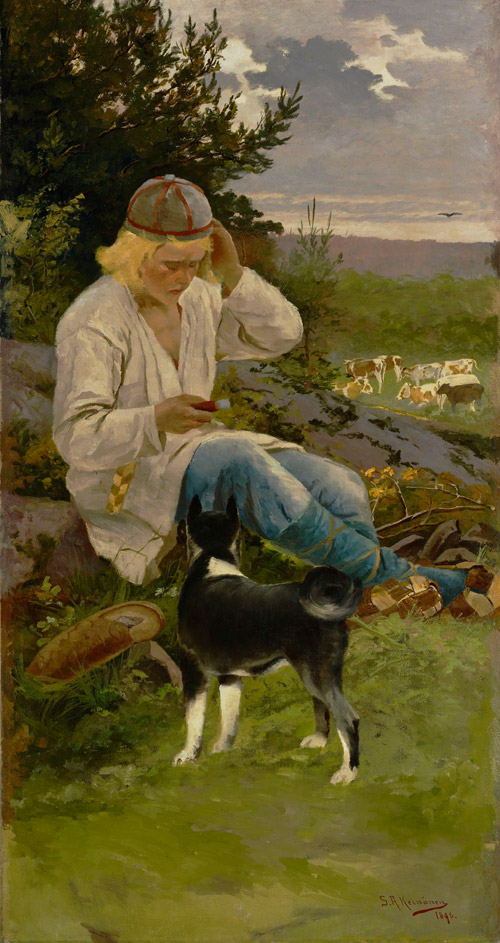
"Kullervo paimenessa" (1896) by Sigfrid August Keinänen

Kuller­vo paime­nes­sa” (1896) by Sigfrid August Keinänen

The con­cert-going pub­lic doesn’t asso­ciate Sibelius with cham­ber music, but he actu­al­ly com­posed quite a bit of it, includ­ing four string quar­tets. One of them, the Quar­tet in D Minor, Op.56, known as “Voces Inti­mae”, has made it into the stan­dard reper­toire. With it’s jaun­ty rhythms, pecu­liar twists and turns, and fre­net­ic pas­sages that must work up a sweat among the play­ers, it has won a place in the sun, though it’s not in the same league with the famous Beethoven, Bartók, or Dvořák quar­tets. It’s always been a favourite of mine, because it seems to con­vey a mood that hits me occa­sion­al­ly, for which there is no com­mon name. It was com­posed around the time of the stark, intro­spec­tive Fourth Sym­pho­ny, and it shares some of its strange­ness. But Sibelius com­posed three oth­ers, sel­dom per­formed. The first, in E‑flat, is a youth­ful effort with lit­tle to com­mend it. It’s just warmed-over Hay­den, con­struct­ed by the book. But the sec­ond and third ones, in A Minor and B‑flat, are lis­ten­able and enter­tain­ing. Sibelius pret­ty obvi­ous­ly drew his inspi­ra­tion from Dvořák, but you can hear dis­tinc­tive­ly Sibelian ele­ments in both. The B‑flat one has evolved suf­fi­cient­ly to stand next to Voces Inti­mae with­out shame, and it should be played more.
First-time listening for May 2014

22901. (Penn Kazh) mesKad
22902. (Giuseppe Ver­di) Aïda [com­plete opera: von Kara­jan; Tebal­di, Simion­a­to, Bergonzi]
22903. (Denez Pri­gent) Irvi
Read more »

First-time listening for April 2014

22887. (Bruno Mars) Doo-Wops & Holligans
22888. (Char­lie Park­er) Gitanes Jazz
22889. (Mor­ton Sub­ot­nick) Sil­ver Apples of the Moon
Read more »

Monday, April 28, 2014 — Saint-Barthélemy & Lann Gouh

A fab­u­lous night of music and con­ver­sa­tion. An assort­ment of local musi­cians at the vil­lage pub called Sterenn Roz (The Rose Star). These “ses­sion trad” have been held here for at least a quar­ter cen­tu­ry. Young and old, play­ing in dif­fer­ent com­bi­na­tions through­out the evening. No stage, just a com­fort­able mix of musi­cians and clien­tele. Peo­ple switch­ing instru­ments, drop­ping in or drop­ping out of a song as the spir­it moved them, glances exchanged between play­ers who found a com­mon groove. The Celtic way. There were accor­dions; gui­tars, bag­pipes, and a cou­ple of reed instru­ments resem­bling a medieval shawm which they called a bom­barde. Call-and-response, knees and feet catch­ing the tem­po. The style of per­for­mance, the rhythms and melodies bore a strong resem­blance to Cana­di­an folk music (It’s no acci­dent that the acknowl­edged region­al heart of Cana­di­an folk is Cape Bre­ton, Nova Sco­tia). But the fid­dle, the work­horse of Cana­di­an music, played no part. So the effect was a bit weird to me, as if some­one played blue­grass with no ban­jo. Read more »

First-time listening for March 2014

22842. (Jean-Philippe Rameau) Pyg­malion [com­plete opera; d. Leon­hardt; Elwes, van der 
. . . . . Sluis, Van­hecke, Yakar]
22843. (Yeah Yeah Yeahs) Mosquito
(Kiri Te Kanawa) Solo e Amore — Puc­ci­ni Arias:
Read more »

La Mer and the Garden of Fand

Debussy’s La Mer is so famil­iar that it’s easy to for­get how rev­o­lu­tion­ary a piece it was when it was fin­ished in 1905. After a gazil­lion per­for­mances, it still remains fresh. We are accus­tomed to think of it as a pure exam­ple of “expres­sion­ism”, a kind of musi­cal equiv­a­lent of Monet’s fuzzy lily pads and flow­ers, and it is indeed that. But at the same time, it exhibits a strict clas­si­cism in its struc­ture, and roman­tic dynamism in that a “sto­ry” unfolds as each sec­tion devel­ops from hints in pre­vi­ous sec­tions, and it trav­els through the emo­tions as much as any high roman­tic sym­phony. In fact, it is fair enough to call it a sym­phony, if you think more in terms of the last Sibelius sym­phony than of Beethoven or Schu­bert. So it gives us the best of three worlds. Like most peo­ple who lis­ten to clas­si­cal music, I some­times neglect to lis­ten prop­erly to “con­cert chest­nuts” like this. In fact, it had been quite some time since I had giv­en La Mer any thought. What trig­gered a return to it was lis­ten­ing to anoth­er impres­sion­ist work about the sea, much less well-known, Arnold Bax’s The Gar­den of Fand.

Fand leaves her lover Cu Chu­lainn (Man­an­nan MacLir in the mid­dle casts a spell of obliv­ion upon his wife, Fand) — Illus­tra­tion by Yvonne Gilbert

Arnold Bax (1870–1953) was an Eng­lish com­poser who became obsessed with Irish music, poet­ry and mythol­ogy. He is best known for a series of tone poems on celtic themes, of which Tin­tagel (1917) is the best known, and The Gar­den of Fand (1913–16) is the best. I’ve loved this piece for most of my life, though for a long time could only find a sin­gle record­ing of it. For­tu­nately, it was by Adri­an Boult, the most sym­pa­thetic and able Bax inter­preter. Bax had lit­tle fame or suc­cess dur­ing his life­time. The ear­ly tone poems had a mod­est suc­cess, but his sev­en sym­phonies dropped into obliv­ion. How­ever, Sibelius felt his work was first-rate, and the two men formed a last­ing friend­ship. It was the advo­cacy of Adri­an Boult that slow­ly brought Bax back into view, though most of his works were not avail­able on record until the 1980s. Sibelius’s influ­ence is vis­i­ble in his work, but not obvi­ously so. Debussy’s influ­ence is more obvi­ous, with the French­man’s par­al­lel thirds shift­ing by whole tones, and sparkling wood­wind orna­ments. But Debussy tends to evoke nature with dis­pas­sion, while Bax invokes a more super­nat­ural, even creepy sen­si­bil­ity. The Gar­den of Fand is based on an ancient Irish epic from the Ulster Cycle tale, Ser­g­lige Con Culainn (The Sickbed of Cúchu­lainn). Fand is a Celtic sea god­dess, asso­ci­ated with the tran­si­tion to the oth­er world, faerie. The peren­nial Irish hero, Cúchu­lainn, tan­gles with her, to his per­il. What has always appealed to me about the piece is it’s sin­u­ous, shape-shift­ing melody, which has stuck in my mind far more than most. Around it, Bax weaves no end of dra­matic sur­prises. It’s a fab­u­lously inven­tive piece, with sud­den changes of tem­po and sur­pris­ing effects. Lit­tle twin­kling fig­ures trans­form into sin­is­ter for­tis­si­mos. Like Celtic myth, the piece is decep­tive, noth­ing ever remain­ing the same for long, and noth­ing being quite what if first appears to be… in short, it’s like the sea.
 

First-time listening for February 2014

22742. (Hen­ry Pur­cell) Dido and Aeneas [com­plete opera; d. Pin­nock; von Otter, Varcoe, 
. . . . . Rogers]
22743. (Fuck But­tons) Slow Focus
22744. (Tomas­so Albi­noni) Dou­ble Oboe Con­cer­to, Op.7 #11: Adagio
22745. (Tomas­so Albi­noni) Dou­ble Oboe Con­cer­to, Op.7 #2: Adagio
Read more »

JB Lenoir

14-02-16 LISTENING LenoirIt would be inter­est­ing to imag­ine what would have hap­pened to blues­man JB Lenoir if he had lived beyond his span of 38 years, cut short by an auto­mo­bile acci­dent. Unlike most blues artists of the fifties, he was polit­i­cal­ly ori­ent­ed. One of the three albums I have, Eisen­how­er Blues (1954), is a satir­i­cal stab at that Pres­i­den­t’s poli­cies. He was active in the Civ­il Rights move­ment. Anoth­er album I have, a com­pi­la­tion put togeth­er to accom­pa­ny Mar­tin Scorce­se’s film his­to­ry of the blues, draws heav­i­ly from Eisen­how­er Blues and oth­er Chess record­ings from the 1950s. So does a 1993 Char­ly label com­pi­la­tion I just found, Mama Watch Your Daugh­ter. Dur­ing this peri­od, despite some chart suc­cess with songs like “Don’t Dog Your Woman”, Lenoir had to sup­port him­self work­ing in kitchens. It’s in the six­ties, just before his sud­den death, that he achieved real recog­ni­tion. Down In Mis­sis­sip­pi, issued posthu­mous­ly in 1970, dates from that period. 

Lenoir sang in falset­to, his voice float­ing like a bub­ble on waves of rhythm gui­tar, and the arrange­ments were clos­er to ear­ly Rock ‘n’ Roll than to tra­di­tion­al blues. He affect­ed gar­ish suits, and oth­er­wise fit well into the Rock ‘n’ Roll esthet­ic. His lat­er work was elec­tric boo­gie, and he should real­ly be seen as hav­ing a promi­nent place in the his­to­ry of Rock. Cer­tain­ly, a num­ber of promi­nent rock artists were famil­iar with, and were influ­enced by his work — John May­all, for exam­ple. Per­haps, if he had lived past 1967, that would now be the case. 

Although you will usu­al­ly see his name print­ed as “J. B. Lenoir”, his first name was actu­al­ly “JB”, which was not ini­tials for any­thing. His sur­name was pro­nounced in the French manner.

First-time listening for January 2014

22715. (John Field) Piano Con­cer­to #1 in E‑f, H.27
22716. (John Field) Piano Con­cer­to #2 in A‑f, H.31
22717. (Olivi­er Mes­si­aen) Huits préludes pour piano (1928–29)
22718. (Book­er T & The MGs) Green Onions
Read more »