20347. (Somatic Responses) Digital Darkness
20348. (Franz Josef Haydn) Symphony #79 in F
20349. (Franz Josef Haydn) Symphony #80 in D Minor
20350. (Franz Josef Haydn) Symphony #81 in G
20351. (Youssou N’Dour) Nothing’s In Vein
20352. (Doves) Kingdom of Rust Read more »
Category Archives: C - LISTENING - Page 28
First-time listening for September, 2009
Posted by Phil Paine
on September 30, 2009
No comments
Somatic Responses: Digital Darkness
Posted by Phil Paine
on September 2, 2009
No comments
Somatic Responses is the tag for two Welsh brothers, John and Paul Healy. Digital Darkness is breakbeat, rhythmic noise, or soundscape, or something like that. I like it. It has interesting rhythmic intricacies, within a relatively slow-paced framework. I particularly liked the strings in “Stranded” and the grim bass line in “Human Bass”. Not something you would play as background or to make yourself feel happy, but stimulating.
First-time listening for August, 2009
Posted by Phil Paine
on August 31, 2009
No comments
20178. (Arcangelo Corelli) Sonata da chiesa in A, Op.3 #12,
20179. (Arcangelo Corelli) Sonata da chiesa in F Minor, Op.3 #9
20180. (Arcangelo Corelli) Sonata da chiesa in B‑flat, Op.3 #3
20181. (Arcangelo Corelli) Sonata da chiesa in G Minor, Op.3 #11
20182. (Arcangelo Corelli) Sonata da chiesa in F, Op.3 #1 Read more »
Gwa’wina Singers: Rising From the Ashes
Posted by Phil Paine
on August 28, 2009
No comments
Kwakwaka’wakw [Kwakiutl] music in British Columbia comes as a surprise to anyone who is more familiar with the pow-wow music of the rest of Canada. It’s meant to accompany indoor ceremonies and the peculiar dance dramas with elaborate costumes that prevailed on the Pacific coast. Orchestras of log, box, and hide drums are accompanied by a variety of rattles and whistles play with unison chants in Kwak’wala, supplemented by solo “hollers”. It’s the rattles that carry the aura of sacredness. The rhythms are nothing at all like what you would hear on the plains. Some are reminiscent of Japanese forms, like gagaku. I don’t know how this particular album, by the Gwa’wina Singers of Alert Bay, compares to other stuff from the Coast. This whole area of music is unfamiliar territory for me.
Jesse Crawford, Don Baker and Marv Merlin
Posted by Phil Paine
on August 22, 2009
No comments
During the era of silent films, theatre organists were big stars. After the arrival of talking films, most of them lost their jobs, but the best of them found work in other media, or lingered on as names. Such was Jesse Crawford, who followed success as a film organist with success on radio, as a recording artist, and as an instructor. In later years, he became associated with the popular Hammond organs. I have a Decca Vocalion recording, Sweet and Low, of him performing a dozen standard tunes, and another album which he shares with Don Baker and Marv Merlin, called Organ Greats. Baker was a Canadian organist whose career closely paralleled Crawford’s.
This stuff was very popular in the 1950’s, when it was thought of as soothing and mellow, probably providing the equivalent of “lounge” music today. In fact, Baker’s rendition of “The Third Man Theme” is included in Capitol’s “Ultra Lounge” compilation, Organs in Orbit. With the passage of time, this genre has acquired a sort of unintended creepiness. You could use these albums quite effectively as a soundtrack for a David Lynch film.
Parkway Drive
Posted by Phil Paine
on August 4, 2009
No comments
This is an Australian metalcore band that sticks to convention. It’s in the same vein as Pantera or Slayer, with nothing to suggest that they are recording in this decade. Might be fun at a live venue, but not likely to be played repeatedly at home. They’ll be coming to Toronto next month, and I might check them out if I’m in a nostalgic mood for ‘core. I have two albums: Killing with a Smile (2005) and Horizons (2007), with different bass players. I like the drummer, who does some nice machine-gunning.
First-time listening for July, 2009
Posted by Phil Paine
on July 31, 2009
No comments
20090. (Juno Reactor) Masters of the Universe CDM
20091. (Juno Reactor) Conga Fury EP
20092. (Juno Reactor) God is God CDM
20093. (Front 242 & Juno Reactor) God is God Front 242 Remixes [single]
20094. (Juno Reactor) Guardian Angel EP Read more »
Fredrik Pacius’ opera, “The Hunt of King Charles”
Posted by Phil Paine
on July 28, 2009
No comments
Finland is one of those countries where the “national anthem” isn’t the national anthem. “Waltzing Matilda” is Australia’s real anthem, as everyone knows, while the official one is some forgettable piece of music called “March On Australia Fair Sis Boom Bah Rah Rah Rah”, or something to that effect. Similarly with Finland. Everyone outside that country assumes that Sibelius’ “Finlandia” is the national anthem. It isn’t. An immigrant German named Fredrik Pacius composed the official one ― “Maamme”. Read more »
Empire of the Sun: Walking on a Dream
Posted by Phil Paine
on July 15, 2009
No comments
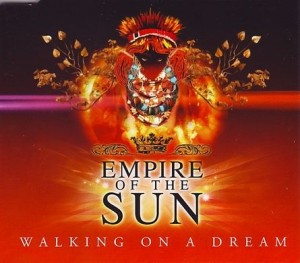 This pleasant mixture of electronic-psychedelia and pop is the product of Australians Luke Steele and Nick Littlemore. There are so many eclectic influences in this album that it would be exhausting to identify them. Three songs, “Walking on a Dream”, “We Are the People” and “Standing on the Shore”, have been chart hits in Anzac/UK territory, but I don’t think they’ve had much impact here in Canada. The biggest chart success, “Walking on a Dream”, was the track that least appealed to me. There’s a retro-late-seventies/early-eighties feel, though the thick layering is more contemporary. Definitely worth checking out, especially if you have some grounding in eighties pop, Adam Ant, or Bowie, but not so much if you instinctively eschewed these for hard-core, punk, or metal during that transitional decade. Some of the orchestral passages, which drift away from the seventies-eighties ambiance, are quite charming. Yes, the band is named after the J. G. Ballard novel. Released in Australia sometime last fall.
Haydn’s “Seven Last Words” for String Quartet
Posted by Phil Paine
on July 2, 2009
No comments
This is one of three different versions that Haydn prepared of a work meant to dramatize readings of “Die sieben letzten Worte unseres Erlösers am Kreuze” (“The Seven Last Words of Our Saviour on the Cross”), known more commonly in English by the more succinct “The Seven Last Words of Christ”. The first version was for full orchestra, meant to be presented in the Cathedral of Cádiz. Haydn himself wrote: “The walls, windows, and pillars of the church were hung with black cloth, and only one large lamp hanging from the center of the roof broke the solemn darkness. At midday, the doors were closed and the ceremony began. After a short service the bishop ascended the pulpit, pronounced the first of the seven words (or sentences) and delivered a discourse thereon. This ended, he left the pulpit and fell to his knees before the altar. The interval was filled by music. The bishop then in like manner pronounced the second word, then the third, and so on, the orchestra following on the conclusion of each discourse.” Read more »