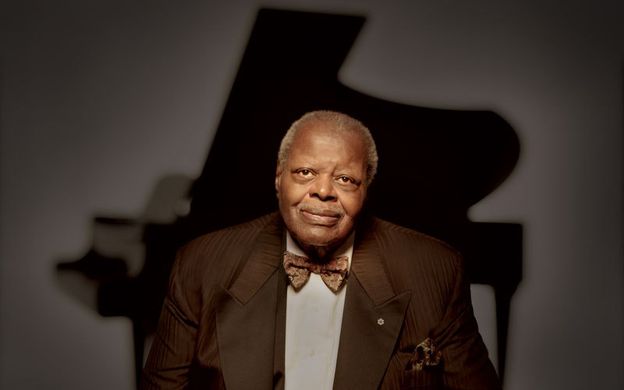
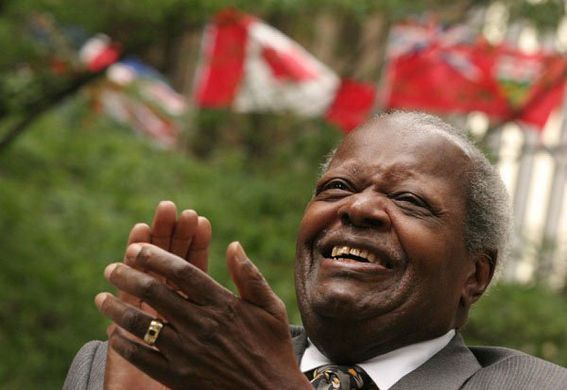
 Christmas in Canada was saddened by the death of Oscar Peterson, who is acknowledged by many as one of the greatest of our countrymen. During his immensely productive lifetime, Oscar exemplified everything that Canadians tend to admire: calm, equilibrium, gentle good humour, an inate and effortless democracy, a complete lack of pomposity and chest-beating, combined with a delight in life and pleasure, and an exact precision in execution. Every flash of fingers on the keyboard was like a Gretsky goal. In other words, he was the complete opposite of what modern consumer culture elevates as virtues. As long as we had him with us, perhaps, we could not be entirely corrupted.
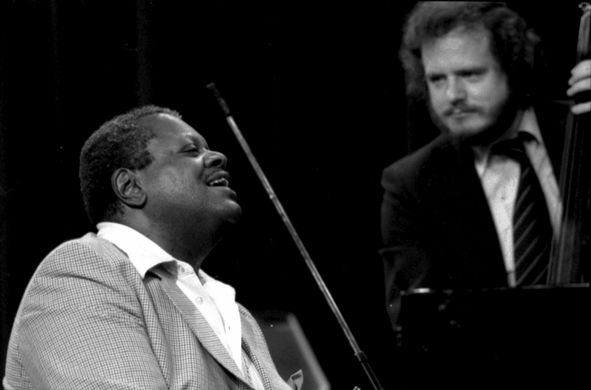
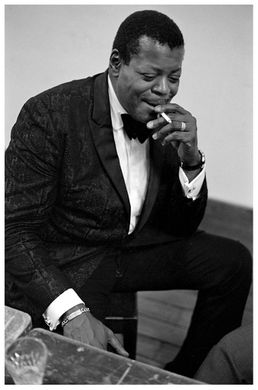 The son of a Canadian Pacific Railway porter, Peterson grew up in the Little Burgundy neighbourhood of Montreal. It was a predominantly black neighbourhood that was filled with music, both classical and jazz. His musical family encouraged him in a classical training, and he studied with Paul de Marky, a student of Franz Liszt. He was psychologically a perfectionist, and practiced four to six hours a day, even in early childhood. By the age of fourteen, his astonishing virtuosity had led him to win a national radio competition. His strongest influences included Art Tatum, Bach, Rachmaninov, Nat “King” Cole, Teddy Wilson, and, most notably, his own sister, a music teacher who nurtured several Canadian jazz stars. He was at his greatest strength in trios, an artform which he perfected with the Ray Brown and Herb Ellis, with Ray Brown and Charlie Smith, and with virtuoso guitarist Joe Pass and Niels-Henning Ørsted Pedersen on bass.
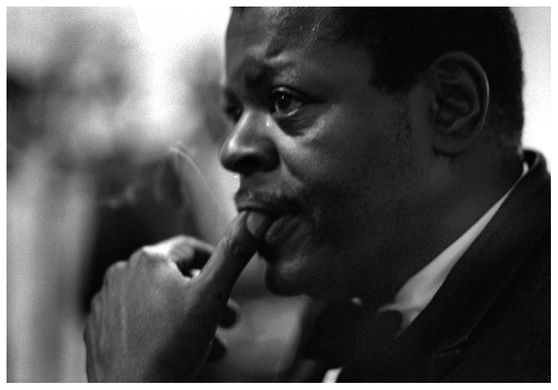
 Peterson’s modest decorum, always part of his particular charm, was exemplified when he was offered the position of Lieutenant Governor of Ontario (in Canada, this position, not the Premiership, is the political Head of State). Prime Minister Jean Chrétien, a lifelong friend, was the instigator of this tribute, but Peterson turned it down. But Chrétien did manage to orchestrate a highly emotional meeting between Peterson and Nelson Mandela. His last years, despite ill-health, were concentrated on teaching. He always insisted that jazz pianists should master Bach as part of their basic training.
 I’m listening again, with pleasure, to L’amour est sans pitié, a 1990 album by the interesting Canadian rocker Jean Leloup. Leloup (“The Wolf”) is a stage name for Jean LeClerc, who was born in Quebec, but spent his childhood in Togo and Algeria, returning home at age fifteen. After an apprenticeship in the Quebec rock scene, he briefly found some national and international success with this album, which has songs in both French and English. He combined rock with rai elements long before anyone else was doing this in North America, and his lyrics are clever. I’m told that a subsequent album, Le Dôme, which was not as widely distributed, is even better. I haven’t found a copy yet. I understand that he subsequently published a philosophical novel called Noir destin que le mien, which I haven’t seen.