(Capra 1936) Mr. Deeds Goes To Town
(McCarey / Marx Brothers) Duck Soup
(Allen 1975) Love and Death Read more »
Category Archives: D - VIEWING - Page 28
FILMS JULY-SEPTEMBER 2006
Posted by Phil Paine
on September 30, 2006
No comments
(Polonsky 1948) Force of Evil
Posted by Phil Paine
on September 23, 2006
No comments
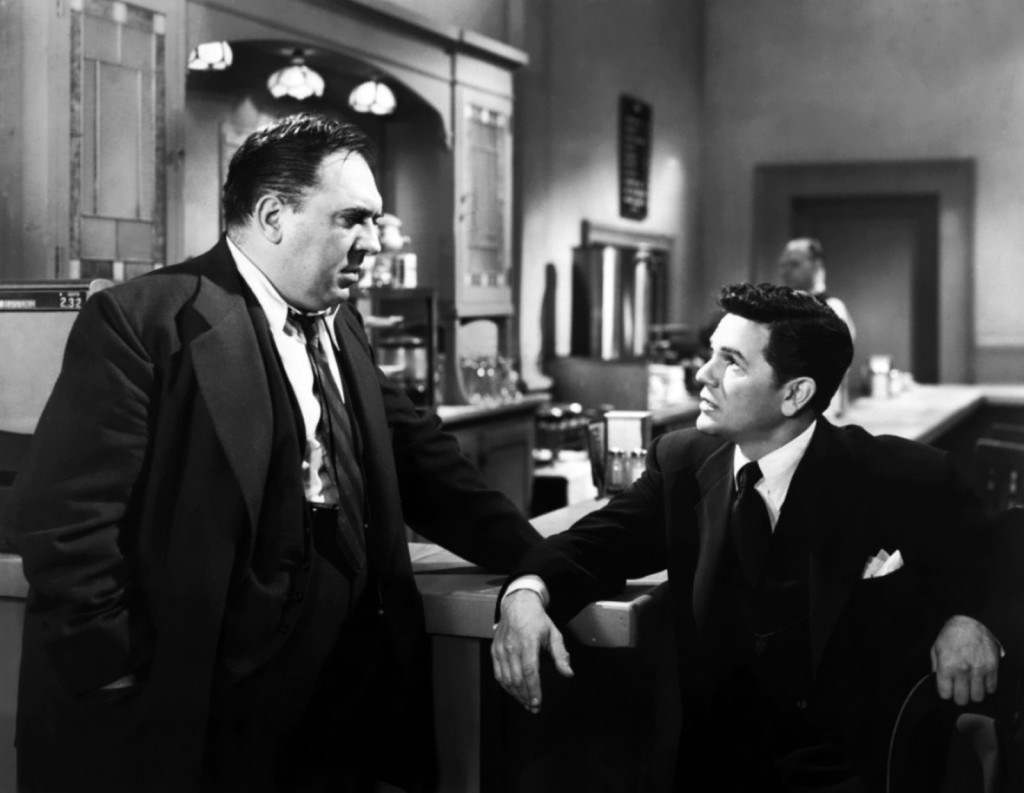 This one is no longer neglected. It is now well-known as a “film noir” gem. IMDB states that “In order to show cinematographer Geprge Barnes how he wanted the film to look, director Abraham Polonsky gave him a book of Edward Hopper’s Third Avenue paintings.” John Garfield is very good in the film, but it is stolen by character actor Thomas Gomez. Pay special attention to the scene where Gomez’s character is “rubbed out” if you want to see script, performance, camera, lighting and editing working in perfect harmony.
(Kubrick 1958) The Killing
Posted by Phil Paine
on September 20, 2006
No comments
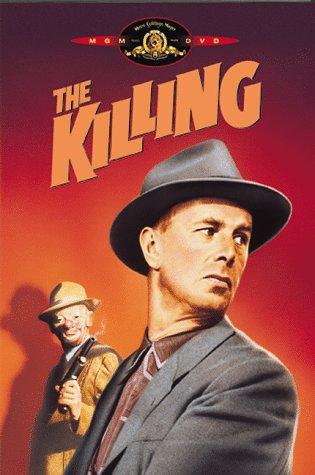 This was Stanley Kubrick’s first feature film, a low budget crime thriller. Apparently the producers thought that its non-linear story sequence would be incomprehensible to an audience, and did not promote it. But there are some very good sequences in this, and the acting, by unknowns and “B” stars (Stirling Hayden, Coleen Gray, Vince Edwards, Elisha Cook), is quite good. Elisha Cook’s performance is particularly impressive.
(Kazan 1955) East of Eden
Posted by Phil Paine
on September 14, 2006
No comments
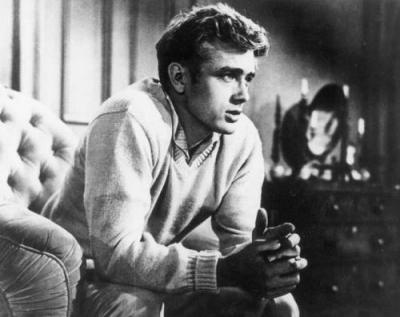 I must admit that James Dean’s performance was as amazing as all the film books say, though it is hard to feel much sympathy for the extremely annoying character he portrays, and hard to see why this character was so admired. Raymond Massey’s subtle performance should not be ignored. The first would not have worked without the other. Elia Kazan’s direction balances intimacy with a sense of grandeur, and manages to make a very talky book into a watchable film.
(Anderson 2004) The Life Aquatic With Steve Zissou
Posted by Phil Paine
on September 9, 2006
No comments
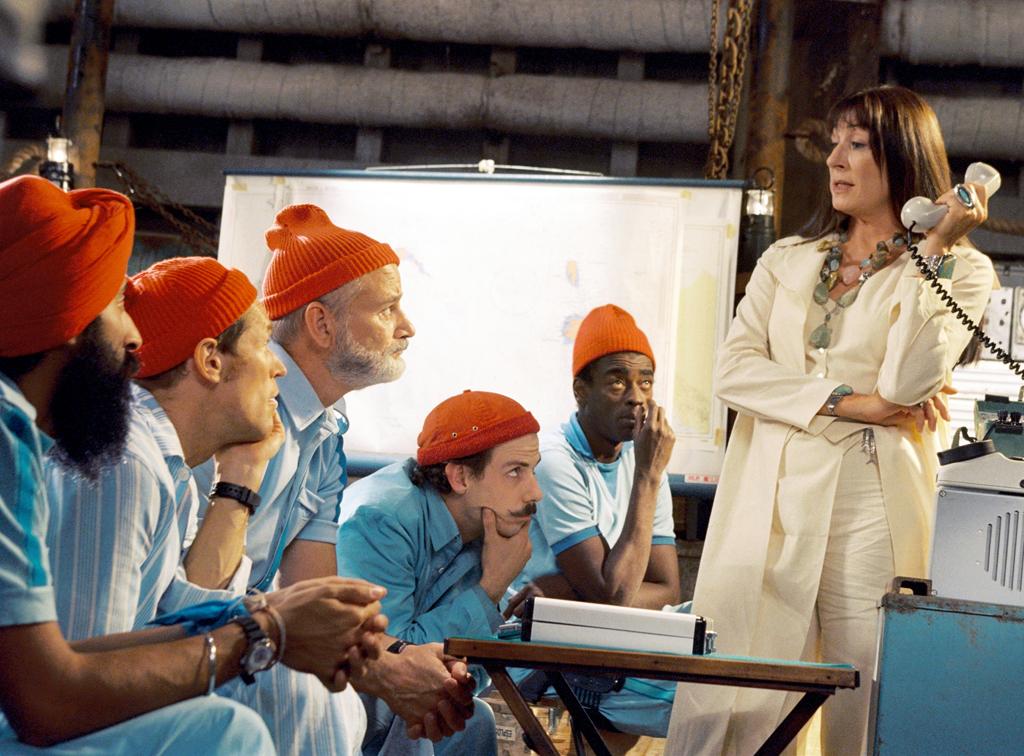 This is another peculiar film starring Bill Murray. He plays Steve Zissou, a famous underwater personality of the Jacques Cousteau type. His muddled relationships with a wife, crew, business associates, former lovers and a possible son is explored against the backdrop of improbable adventures. Everything is made to look unreal, as if a Hergé comic book had been brought to life. The pacing of Wes Anderson’s film is strange, with sudden bursts of activity starting and stopping unexpectedly. I liked the film, mostly because it doesn’t much resemble anything else, and it seems to be sincere. There are some genuine moments of feeling, and some effective satire. But it came and went in the theatres, barely noticed. I was pleased to see a grown-up Bud Cort (Brewster McCloud; Harold and Maude) in a minor role.
(Cocteau 1946) La belle et la bête
Posted by Phil Paine
on September 2, 2006
No comments
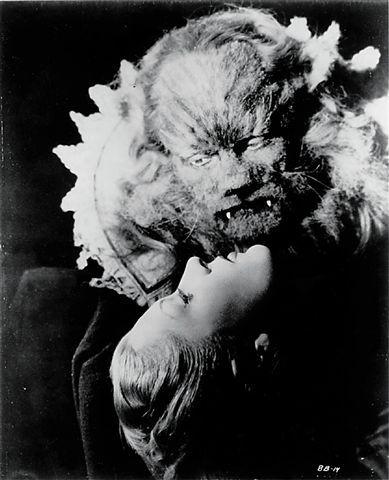 Jean Cocteau’s “Beauty and the Beast” has long been a favourite of film-makers because of its inventive use of effects and its visual charm. But it has a literary strength, as well. It conveys the feeling of folktale. It has the undercurrents of sexual tension, danger, and cruelty that of genuine folklore. Cocteau employs all the traditional folkloric techniques, such as the pattern of three-fold repetition, which a modern story-teller would eschew. He realized that film was closer in techniques and sensibility to the folktale than to the modern novel.
(Hitchcock 1936) The Secret Agent; (Hitchcock 1936) Sabotage
Posted by Phil Paine
on August 29, 2006
No comments
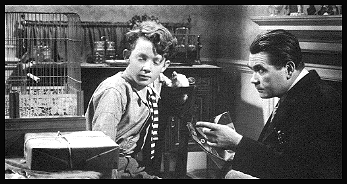
Two fascinating early Hitchcock films both from 1936. The Secret Agent is rather clumsily plotted but has some charm. It is startling to see John Gielgud as a handsome young romantic lead, and Peter Lorre provides an eccentric performance as a sort of generic comical “foreigner”. Sabotage provides a frisson to today’s viewer. The plot involves a terrorist planting a bomb on a London bus. Hitchcock pulls no punches: he builds up a likable child character, then brutally blows him up, halfway through the film. It would have been impossible to do this in an American film until decades later. But audiences did not like it, and Hitchcock later considered it a lapse of judgement. The terrorist in the film employs a liquid explosive of the same type as seems to have been used in the foiled multiple airplane bombing of the last few days.
(Scorcese & Wilson 1995) A Personal Journey With Martin Scorsece Through American Movies
Posted by Phil Paine
on August 26, 2006
No comments
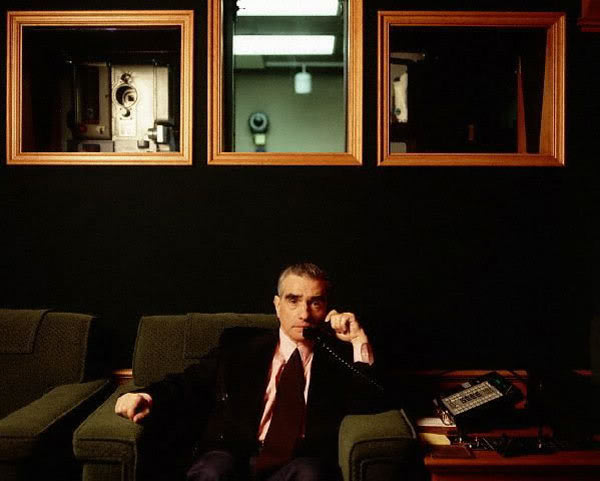 Scorsese is a highly cultured, literate and civilized man, without pretension and remarkably free of snobbery. In this study of the American films that entertained and influenced him, he opens our eyes to the artistry of many Hollywood films ― westerns, gangster films, musicals, and low-budget thrillers ― that film historians and critics would sneer at. This four hours long documentary undermines that obnoxious tendency in all the arts, the glorification of an official canon of “classics”. His analysis of films by forgotten and underrated directors is sharp, but affectionate.
(Polanski 1999) The Ninth Gate
Posted by Phil Paine
on August 20, 2006
No comments
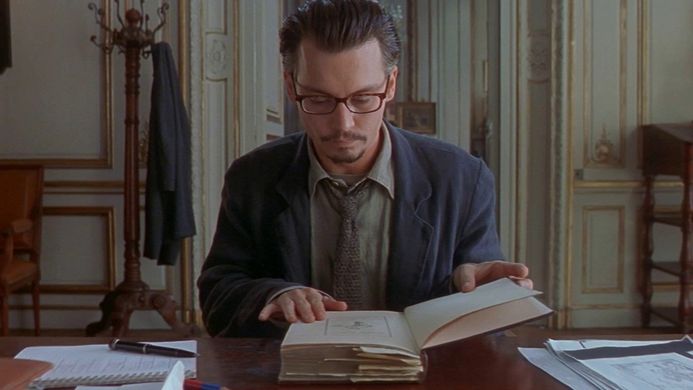 I don’t understand what motivated Polanski to make this muddled supernatural thriller. It’s the sort of thing that works fine in a book, but makes a terrible movie. You can sort of guess what is going on at the end, but doubtless most of the audience left the theatres scratching their heads. A pity, because Johnny Depp’s performance is, as usual, extremely professional. He wrings as much out of the emotionally ambiguous character as he can. Most of us who love books would have been charmed to see an entertaining film in which rare book collectors and dealers are given a fictional life involving murder, intrigue, and hot sex, however inaccurately the technical details of book collecting are presented. But this film doesn’t entertain. Half-way through, one becomes bored with the enigmas, sensing, correctly, that they will not lead to any interesting conclusion.
(Rapper 1944) The Adventures of Mark Twain
Posted by Phil Paine
on August 9, 2006
No comments
While this corny Hollywood biopic is highly inaccurate, Frederick March is absolutely perfect as Twain, able to play him equally well as a young and an 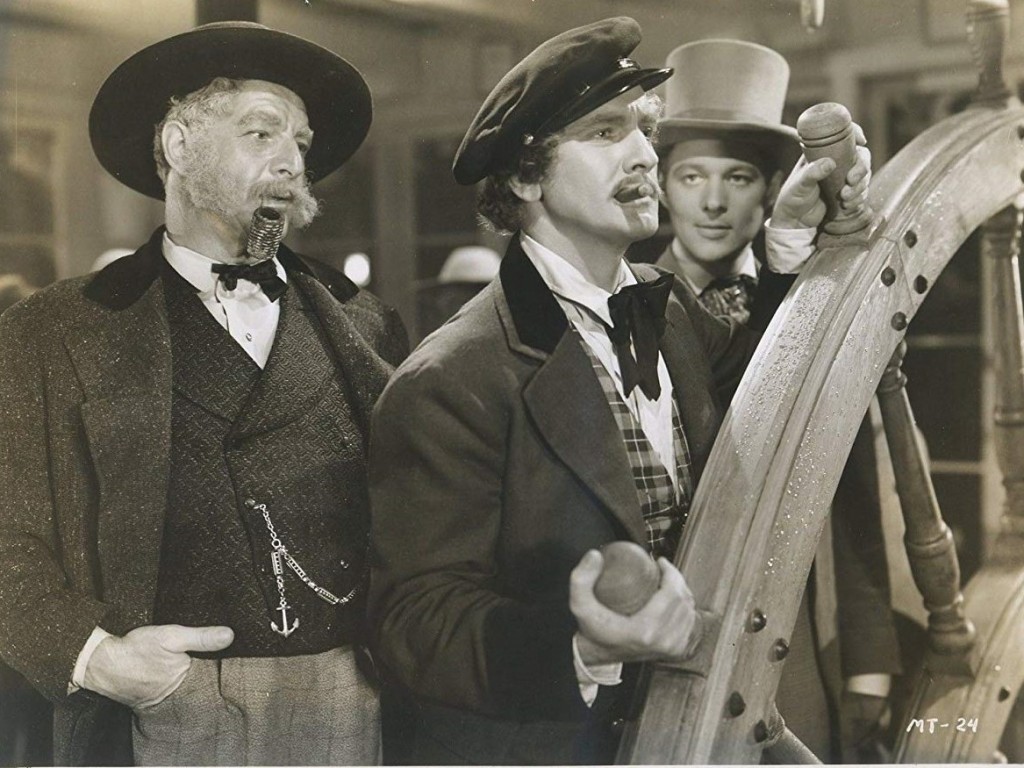 old man. The Max Steiner score is one of his finest.