
Category Archives: A - BLOG - Page 38

Monday, November 24, 2008 — Rangzen or “Middle Way”?
Posted by Phil Paine
on November 24, 2008
No comments
While the world was preoccupied with the financial crisis, the UK Government took advantage of public inattention to write off Tibet. In a little publicized parliamentary statement on October 29, Foreign Secretary David Miliband claimed that Tibet has actually “always been a part of China, and that it has no claim whatsoever to be viewed in anyway differently from the rest of China.” Everyone understands that the elected governments of Europe and North American have never had any serious intention of supporting democratic reform in China, or of giving any tangible support to the conquered and colonialised Tibetan people. But, until now, a nudge-nudge-wink-wink pretense of concern for human rights has been considered good public relations. Apparently, it is no longer de rigeur. Gordon Brown’s government in London seized on the distraction of the global financial meltdown to signal to Beijing that its imperialist conquests are a‑okay, and gave it carte-blanche to proceed with any human rights violations it wants, against its own people, or others. Read more »
Wednesday, November 5, 2008 — Not cool, California
Posted by Phil Paine
on November 5, 2008
No comments
At the very same time that America as a nation chose to enter the 21st Century, the citizens of California have chosen to shame and dishonour themselves. Proposition 8 — a loathsome violation of fundamental moral law, passed in that state. This is the infamous ban on gay marriage. The decision prevents gay citizens of California from exercising their most basic of human rights. It attacks and desecrates the principles of a free society, and equally attacks and desecrates civilization, love and marriage. By this disgusting step, California has aligned itself with the forces of evil, and chosen to duplicate the immoralities of Communist and Taliban dictatorships. Read more »
Wednesday, November 5, 2008 — Way cool
Posted by Phil Paine
on November 5, 2008
No comments
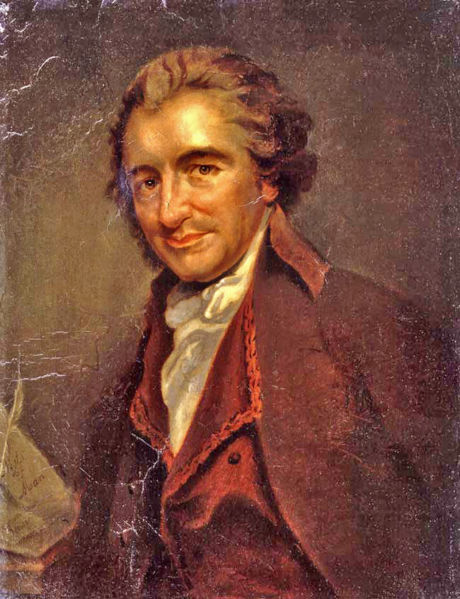
“Way cool, American dudes.…”
Tuesday, November 4, 2008 (just after midnight) — To a Historian
Posted by Phil Paine
on November 4, 2008
No comments
And I did indeed read some Whitman, just at midnight. The first section of Leaves of Grass, “Inscriptions”, which of course starts with “One’s-Self I Sing”, and contains familiar poems such as “In Cabin’d Ships at Sea”, “I Hear America Singing”, “Starting from Paumanok” and the superb “Song of Myself”. But among them I relished one rarely cited, and which I had forgotten: “To a Historian”. To someone like me, who considers himself both a historian and a Science Fiction writer, this one is particularly appropriate.
You who celebrate bygones,
Who have explored the outward, the surfaces of the races,
the life that has exhibited itself,
Who have treated of man as the creature of politics,
aggregates, rulers and priests,
I, habitan of the Alleghanies, treating of him as he is in
himself in his own rights,
Pressing the pulse of the life that has seldom exhibited itself,
(the great pride of man in himself,)
Chanter of Personality, outlining what is yet to be,
I project the history of the future.
Monday, November 3, 2008 — I Have Faith in Americans
Posted by Phil Paine
on November 3, 2008
No comments
Over the last few years, in this website, I’ve taken many critical swipes at American politics and culture. Like most Canadians, I have a somewhat ambivalent and jaundiced attitude towards our southern cousins. Sometimes this can get carried away. When times are at their worst, we tend to respond with the frustrated anger of someone who has learned that his admired brother has turned into a drug addict or been brainwashed by the Moonies. For the times I’ve been intemperate in my criticisms, I duly apologize. But let me say this: I have always admired America, as most Canadians have always admired it, for the obvious reasons. Those reasons can be found in the quintessentially American works of art, music, philosophy and literature that are as much a part of me as the red maple leaves blowing in the street outside my door are part of me. Tomorrow the American people will decide whether their nation is over and done with or will continue and renew itself. If McCain is elected, everyone in the world will know that America is washed up, finished. Nobody will ever take any American seriously again. But it appears that the tide is turning. America seems to be re-discovering itself. I have faith in the American people. Tonight, I’ll read Whitman.
16732. (Terje Anderson) [in blog Daily Kos] Why We Stand in Line to Vote — A Historical Photo Essay [article]
Posted by Phil Paine
on November 3, 2008
No comments
Steve Muhlberger’s blog Muhlberger’s Early History linked to this moving photo article in the Daily Kos. For decades I’ve argued with people who thought they are being clever by not voting, and who subsequently wondered why they woke up in a world controlled by religious wackos and sleazy haters of freedom. Well, it’s because they never showed up at the polls, and the haters of freedom made sure their minions did. The lame logic behind the “don’t vote, it only encourages them” notion was basically that, if your only weapon is a bow and arrow, and you are being hunted by a someone with a gun, you should throw away the bow and arrow. The Democratic Party may not be a shining bastion of reason and freedom, but at the moment, the difference between it and the Republican Party is roughly equivalent to the difference between the post-WWII democracies and the Soviet Union. Remember the nitwits who, back then, liked to talk as if the two were “morally equivalent”? History has turned them into jokes. Right now the last thing in the world a sane human being can claim is that the Democratic and Republican parties are morally equivalent. The contrast is stark and irrefutable. Read more »

Elgar, Mozart and Tchaikovsky at Grace Church On-the-hill
Posted by Phil Paine
on October 28, 2008
No comments
Circumstances have prevented me from attending many live concerts, recently, so I jumped at the chance when Isaac White and his parents kindly invited me to a concert at Grace Church On-the-hill, a handsome Anglican church built in 1912. I arrived early, so I spent an hour wandering around Forest Hill, in Suydam Park, Relmar Gardens, and the Cedarvale ravine before meeting Isaac at the Second Cup. Forest Hill is like a small town embeded in the city, with its own little “main street” and a thick canopy of maples. In the crisp autumn air, the village seems like a Ray Bradbury story re-written by Margaret Atwood. Among the stacks of pumpkins and the drifting red and gold fallen leaves, the Anglican, United Church and Jewish versions of Toronto Respectability compete. No place could seem farther from the woes of the world. The local book store has a strangely morbid display of highly literary titles in its window, with each title accompanied by a card explaining how the author died (did you know that Roland Barthes was run over by a laundry truck?). There are very comfortable public benches on the sidewalks, a rarity in the rest of penny-pinching Toronto. In the ravine, I saw a dog chasing a cat chasing a squirrel chasing a leaf. Read more »