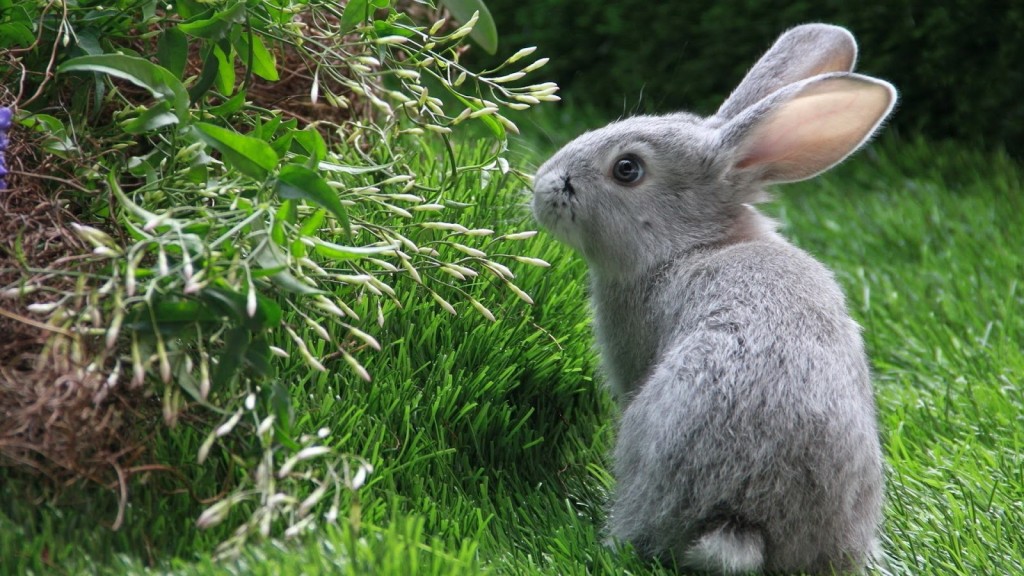
 I could write, tonight, about some of those things that Nature uses to suck you in, like the pleasant sunset I just saw. It was mellow, rather than spectacular. A glowing tangerine sun descending slowly behind the ridge, with clouds daubed onto the sky by some minor 17th century Dutch master. The sort of sunset that makes you feel the sphere of the Earth rolling under your feet, but doesn’t look like it was conjured up by Industrial Light & Magic. But I would rather write about the nastier side of Nature. Read more »
Category Archives: A - BLOG - Page 40
Monday, July 28, 2008 — Red In Tooth and Claw
Posted by Phil Paine
on July 28, 2008
No comments
Thursday, July 24, 2008 — Rainbow and Tourtière
Posted by Phil Paine
on July 24, 2008
No comments
 I took the dogs out after a late afternoon shower, and there was a quite spectacular rainbow, contrasted against the retreating storm clouds. I let the critters romp in the wet grass and clover while soaking in the symphonie fantastique of smells the rain had brought out.
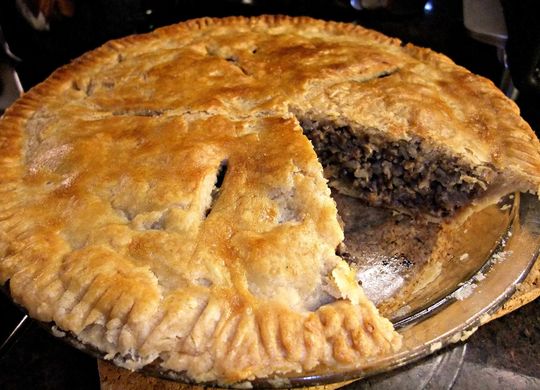
So when I returned to the house, I felt I deserved a feast. The proper ingredients were at hand. I put on some Haydn, and dined on steamed beets and cauliflower, and a freshly made tourtière. Tourtière is a meat pie, usually game or beef or pork, served by French Canadian families throughout throughout the country, and occasionally making an appearance in New England or Minnesota. There are hundreds of variants (that of the Saguenay region being particularly bizarre). In some places it is made “à l’écossaise”, with oatmeal added, and sometimes “à l’irlandaise”, with potatoes added, where Scottish and Irish influence made their mark. It is widely said to have been devised to cook passenger pigeons — which flew across North America in great black clouds of millions before they became extinct. However, I suspect that this was merely one convenient filling for an all-purpose pie brought by Canada’s earliest Norman and Breton settlers. In Canada, meat and game were staples for the independent habitants, though back in France, such dishes would have been only for the rich. In France, today, the word tourtière means a shallow pan for making pies, though I don’t think anything much like the Canadian dish exists there now. It doubtless descends from the Middle Ages, since the meat is slowly simmered with onions, sage, rosemary, savory, nutmeg, cinnamon, cloves, allspice and plenty of black pepper before it is enclosed in a thick, flaky pie crust… a very medieval style of cooking. True to this archaic pattern, it should be served with something sweet on the side: pickled beets, a sweet relish, or even a chutney. In this case, I had some beets handy. At a Christmas réveillon, it would be served as a desert course, competing with the apple and blueberry pies. A documented recipe from the year 1611 is virtually identical to the one used in my family.
Do not, under any circumstances, imagine that a frozen tourtière purchased in a supermarket gives even a hint of this delicacy. Those are fraudulant abominations, no matter how folksy-looking the package.
Saturday, June 21, 2008 — Olympic Spirit
Posted by Phil Paine
on July 21, 2008
No comments
The Communist Party in Beijing is broadcasting carefully staged fantasy images of “celebrations” in Lhasa, as the Olympic Flame makes it’s appearance in Tibet. In reality, the city is locked down. All traffic is stopped, Tibetans are not allowed to walk about without special permits, and a huge foreign army patrols the streets. Tanks, guns, beating batons are everywhere. Near the Potala, a handful of hand-picked stooges are present to be photographed cheering.
This is the reality of the “Olympic Spirit” — at least the version of it approved in the Age of Corporatism and Dictatorship. If I hear even one other person using that sickening phrase, I will turn my back on them and walk away. There is no sense talking to people who live in a world of lies, and abandon their fellow human beings to slavery, then spew out propaganda garbage claiming they represent noble values.
Saturday, July 20, 2008 — Blueberries
Posted by Phil Paine
on July 20, 2008
No comments
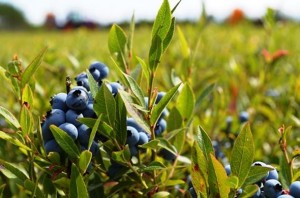 For the next three weeks, I’ll be at my friends, Steve and Ruta Muhlberger, minding their farm while they’re away. A pleasant atmosphere, and not much work involved, as there are only three horses, two dogs and some cats to care for, nowadays. And the fields are so lush from rain that the horses can pretty much fend for themselves. There is also an infinite supply of blueberries and raspberries, unless the bears vacuum them up before I can pick them. Fresh berries, fresh eggs, milk straight from the cow. Sunlight, starry skies, crisp clean air. Boy, do I ever need a dose of this stuff. I have a small amount of contractual work to do, while I’m here, but for the most part I’ll be working on my own stuff ― a rare and blessed luxury. Read more »
Thursday, June 19, 2008 — Omlowen dha bos!
Posted by Phil Paine
on July 19, 2008
No comments
While I’ve been silenced by the demands of work, my friend Steve Muhlberger has become more voluble, with longer and more detailed blog entries, inspired by his European travels. These can be read at Muhlberger’s Early History. Among them are items on Latvia, Medieval robots, the enchanting Cornish landscape, the truth about the Cornish pastie, and a particularly fine one on the legacy of Cornish tin mines. The discussion of the distinctive pride of the miners reminded me of a medieval mining town of Kutná Hora I visited in Czech Republic. There, the gothic Church of St. Barbara (Chrám svaté Barbory) is decorated with wonderful frescoes that depict the daily life and work of miners and minters. The miners had considerable political and social power and independence, and expressed it in this extraordinary art. Read more »
Tuesday, May 20, 2008 — Getting Teff and Getting Tough
Posted by Phil Paine
on May 20, 2008
No comments
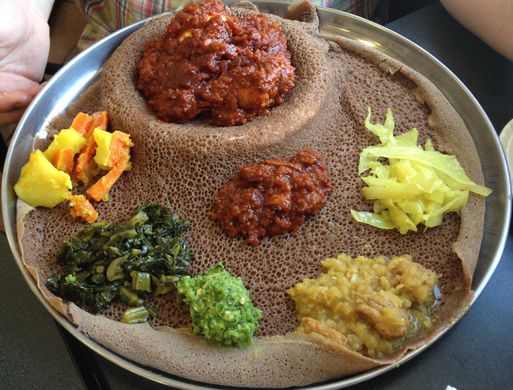 Canadians are noticing a dramatic rise in food prices. The price of rice has doubled in a few months, and products made of wheat are about fifty percent more expensive. I live on a very tight budget, so it affects me directly. Not as directly, of course, as the millions in unluckier countries who will experience food shortages.
My particular survival strategy depends on circumventing global state-corporate agribusiness. Instead of serving my stews, chilis, and vegetables on rice, I am regularly buying njeera (or injera, enjira, etc.) at the local Ethiopian/Somali shops. There are several bakeries in Toronto that produce the delicious East African staple food, which, since it lies outside of the control of global agricultural collectivism, has not significantly risen in price. Not only does it taste delightful, but it is highly nutritious. And the dishes I put on the njeera? They are made, as much as I can manage, from seasonal local produce. Given a choice between paying money to an honest Canadian farmer and paying money to some loathsome global gangster who hires death squads to terrorize serfs, I know what choice is both moral and patriotic. Read more »
Wednesday, May 14, 2008 — Steven Muhlberger on Canadian Historians; Romeo Dallaire
Posted by Phil Paine
on May 14, 2008
No comments
Two interesting items over at Muhlberger’s Early History. One discusses the peculiar psychology of Canadian historians who can’t quite make themselves believe that Canadian history is worthy of being discussed in a world context, and, react to the thought with the titters of Victorian spinsters spotting a naked bottom. [ The French Revolution and Canada — laughable?] .Then he discusses Senator Romeo Dallaire’s comments. blasting our government for its hypocritical and immoral policy regarding Omar Khadar, the Canadian child soldier long held at Gitmo against all standards of law and decency. [Rule of law and human rights — only when convenie…] Spot on. I, too, looked on with disgust as our morally puny Secretary of State, Jason Kenney (Conservative) gave a fatuous lecture on the nature of evil — to a man whose personal knowledge of genocide, and whose ethical credentials stand as far above him as the Hubble Telescope stands above an ant on the shore of the Dead Sea. When Mr. Kenney spouted the predictable “the end justifies the means” claptrap beloved by scoundrels, Dallaire looked him straight in the eye and said: “If you want a black and white, and I’m only too prepared to give it to you, absolutely. You’re either with the law or now with the law. You’re either guilty or you’re not.”
Monday, May 12, 2008 — What Is Progress? What Is Progressive?
Posted by Phil Paine
on May 12, 2008
No comments
In a speech, today, Canada’s Prime Minister, Stephen Harper outlined his plan to force our country down the same path to bankruptcy and self-destruction that the United States has relentlessly pursued over the last generation. It’s first purpose is to destroy our domestic industry (especially in Ontario) and reduce us to abject submission to “Big Energy”, the global communism of oil sheiks, dictators and multinational gangsters. It’s secondary purpose is to escalate economically paralyzing military spending, and make us even more available as mercenary canon fodder to our global masters. Canada’s industrial base is rapidly disintegrating. Just today, the closure of another major industrial facility in Ontario was announced. Canada’s currently “strong” economy is being propped up by oil and gas production, and prosperity is confined to the exportable resource regions. Oil, gas, mining. The Conservative regime is forcing us back into the pathetic “hewers of wood and drawers of water” status that it took us a century of struggle to free ourselves from. The decade of balanced budgets and surpluses generated by Liberal governments has been canceled out ― pillaged by the Conservative regime ― and we will soon be plunging into debt. This is the result of importing the obnoxious, freedom-hating Conservative ideology that has crippled and dishonoured the United States ― an ideology that would far more accurately be named “Neo-Communism”. Read more »