19364. (George MacDonald Fraser) Flashman
19365. (Kenneth Pomeranz) The Making of a Hinterland ― State, Society, and Economy in
. . . . . . Inland North China, 1853–1937
19366. (Anthony H. Birch) The Concepts & Theories of Modern Democracy Read more »
Category Archives: B - READING - Page 22
READING – FEBRUARY 2011
Posted by Phil Paine
on February 28, 2011
No comments
READING – JANUARY 2011
Posted by Phil Paine
on January 31, 2011
No comments
19320. (Jules Verne) Cinq Semaines en ballon
19321. (Steve Muhlberger) [in blog Muhlberger’s Early History] Agora (2009) [film review]
19322. (Francis Spufford) Red Plenty Read more »
Ordering The Secret History of Democracy online
Posted by Phil Paine
on January 17, 2011
No comments
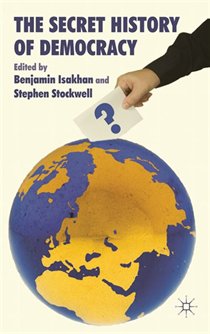
It’s a bit pricey for most people I know, but if you’re in a position to recommend it to a library, faculty, or institution, do so. In addition to chapters by myself and old friend Steven Muhlberger, the contributors are Benjamin Isakhan, Stephen Stockwell, John Keane, Larissa Behrendt, Pauline Keating, Mohamad Abdalla & Halim Rane, Patricia Pires Boulhosa, Luisa Gandolfo, I.Kissa, and P.Fry.
Pre-orders in Canada from Chapters-Indigo online (available April 12)
in the U.S.A from Amazon.com or Barnes & Noble (available April 12)
in the U.K. and Europe from Amazon.uk (available February 11)
in Australia from EmporiumBooks.com.au (available March 11)
“The thought-provoking essays gathered in The Secret History of Democracy provide convincing evidence that democratic mechanisms have been invented many times and in many places, including times and places neglected in common accounts. This collection is a sobering reminder that democratic practices have often been succeeded by something else. But one also takes away a sense of the dynamic character of democratic history and the endless diversity of practices with some reasonable claim to embody democratic principles. As growing numbers wonder about what sorts of political institutions make sense in the face of the enormous problems confronting the twenty-first century, this demonstration of the long human history of political creativity gives some reason for hope.”
-John Markoff
“A fascinating, thought-provoking and well-informed survey of little-known “roots of democracy” and “proto-democratic” systems and movements across the globe , from ancient and “primitive” to modern societies. An eye-opener that forces us to differentiate more carefully and to rethink the history of democracy.”
- Kurt Raaflaub
“This exciting book surely enlivens and enriches our debate on democracy and its future by digging afresh oft-forgotten, yet most enlightening democratic experiences found in human history. ”
- Takashi Inoguchi
READING – DECEMBER 2010
Posted by Phil Paine
on December 31, 2010
No comments
19301. (Theodore Sturgeon) Some of Your Blood
19303. (Steve Muhlberger) [in blog Muhlberger’s Early History] Review of Jousting in
. . . . . Medieval and Renaissance Iberia by Noel Fallows
19303. (A. Merritt) The Ship of Ishtar Read more »
READING – NOVEMBER 2010
Posted by Phil Paine
on November 30, 2010
No comments
19281. (Walter Scott) Waverley, or ‘Tis Sixty Years Hence
19282. (Charles L. Harness) Lunar Justice
19283. (Marie Corelli) A Romance of Two Worlds
19284. (Thomas Burnett Swann) How Are the Mighty Fallen Read more »
The Sensual Fantasies of Thomas Burnett Swann
Posted by Phil Paine
on November 15, 2010
No comments
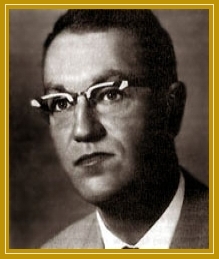 Back in 1987, I read Thomas Burnett Swann’s Day of the Minotaur, and enjoyed it, but did not follow through with any more of his books until recent weeks. Now, reading four more of his novels gives me a better appreciation of this odd fantasy writer, who descends more from the Pre-Raphaelites, Lord Dunsany, and James Branch Cabell than the more usual fantasist’s patrimony of Tolkien and Howard. Read more »
19281. (Walter Scott) Waverley, or ‘Tis Sixty Years Hence
Posted by Phil Paine
on November 9, 2010
No comments
When Walter Scott published the first of his novels, Waverley, in 1814, he was already well-known as a poet. The book was so spectacularly successful that it launched him on a career as a novelist known in every corner of the world. His influence in 19th Century Canada, for instance, was such that nobody with pretention to education was without a set of “Waverley novels”. When I worked on various Ontario farms, I often saw them in Victorian-era farmhouses. I found a complete set in a barn, for which I negotiated payment in hay baling. That set (gorgeously bound) is long gone, but now I have another, acquired in a small Ontario town. Many of the scenes and characters of Scott’s novels are preserved in Toronto street names. Anyone familiar with Canadian history knows that in the 19th Century, its literary icons were, in descending order of importance: the Bible, Robby Burns*, Shakespeare, Scott, and Dickens. Read more »
Tuesday, November 2, 2010 — The Secret History of Democracy: Publication Dates
Posted by Phil Paine
on November 2, 2010
No comments
My long-time friend and colleague, Steve Muhlberger and I both have chapters in an upcoming book which may interest readers of this blog. The book is The Secret History of Democracy, edited by Benjamin Isakhan and Steven Stockwell, and published by Palgrave Macmillan. Read more »
READING – OCTOBER 2010
Posted by Phil Paine
on October 31, 2010
No comments
19235. (James Boswell) Boswell’s London Journal, 1762–1763 [ed. F. A. Pottle]
19236. (Eric Linklater) White-Maa’s Saga
19237. [2] (Charles Darwin) The Origin of Species by Means of Natural Selection
19238. (Steve Kingstone) How President Lula Changed Brazil [article]
19239. (Isaac White) Review of Scott Pilgrim vs. the World [film review]
19240. (Thomas Burnett Swann) The Minikins of Yam
Read more »
READING – SEPTEMBER 2010
Posted by Phil Paine
on September 30, 2010
No comments
19035. (Jean-Pierre Changeux) The Physiology of Truth: Neuroscience and Human Knowledge
19036. (Jan Harding) Henge Monuments of the Scottish Isles
19037. (Kevin J. Edwards) People, Environmental Impacts, and the Changing Landscapes of
. . . . . Neolithic and Bronze Age Times [article]
Read more »