18957. (Ronald Firbank) Concerning the Eccentricities of Cardinal Pirelli
18958. (Vernon L. Scarborough) The Flow of Power ― Ancient Water Systems and
. . . . . Landscapes
18959. (Jason Peters) [in blog Front Porch Republic] Beer. It’s What’s For Dinner [article] Read more »
Category Archives: B - READING - Page 23
READING – AUGUST 2010
Posted by Phil Paine
on August 31, 2010
No comments
18976. (Peter M. Edwell) Between Rome and Persia
Posted by Phil Paine
on August 14, 2010
No comments
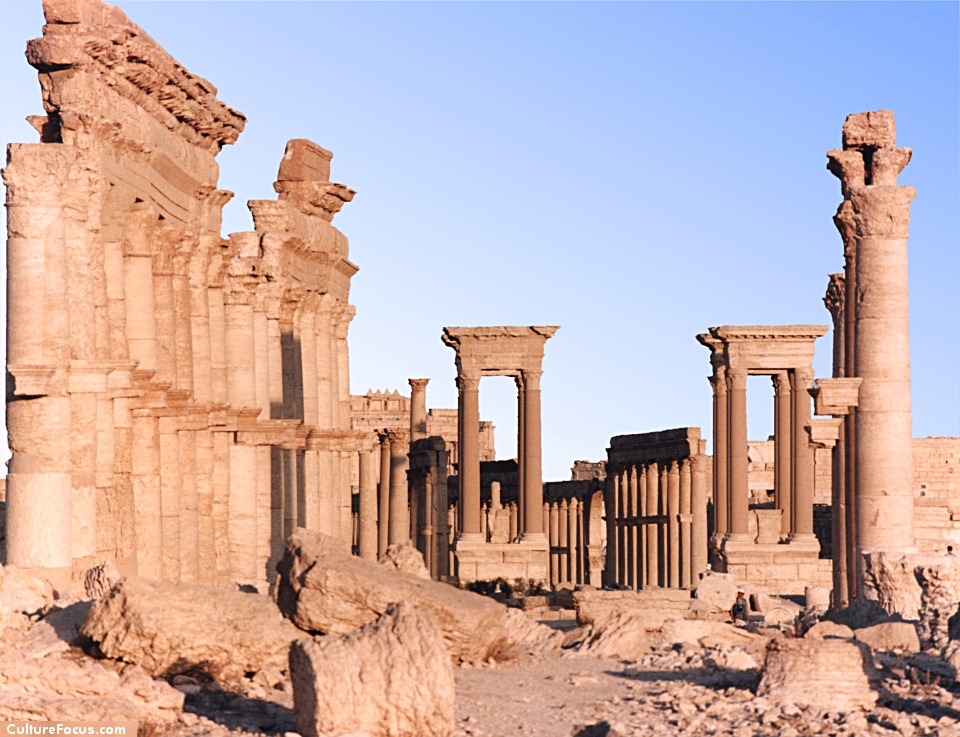 This is a straightforward history, largely military and administrative in orientation, of two cities, Palmyra and Dura Europus, which acted as buffer states and trading centers between the Roman and Parthian empires. Both flourished in the second and third centuries A.D., growing wealthy on trade between the Mediterranean and the Persian Gulf. The Palmyrenes maintained a crack army of archers, who specialized in protecting caravans. The safety they provided made their city extremely wealthy. What interests me is that Palmyra had a fully operational boule and demos on the classical Greek model. Read more »
READING – JULY 2010
Posted by Phil Paine
on July 31, 2010
No comments
18882. (Keith Laumer) Worlds of the Imperium
18883. (Elliot Aronson with Joshua Aronson) The Social Animal [10th edition]
18884. (O. Neugebauer) The Exact Sciences in Antiquity
18885. (Bruce Cronin) Community Under Anarchy: Transnational Identity and the Evolution
. . . . . of Cooperation
Read more »
READING – JUNE 2010
Posted by Phil Paine
on June 30, 2010
No comments
18806. (Steven Muhlberger) Deeds of Arms ― Formal Combats in the Late Fourteenth Century
18807. (Richard A. Schweder, Manamohan Mahapatra, & Joan G. Miller) Culture and Moral
. . . . . Development [article]
18808. (John Lewis Gaddis) The Landscape of History ― How Historians Map the Past Read more »
18806. (Steven Muhlberger) Deeds of Arms ― Formal Combats in the Late Fourteenth Century
Posted by Phil Paine
on June 2, 2010
No comments
Steve has outdone himself with this parvum opus. It’s an exemplary work of focused history, with everything there in the right quantities and proportions. Medieval western Europe was a military society in which tournaments — group or single combat done by rules and for the display of prowess — had a profound significance, affecting far more than their immediate participants. Success in deeds of arms could bring more than mere celebrity. In a society where aristocracy justified itself primarily by courage in battle, it was the key to upward mobility and power. Learning how this kind of combat nullo interveniente odio (without rancor) was done and celebrated gives us insight into how medieval society worked. The Middle Ages, especially its upper reaches of power, smelled of blood, sweat, dung and horses. This book is a fine antidote to those that retrofit the era with a kind of abstract geopolitical aura, something like an EU Barosso Comission report delivered by board members unaccountably wearing hose and plate armor. Those who have only a passing interest in chivalry or deeds of arms will find this book refreshingly compact, clear and informative. Those with a deeper interest will not find it wanting in depth of scholarship and understanding.
READING – MAY 2010
Posted by Phil Paine
on May 31, 2010
No comments
18771. [2] (Mark Twain) Tom Sawyer
18772. (Osbert Sitwell) Introduction to Five Novels by Ronald Firbank
18773. (Francis Grose) Ordinances of Richard II from Military antiquities [tr. Will McLean] Read more »
READING – APRIL 2010
Posted by Phil Paine
on April 30, 2010
No comments
18696. (Steven Muhlberger) Jousts and Tournaments ― Charny and the Rules for Chivalric
. . . . . Sport in Fourteenth-Century France
18697. (Geoffroi de Charny) Demands pour la joute, le tournoi, et la guerre [manuscripts
. . . . . edited by Michael Anthony Taylor, tr. Steven Muhlberger]
18698. (C. William Harrison) Calling Dr. Death [story] Read more »
Jousts and Tournaments
Posted by Phil Paine
on April 4, 2010
No comments
18696. (Steven Muhlberger) Jousts and Tournaments ― Charny and the Rules for Chivalric Sport in Fourteenth-Century France
18697. (Geoffroi de Charny) Demands pour la joute, le tournoi, et la guerre [manuscripts edited by Michael Anthony Taylor, tr. Steven Muhlberger]
Rather than bug Steve for a copy, I put myself on a library waiting list for his study of the rules of jousts and tournaments of the Middle Ages. I was on the list for over a year, before it turned up, which shows that there is a significant audience for what appears, at first, to be an obscure topic. But I can see why, as the subject is dealt with in a logical, orderly fashion, and in his usual fine prose style. I particularly enjoyed the chapter in which he draws on his knowledge of the modern horsemanship scene to help imagine what the spotty historical record does not tell us. The original text of Geoffroi de Charny’s “Questions” in Middle French is included, with a translation by Steve.
READING – MARCH 2010
Posted by Phil Paine
on March 30, 2010
No comments
18642. (P. F. de Moraes Farias) Arabic Medieval Inscriptions from the Republic of Mali: Epigraphy,
. . . . . Chronicles, and Songhai-Tuāreg History
18643. (Jacques Hureiki) Essai sur les origines des Touaregs ― herméneutique culturelle des
. . . . . Touaregs de la région de Tombouctou
18644. (Anthony Bourdain) Kitchen Confidential Read more »
Sunday, March 28, 2010 — A Lay of Ancient Toronto, Part 2
Posted by Phil Paine
on March 28, 2010
No comments
When I received Dorothea’s book [see previous blog entry] from the University of Toronto’s compact storage facility.[1] I was rewarded in a way that I could not have guessed. In fact, the coincidence involved is so extreme that I hesitate to relate it, for fear of being thought a hoaxer. Read more »