String Quartet No. 1 in A major, Op. 2 was Dvořák’s second chamber work. He was only 21 when he completed it, in 1862. It was not performed, however, until he revised it in 1888. The revisions seem to have been confined to some cuts to make it “leaner”, so it is probably representative of his musical thinking and abilities at that early stage. If that’s the case, then his genius shines out. It isn’t a great work, especially when compared to the divine quartets of his maturity, but it shows many of his signature qualities: the playfulness, effortless melodic invention, and the ability to communicate beauty and even sweetness without cloying. The first of the four movements has a catchy melody, but develops it very conventionally. It’s in the third movement, Allegro scherzando, that the future Dvořák is most evident. Its trio section could have been composed by no one else. The animato of the final movement is vigorous and confident. This first quartet can be played strictly for the pleasure it affords, not just for its presentiments of greatness. My best copy is brilliantly performed by the Kvarteto města Prahy.
Category Archives: C - LISTENING - Page 19
Naxi Music from Lijiang
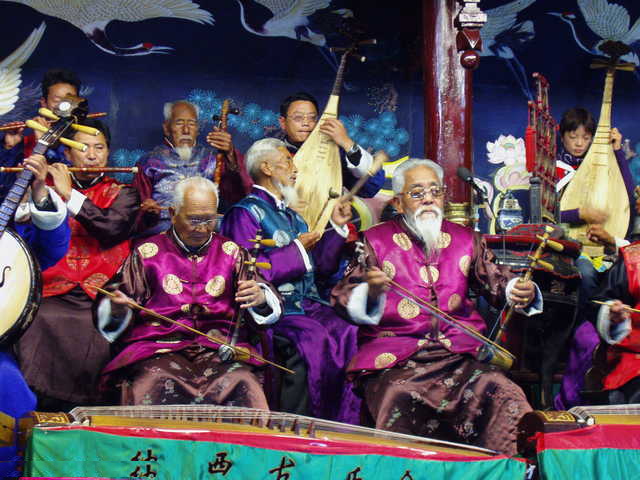
Dayan Ancient Music Association performing
Of all the provinces of China, it is Yunnan that has fascinated me most. Remote and mountainous, and forgotten by the world in the last few centuries, it once played a critical role in world history by being the first region to transmit major cultural and technological influences between East Asia and South Asia. The oldest known hominid fossils of East Asia were found there. Before the famed Silk Road was established in the north, trade and ideas wormed their way through the precipitous mountain passes of Yunnan, across northern Burma, then over the Naga hills to the valley of the Brahmaputra in India. Rice cultivation probably entered India by this route in prehistoric times, and possibly the technology of casting bronze. Some magnificent bronze art survives from the 3rd Century BCE. From that time to the Yuan era, though sometimes controlled by Tibetan or Han Chinese empires, Yunnan was most often the center of its own kingdoms, such as Dian [滇國], Nangzhao [南诏], and Dali [大理国]. A melting pot of peoples spoke various Tibeto-Burman, Tai-Kadai, and Miao-Yao languages. The historically important Bai language’s classification is disputed. These aboriginal languages survive and thrive despite the influx of Chinese speakers to the region, as do many ancient traditions. Shamanism, Taoism, Buddhism, Christianity, and even Islam have been influences on local beliefs. A synchretistic religion called Dongba, related in some way to the shamanistic Bön faith that preceded Buddhism in Tibet, is still practiced. It focuses significantly on the sacredness of trees, and once provided the spiritual basis for careful (and sustainable) practices in logging. The Communist Party attempted to crush the faith, not only for ideological reasons, but to facilitate clear-cutting and destructive exploitation of the forests. The religion, however, survives. Read more »
First-time listening for August, 2013
22333. (School of Ecclesiastic Music, Mt. Lebanon) The Divine Byzantine Liturgy of the
. . . . . Antiochian Holy Church
22334. (Hector Berlioz) Te Deum, Op.22
22335. (tUnE-yArDs) BiRd-BrAiNs
Read more »
First-time listening for July, 2013
Lullaby For the Moon — Japanese Music for Koto and Shakuhachi:
. . . . 22292. (Hozan Yamamoto & Utazumi Kunishige) Variations on Komoriuta Lullaby
. . . . 22293. (Tozan Hara & Tozan Tanno) Toge-Hachi-Ri [8 Miles through a Mountain Pass]
. . . . 22294. (Hozan Yamamoto & Utazumi Kunishige) Kuon No Hikari [Eternal Lights]
Read more »
Tame Impala
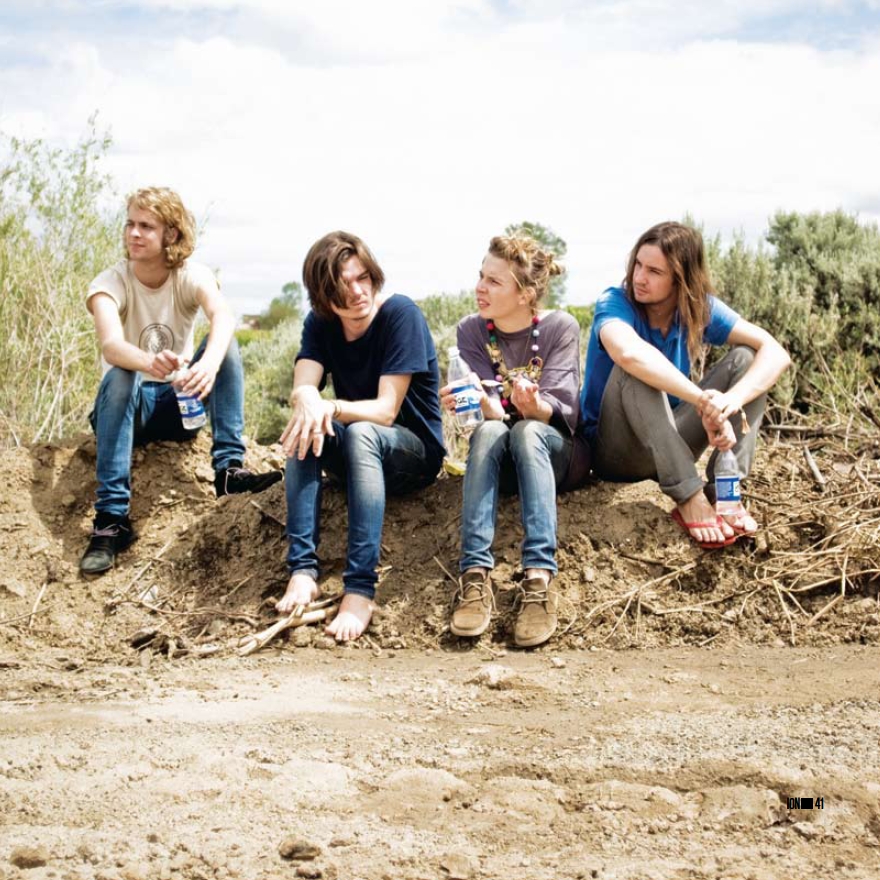 I like this band from Perth, Western Australia, which produces a clever update of sixties psychedelia. I possess their first EP, and first two studio albums, Innerspeaker (2010) and Lonerism (2011). The psychedelic sound is now much misunderstood — listeners today confuse it with glam-rock, early heavy metal, and other trends which were distinct back in the sixties and seventies. They even look like psychedelic bands actually did, rather than the cartoon hippies imagined by the media. I think this band comes much closer to the introspective, dreamlike quality that musicians back then achieved after dropping acid while camping in the desert, or some such inspiration. It’s a little more calculated and technologically hip, but it’s at least in the same ballpark. There are plenty of memorable songs, with distinct mood and character, in their corpus, so far: “Skeleton Tiger” and “Half Full of Glass” on the EP; “Solitude Is Bliss”, “Lucidity”, “Expectation” and “Why Won’t You Make Up Your Mind?” on Innerspeaker; “Elephant” and “Feels Like We Only Go Backwards” on Lonerism. All three records are good, but Innerspeaker appeals to me most. I can’t listen to it without feeling like I’m waking up on an empty Western Australia surfing beach, after a night of hard partying, with a philosophical twinkle in my eye. Lonerism is gloomier, with Aussie innocence shifting into European artfulness.
Umekichi — The Voice of the Geisha
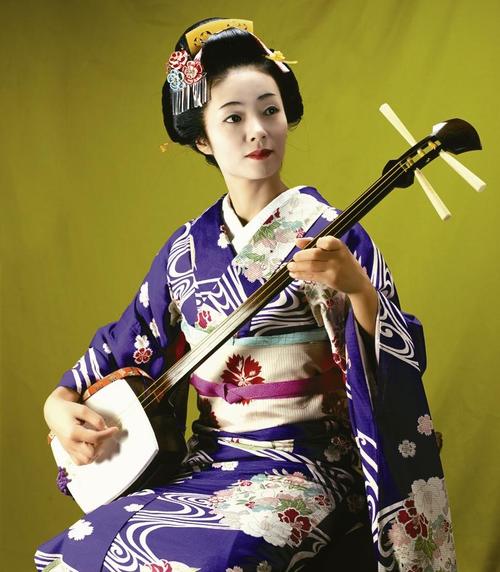 I listened to this album while watching one of Yasujirō Ozu’s silent films, Passing Fancy [出来ごころ; Dekigokoro] (1933), after a massive sushi lunch. Umekichi is the performing name of Okayama Kurashiki, a pop/folk musician who sings and plays shamisen. It seems that she pokes fun at both Japan’s ephemeral pop music and the classical tradition by effortlessly blending the two. This, apparently, has not been taken well by Japanese folklorists, for whom every ditty about cherry blossoms is sanctified. The playful sarcasm comes across to me in her voice, though of course I can’t understand a word of it. For me, it’s just one more tentative little foray into Japan’s immensely complex and thoroughly confusing popular culture.
First-time listening for June, 2013
22269. (James Brown) Greatest Hits
22270. (Drowning Pool) Desensitized
22271. (Philip Glass & Allen Ginsberg) Hydrogen Jukebox
Read more »
Bombay Bicycle Club
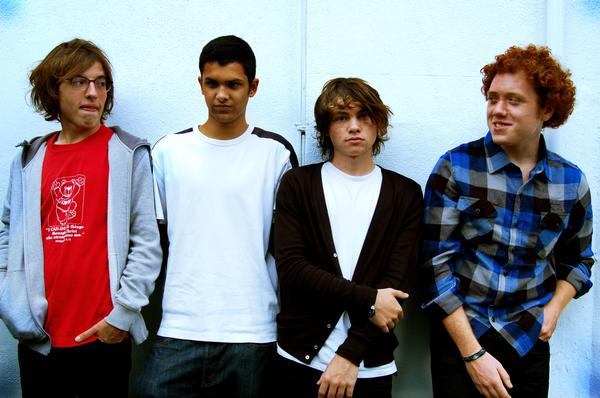
The first I heard of Bombay Bicycle Club was the song “How Can You Swallow So Much Sleep?” from their third album A Different Kind of Fix (2011), which got some play here in Canada. But other songs I heard, from an earlier album, didn’t sound very similar, and I didn’t connect them in my head until, searching for the EP version of “How Can You…”, I acquired all three of their albums. We are in an age in which musicians are much less tribal than they used to be. The bands that make the strongest impression today tend to be eclectic, drawing on many sources for their style, and changing their style as the mood suits them. They cannot easily be classified. This London band exemplifies the trend. A Different Kind of Fix is Read more »
First-time listening for May, 2013
22259. (George Frederick Händel) Trio Sonata in F for 2 Recorders & Cello
22260. (Dandy Warhols) Dandys Rule, OK
22261. (Screaming Trees) Clairvoyance
Read more »
Ponemah Chippewa Singers: Chippewa War Dance for Pow Wow
Ojibway communities straddle the border between Canada and the U.S. In Minnesota, where they are often called “Chippewa” there has long been a little goldmine of musical vitality at Ponemah, a small settlement on the long peninsula that separates Upper and Lower Red Lake. It’s an area, unusual in the U.S., that closely resembles to wilder, remoter, more traditionalist Canadian side of the border. This is where some of the earliest recordings of Ojibway music were made, when Kimiwun’s puberty dreamsongs were recorded, a hundred years ago. Those songs are mostly still alive, though they have evolved in both style and the context in which they are sung. The Ponemah Chippewa Singers carried on the tradition in the 1970s.
I was playing this old tape when my friend Isaac White walked into my apartment, and he immediately recognized the style. He had heard another recording from the region, and taken a liking to it, though he’s a born-bred-and-buttered Torontonian who knows nothing about native music and had never been to a pow wow. I was astonished that his ear was keen enough to spot it, without any preparation. It just goes to show how distinctive the Minnesota / North Western Ontario style is, and how it can speak to an audience outside its backwoods origins.