23094. (Hector Berlioz) Les nuits d’été [s. Kiri te Kanawa]
23095. (Hector Berlioz) Le mort de Cléopâtre, Scène lyrique [s. Norman]
23096. (Memphis Slim) Beer Drinkin’ Woman [Blues Collection #13]
23097. (George Frederick Händel) Faramondo, Opera in 3 Acts [d. Palmer; Fortunato, Baird] Read more »
Category Archives: C - LISTENING - Page 21
First-time listening for November, 2012
Posted by Phil Paine
on November 30, 2012
No comments
Haydn’s Sinfonia Concertante in B‑f
Posted by Phil Paine
on November 5, 2012
No comments
The sinfonia concertante is a form that sits a little uncomfortably between the symphony and the concerto. Instead of a solo instrument battling heroically with or against the orchestra, a concertante of various instruments (usually three or four) play solo parts in conversation against the backdrop of the orchestra. This definition has fuzzy edges, and many works might be classified as sinfonia concertante which are named something else. The term is usually associated with the late baroque period, and Haydn composed three of them. Among them is his Sinfonia Concertante in B‑flat, Hob. I/105, composed in 1792, which is a fine exemplar. Violin, cello, oboe and bassoon perform the “solo” roles in this one. The “conversation” seems like a pleasant one, as if the instruments were relaxing with brandy and cigars after a fine dinner. The viola’s voice, particularly, comes across as mellow, but never maudlin. In fact, I think the best time to listen to this would be precisely in those physical circumstances.
First-time listening for October, 2012
Posted by Phil Paine
on October 31, 2012
No comments
23046. (Ella Fitzgerald) Ella Fitzgerald Sings the Gershwin Songbook
23047. (Pat Metheny & Lyle Mays) As Falls Wichita, So Falls Wichita Falls
23048. (Albert King & Otis Rush) Door to Door Read more »
Juno Reactor’s First Album
Posted by Phil Paine
on October 5, 2012
No comments
I’ve been fond of Juno Reactor’s eclectic electroni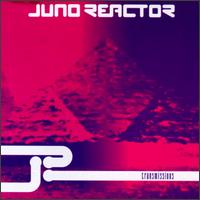 ca since I first heard Beyond the Infinite in 1996. I’ve listened to most of their albums frequently, especially Bible of Dreams. But I pretty much forgot about their first release, Transmissions (1993). Revisiting it now, I see why. It has little of the input from world musical traditions that they became famous for. It now sounds pretty much like conventional trance poised somewhere between darkrave and goa trance. But in fact, it was a pioneering work from which these trends subsequently evolved. It still plays well, and doesn’t deserve to be entirely ignored, just because the group went on to develop a more sophisticated sound.
First-time listening for September, 2012
Posted by Phil Paine
on September 30, 2012
No comments
23000. (George Frederick Händel) Brockes Passion, Oratorio Hvw.48 [d. McGegan; Klietman,
. . . . . Gáti]
23001. (Weather Report) Weather Report
23002. (Ramsey Lewid Trio) The Best of the Ramsey Lewis Trio Read more »
First-time listening for August, 2012
Posted by Phil Paine
on August 31, 2012
No comments
22975. (Arthur Sullivan, mus. & W. S. Gilbert, text) The Mikado [D’Oyly Carte; Ayldon, Wright]
22976. (Purrkur Pillnikk) Ehgji En
22977. (Jo Basile) Vienesse Waltzes for Accordion
22978. (Sunna Gunnlaugs) The Dream Read more »
First-time listening for July, 2012
Posted by Phil Paine
on July 31, 2012
No comments
22953. (George Frederick Händel) Belshazzar, Oratorio [d. Knothe; Schreier, Frank-Reinecke,
. . . . . Treckel-Burkhardt, Pohl]
22954. (7 Seconds) 7 Seconds
22955. (Youth Lagoon) The Year of Hibernation Read more »
Paul Oakenfold — Global Underground 004 Live in Oslo, 1997
Posted by Phil Paine
on July 5, 2012
No comments
This fine mix was recorded live at Cosmopolite Club in Oslo, Norway, as part of the Quart Festival. The two-cd set shows two rather different sides of Oakenfold’s considerable talent. The first cd is very mellow drum & bass merging into goa trance, barely dance-able, but quite entertaining to listen to. The second cd is lively house that would be best enjoyed on your feet. This comes from the period when the club scene was probably at its peak in Europe. Neither part is a “dense” mix (tracks come together only a few bars at a time). There is nothing here that has the impact of Tranceport, but it’s a good solid set. Lucky were the Norwegians on that floor.
First-time listening for June, 2012
Posted by Phil Paine
on June 30, 2012
No comments
22924. (Dead Kennedys) Spend July 4th With Dead Kennedys [Live at Central London Poly,Nov 26 . . . . . 1982] (released 1992)
22925. (Bing Crosby) Bing Crosby with Paul Whiteman Orchestra
22926. (Adele) iTunes Live from SoHo
22927. (Rastafari Elders) Rastafari Elders Read more »
First-time listening for May, 2012
Posted by Phil Paine
on May 31, 2012
No comments
22906. (Jimi Hendrix) Band of Gypsys
22907. (Frank Zappa) Jazz from Hell
22908. (Cramps) Songs The Lord Taught Us
(Feodor Chaliapin) Feodor Ivanovich Chaliapin Sings: Read more »