20085. (Ludwig van Beethoven) Piano Sonata #16 in G, Op.32 #1
20086. (Ludwig van Beethoven) Piano Sonata #18 in E‑flat, Op.32 #3 “The Hunt”
20087. (Polarkreis 18) The Colour of Snow
20088. (Frédéric Chopin) Polonaise-Fantaisie in A‑flat, Op.61
20089. (Sergei Prokofiev) Piano Sonata #6, Op.82 Read more »
Category Archives: C - LISTENING - Page 29
First-time listening for June, 2009
Posted by Phil Paine
on June 30, 2009
No comments
Melpo Mene’s “Holes”
Posted by Phil Paine
on June 23, 2009
No comments
This band (the name is a reference to Greek myth) is primarily Swedish singer/songwriter/lead guitarist Erik Mattiasson. Mattiasson works out his own personal agonies. He had a rough childhood in Kiruna, a small city in Sweden’s northernmost boonies. He suffers from schizophrenia. The title cut, with its eerie, whispered lyrics about holes in his head, explores this malady from an insider’s view. The musicianship is fine, my only qualm is that all the songs have the same tone, so perhaps they are more effective when heard one at a time. There’s a new album out, Bring the Lions In, which I haven’t been able to get a hold of. As with most Swedish rock, it’s sung in English. Doesn’t anybody record songs in Swedish? It’s nice to be accessible to the world market, but surely there’s something lost when an international language so thoroughly dominates a country’s music scene.
Bonnie Dobson [Argo Decca (UK)1972; different from 1969 RCA album of same title]
Posted by Phil Paine
on June 10, 2009
No comments
While poking around, I came across this eponymous album of Canadian folk standards by Bonnie Dobson. Now forgotten, she was prominent in the folk scene of the 1960’s, and one song of hers, “Morning Dew”, was covered by Robert Plant, Jeff Beck, Clannad, Nazareth, the Allman Brothers, and the Grateful Dead. I was already familiar with “Morning Dew”, which appears on the entertaining compilation The Music Never Stopped: Roots of the Grateful Dead. Dobson’s soprano voice is in a class with Sandy Denny, Maddy Prior, and Rachelle Paiement for that “strong and sweet” combination that best suits folk tunes. Her interpretations of Canadian standards are a bit quirky, but very moving. Her versions of “Four Strong Winds” and “Un Canadien errant” are particularly moving. Her guitar-playing is restrained, always supportive of the vocals, but very skilled. This is not her most famous album, so I have a feeling I have some pleasant surprises ahead if I can find others. Despite obvious talent, she never made it big, but I have a feeling that more successful singers in the folk scene must have respected her work. Now 68, Dobson long ago retired from the music business, moved to the U.K., and became the administrator of the Philosophy Department of the University of London.
First-time listening for May, 2009
Posted by Phil Paine
on May 31, 2009
No comments
19922. (Syd Barrett) You Got It Now [rare European bootleg LP]
19923. (Thomas Tallis) In nomine I
19924. (Thomas Tallis) In nomine II
19925. (Thomas Tallis) A Solfing Song
19926. (Thomas Tallis) Salvator Mundi [version for strings] Read more »
Elk Whistle: Still With Us / Wambdi Hokshida
Posted by Phil Paine
on May 25, 2009
No comments
Elk Whistle [aka Elk Whistle Singers] hale from Regina, Saskatchewan. This album would be classed as “pow pow contemporary” rather than “traditional”, sung in the Northern Style, with considerable improvisational freedom. It’s an example of the fine material being released by Saskatoon-based Turtle Island Music.Outstanding is the lead-in “Victory Song”.
Sibelius Symphony #1
Posted by Phil Paine
on May 11, 2009
No comments
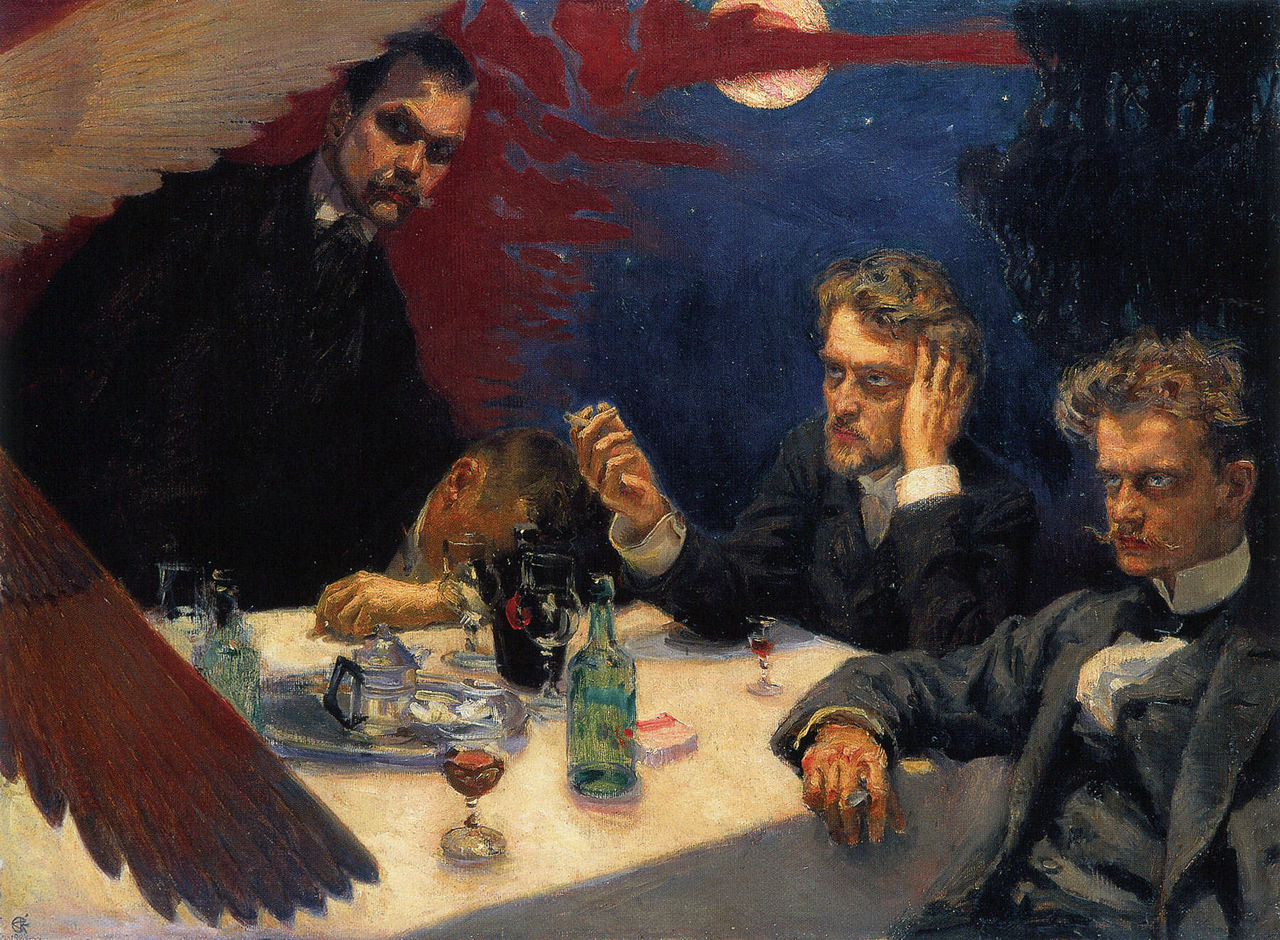
Akseli Gallen-Kallela’s painting Symposium made in 1894. Symphony #1 was completed in 1899. From left: Akseli Gallen-Kallela, Oskar Merikanto, Robert Kajanus and Jean Sibelius. They were a clique of young bon vivants in Helsinki. Sibelius had already developed his trademark scowl. Kajanus would conduct the symphony.
Jean Sibelius’s Symphony No. 1 in E minor, Opus 39 was written in 1898, and first performed the next year. Sibelius was aged 33, but he had been composing seriously for less than ten years. The seven symphonies constitute a corpus of work that begins with the conventional symphonic form and gradually evolves into an entirely different approach. Standing at the beginning of this process, the First is essentially conventional in form. Its resemblance to Tchaikovsky’s symphonies is so obvious that most listeners will spot it instantly, but it also displays many of Sibelius’ distinctive mannerisms. Read more »
Pluxus: Solid State
Posted by Phil Paine
on May 7, 2009
No comments
This Swedish electronic group is yet another example of musicians delighting in “retro” electronic sounds generated by old equipment. The beeps, blips, and spacey sounds that embarrassed the previous generation of electronicists now seem cool again, especially if they can be mixed with contemporary samples. Getting it to work — to make music that appeals to the ear, can be tricky. I would say that this album, released in 2006 and re-released in 2008, does so about half the time, notably with the skitter beat 2 (“Perm”), the strangely folky 3(“Bootstrap’) and 4 (“Kinoton”) with the only vocals, which make a nice sequence, but less so with the remaining tracks.
First-time listening for April, 2009
Posted by Phil Paine
on April 30, 2009
No comments
19790. (Sergei Prokofiev) Piano Sonata #9 in C
19791. (Sergei Prokofiev) Piano Sonata #10 (fragment), Op.107
19792. (Grievous Angels) One Job Town
19793. (High Places) 03/07–09/07
19794. (Nelly Furtado) Folklore Read more »
Are You Experienced?
Posted by Phil Paine
on April 17, 2009
No comments
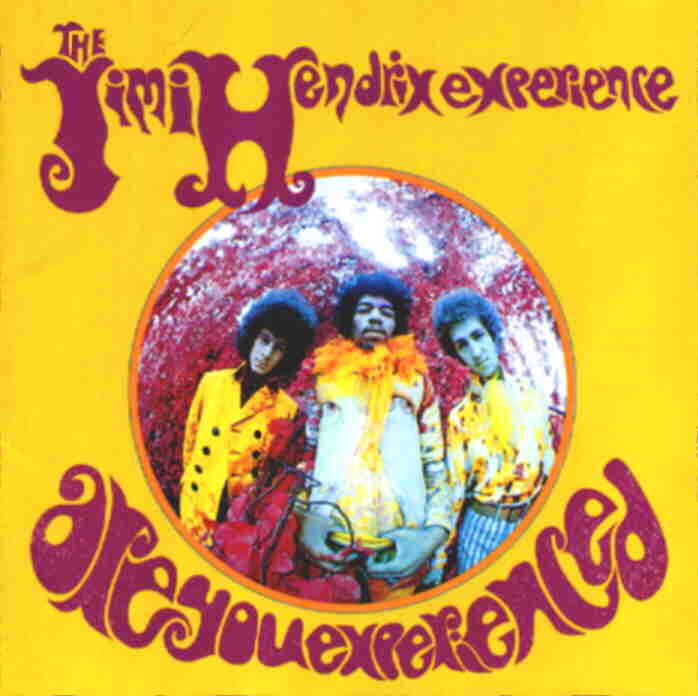 This was, believe it or not, the first album I ever owned. I grew up in a non-musical family, and apart from whatever turned up on the radio or television, my exposure to music was very limited. When I acquired a (kit-built) turntable and amplifier, I ran out and bought the first thing that appealed to me. Having nothing to go on, I picked Jimi Hendrix’s Are You Experienced? for no other reason than that I liked the cover. Read more »
First-time listening for March, 2009
Posted by Phil Paine
on March 31, 2009
No comments
19688. (Frederick Delius) Dance Rhapsody #1
19689. (Frederick Delius) The Song of the High Hills
19690. (Frederick Delius) Piano Prelude #1
19691. (Frederick Delius) Piano Prelude #2
19692. (Frederick Delius) Piano Prelude #3 Read more »