Something made me think of Timbuktu, today. For a moment, I could smell the wind-blown sand, the acacias, the drying dung. For a moment I could hear snorting camels, the rapidfire street-talk in Chiini, the wailing muezin, the griots playing gurkels and koras, the slender Fulani traders walking like gods through the market place, jaunty in their conical hats. Fabled Tombouctou, the name itself has come to mean “far away and unreachable”. Sad Timbuktu, the fading shadow of an ancient greatness.…“Salt comes from the north, gold from the south, but the wealth of wisdom comes from Timbuktu.” Few can now read the manuscripts from its centuries-old libraries, and the children who tumble out of the Lycée may not care about their loss. Outside the city, the monstrous sand dunes march southward, threatening to swallow what’s left of the city, like so many others that have sunk and drowned and vanished into the sand sea. Years of war among the desert nomads, ended only by uneasy truce in the late nineties, did not do it any good. Nor did decades of exploitation and brutality by a parasitic Marxist aristocracy, before that. Read more »
Category Archives: C - LISTENING - Page 42
Tuesday, March 7, 2006 — Thinking of Timbuktu
First-time listening for February, 2006
15263. (Sergei Rachmaninov) Symphony #3 in A Minor, Op.44
15264. (Constantines) Shine a Light
15265. (Ani DiFRanco) Not A Pretty Girl
15266. (Friedrich von Flotow) Martha, or The Fair Maid At Richmond [opera highlights;
. . . . . d. Klobucar; w. Durham, Rotheberger, Plumacher, Volker, Wunderlich]
15267. (Northern Pikes) The Northern Pikes
15268. (Aaron Copland) Scherzo Humoristique: The Cat and the Mouse for Piano Solo
15269. (Aaron Copland) Piano Variations, 1930
Read more »
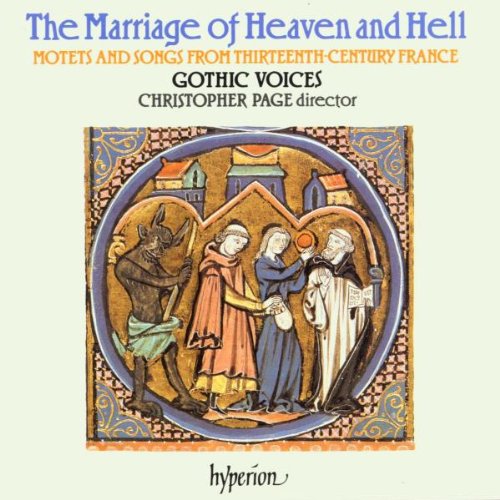
The Marriage of Heaven and Hell
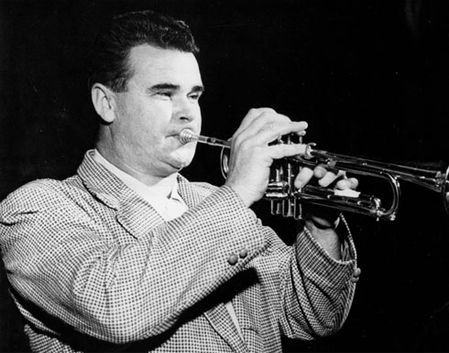
You could not find a better collection of early French motets than this one: “The Marriage of Heaven and Hell: Motets and Songs from Thirteenth Century France” [Hyperion CDA66423], performed by the Gothic Voices, under the direction of Christopher Page, who is also the harpist. Most of these motets are anonymous, but a few are credited to trouvères: Blondel de Nesle, Colin Muset, Gautier de Dargies, and the best known, Bernart de Ventadorn. However, the motet form transforms the feeling of the trouvère songs. They lose their intimate quality, and the poetry of the lyrics is submerged. It’s not really possible to follow lyrics in a motet, even if you know the language well. The best you can do is catch a word here and there. People didn’t listen to motets for the same reason they listened to love ballads and heroic lais. The motet was a game. It took familiar songs and played with them, twisting them out of recognition. In much the same way, 1950’s “cool” jazz took show tunes and love songs and manipulated them in fashions completely at odds with their original intent.
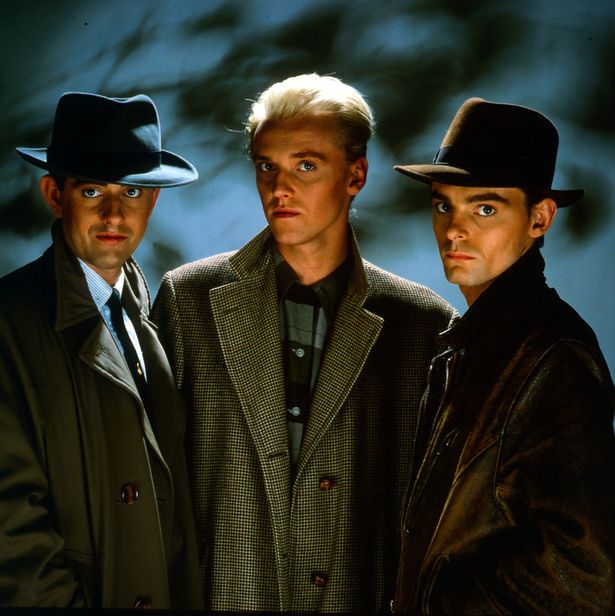
Heaven 17
This is a British synthpop band originating in Sheffield, England in the early 1980s, partly from former members of the Human League. I have their first two (and most successful) albums, Penthouse and Pavement (1981) and The Luxury Gap (1983). From the first album, the single “We Don’t Need This Fascist Groove Thang” gained some notoriety when the BBC banned it from play for political reasons. However, “Geisha Boys and Temple Girls” and “We’re Going to Live For a Very Long Time“ appealed to me more. They achieved greater success with the second album, from which “Temptation” and “Let Me Go” were the band’s biggest UK and US hits respectively. A current listener will be most taken by the primitive “proto-techno” elements: cheesy synthesizers and drum machines. Unlike most of the synthpop bands of the time, they had catchy melodies, and used the crude electronic tools to good effect.
First-time listening for January, 2006
15000. (Crowded House) Alone Together
15001. (Neil Finn) Try Whistling This
15002. (Split Enz) The Living Enz
15003. (Tim Finn) Before & After
15004. (Crowded House) Recurring Dream: The Very Best of Crowded House
15005. (Crowded House) Recurring Dream Bonus Live Album
15006. (Crowded House) Phil’s Crowded House Miscellany
15007. (Dmitri Shostakovich) String Quartet #1 in C, Op.49
15008. (Dmitri Shostakovich) String Quartet #2 in A, Op.68
Read more »
14587. (S. Craig Watkins) Hip Hop Matters ― Politics, Pop Culture, and the Struggle for the Soul of a Movement
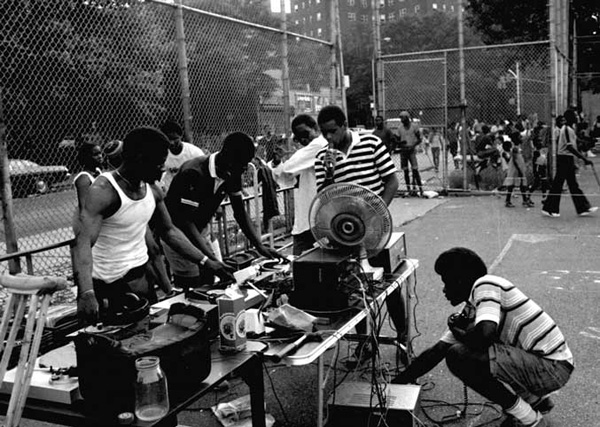
A straightforward history of the early days of Hip Hop, focusing more on the producers, record labels and people who ran the business end than on the performers. Hip Hop seems to have coalesced into existence simultaneously in several U.S. cities in the early seventies, but a conventional “birthday” is the August 11, 1973 party in a basement apartment in the Bronx. Soon, people DJs like Afrika Bambaataa and Kool Herc were throwing block parties featuring breakbeats and scratching. Emcees, began spontaneously rapping to the beats.Through the seventies, it was a spontaneous, informal and barely noticed seen…it was six years before the first Hip Hop album was recorded and released. As the musical fashion saturated the world, money started piling up, and the inevitable struggle between art, social conscience, and business interests. This is the part that interests the author. His analysis is common sense: money soon overwhelms art and social causes.
An interesting quotation: “Who would pay money for something they can hear for free at parties? Let’s keep it underground. Nobody outside of the Bronx would like this stuff anyway.” —- Joseph Saddler, aka Grandmaster Flash, 1979, when approached with the idea of putting rap music on records.
The Play of Daniel
I have two versions of this well known medieval piece, which is important both from a literary and a musical point of view. European drama evolved, in the Middle Ages, from the liturgy of the Church. What began as the modest elaborations on the ceremony of the mass eventually led, by slow increments of change, to Hamlet. Similarly, the simple monophonic chant of the mass was the acorn from which opera, symphony and concerto grew. In both aspects, it was the necessity to entertain the audience, rather than God, that pushed the process. Read more »