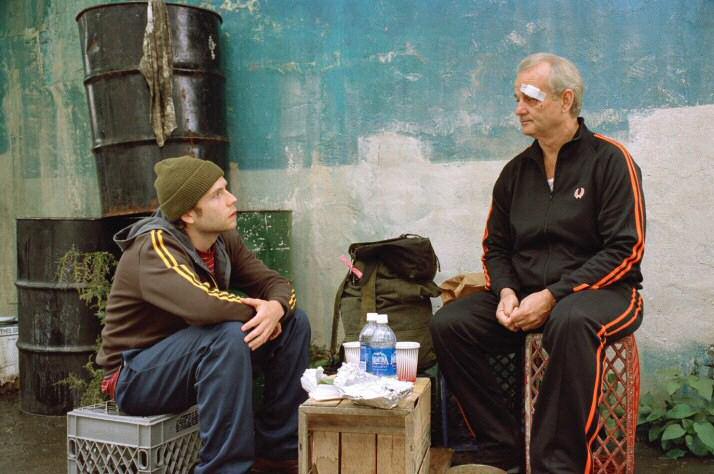
 My friend Skye Sepp brought this film to my attention. I’ve been burnt a few times by movies starring Bill Murray. But he is perfect in this one. The film is a character comedy. It isn’t a “romantic comedy”, since there is no successful romantic resolution. It has a very contemporary feeling. The characters and setting are definitely now — that is, the United States as it really is in 2005, and not some behind-the-times facsimile generated by writers and film-makers who have lost touch with the culture. Jim Jarmusch wrote and directed the film, and it’s obvious that he keeps his eyes and ears open, and knows his own society. Any American who knows how to use Ethiopian pop music in a film, in a way that shows a little respect, plainly has his finger on the pulse.
Category Archives: D - VIEWING - Page 27
(Jarmusch 2005) Broken Flowers
FILMS JANUARY-MARCH 2007
(Sweete 2002) Timothy Findlay’s Elizabeth Rex [tv play, w. Diane D’aquila, Peter Hutt, Brent Carver]
(Resnais 1955) Nuit et brouillard
(Fisher 1959) The Hound of the Baskervilles
(Guillermin 1978) Agatha Christie’s Death on the Nile
(Sales 1990) The Silk Road: In Search of the Kingdom of Lou-Lan
(Lambert 1992) Pet Sematary
(Freundlich 2004) Catch That Kid
(Carpenter 1978) Halloween
(Heston 1993) Needful Things
Read more »
(Judge 2006) Idiocracy
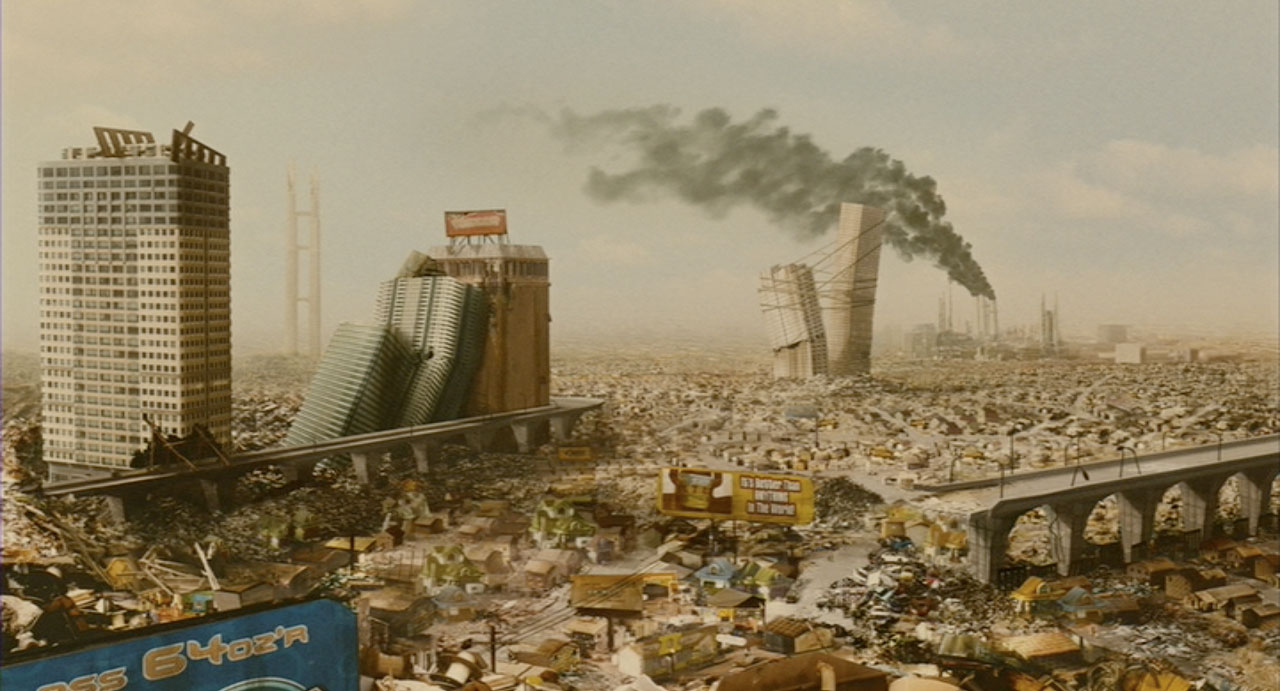
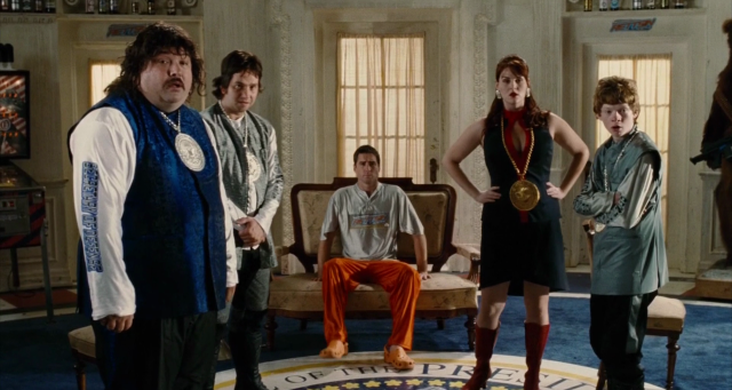 Mike Judge’s Idiocracy seemed reasonably funny to me, though this may have been influenced by the herb partaken while seeing it. It’s more or less a science fiction satire in the manner of an old L. Sprague deCamp story. A man awakens from cryogenic storage to find that the U.S. has bred itself into idiocy. Though himself selected for the cryogenic experiment because of his astonishing averageness, in this brave new world he is the smartest man in the country. He saves the nation from famine by determining that crops should not be irrigated with Gatorade. Most of the comedy is in sight gags embedded in the set design. Anyway, rent this for some stoner party and stock up on taco chips to go with it.
(Sweete 2002) Timothy Findlay’s Elizabeth Rex [tv play; w. Diane D’Aquila, Peter Hutt, Brent Carver]
Timothy Findley (1930–2002) was one of Canada’s finest novelists, but he began as an actor before turning to writing. He was part of the original Stratford Festival company in the 1950s, acting alongside Alec Guinness. His lifetime partner, William Whitehead, his inseperable other half from 1951 until his death, was an actor and director, responsible, among other things, for over a hundred episodes of the groundbreaking science series The Nature of Things, and the extremely intelligent radio series Ideas. They occasionally collaborated on screenplays. So it should come as no surprise that Findley wrote a fine play, as well as familiar novels like The Wars and The Last of the Crazy People. Read more »
FILMS OCTOBER-DECEMBER 2006
(Armstrong 1999) MidSomer Murders: Ep.9 — Blood Will Out
(L’Ecuyer 2004) Prom Queen
(Gaudreault 2003) Mambo Italiano
(Asquith 1952) The Importance of Being Earnest
(Ratushniak 2004) Iron Men, Wooden Ladders
(Hitchcock 1955) To Catch a Thief
(Asquith 1948) The Winslow Boy
Read more »
(Perelman 2003) House of Sand and Fog
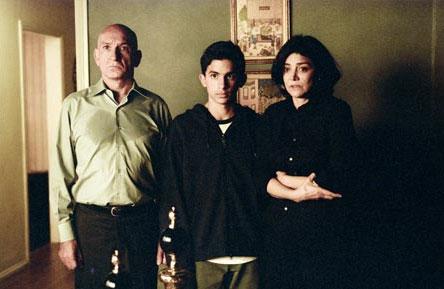
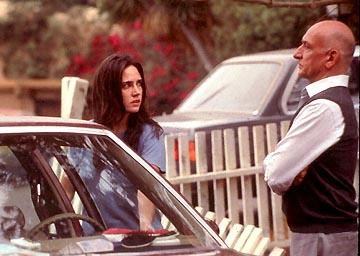
This is a good film. It’s based on a novel by Andre Dubus III, which I haven’t read*. It was the first feature film of Canadian director Vadim Perelman, who had made a reputation with music videos and commercials. Apparently, novelist and director worked together intimately. The cast, Jennifer Connelly, Ben Kingsley, Shohreh Aghdashloo, Ron Eldard, Frances Fisher, Kim Dickens, and Jonathan Ahdout, find every subtlety possible in the characters. This was possible because the characters are well conceived, multi-dimensional, and real. The story is pure Shakespeare. Two people have equally just claims to owning a house. Nothing special, just an ordinary little house with a view of the sea. One is an Iranian immigrant, played to perfection by Ben Kingsley, who desperately needs the house to hold his family together and retain his much injured pride. The other is a lonely woman who has both isolated herself and been isolated, and in the course of the struggle earned the love of a psychologically fragile cop. What begins as a low-key dispute gradually builds in tension and complexity, and unfolds with the inexorable steps to tragedy that Shakespeare perfected, and few dramatists since have learned.
*[I read it the next month]
(Wallace 1990) Stephen King’s It, Part 2
 My friend Isaac and I howled with laughter throughout this long and absurd film. Children in a small town are menaced by evil cosmic forces in the form of a leering clown, played by Tim Curry. When they grow up, they have to do it all over again. The cosmic forces, apparently, can be defeated by group hugs.
(Wood 1959) Plan 9 From Outer Space
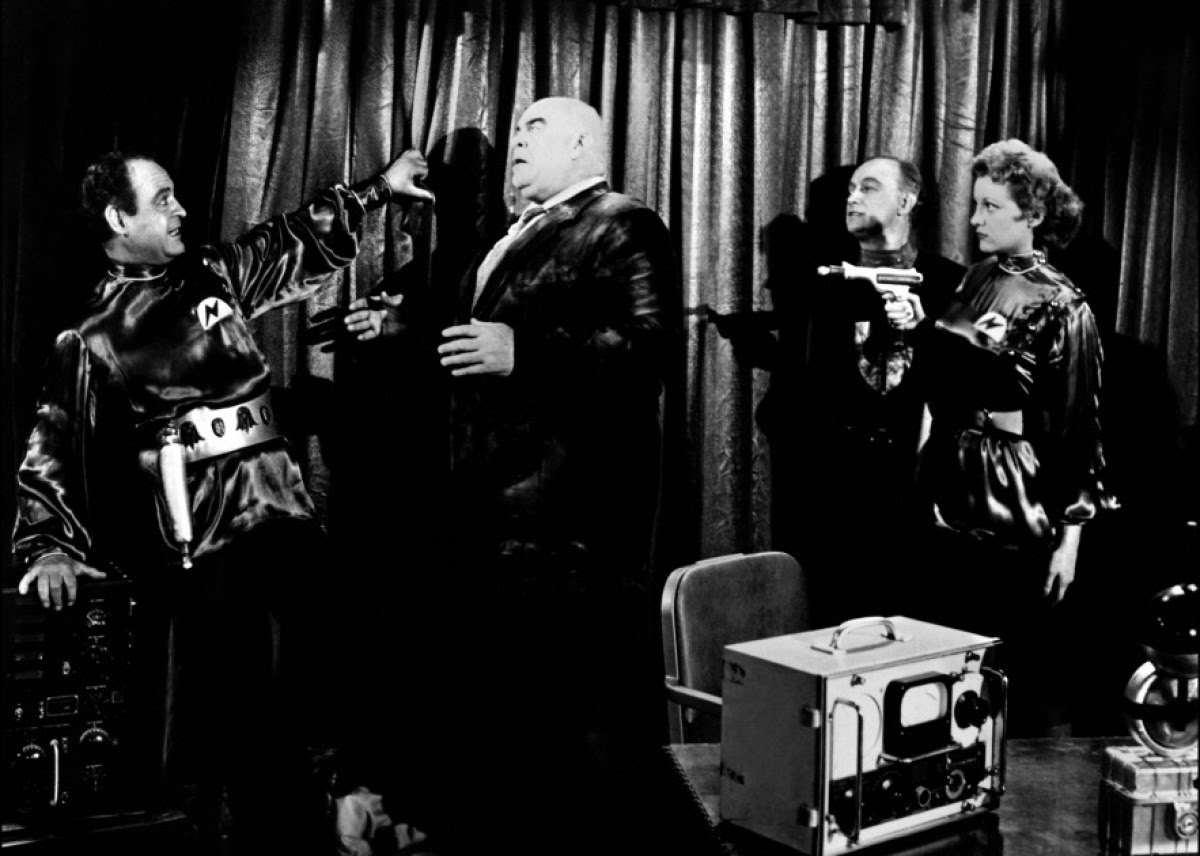
It grows on you with every viewing. Plan 9 is the most notorious film by Ed Wood, Jr., who was voted the worst film director or all time. It is loved by all who aspire not to be Ed Wood, and gives a shiver to those of us who come frighteningly close to being Ed Wood. It combines the inability to master the most elementary film techniques with a surrealistic mangling of the English language. Some of Wood’s bizarre and horrible phrasing approaches accidental poetry.
I had the great pleasure of showing it to a first-time viewer, my good friend Isaac White. Watching him react to the film — especially the scientific explanations “this can of gasoline, the sun, is connected to this rubber ball, the Earth by a line of gasoline.…” “a particle of light is composed of many atoms” — gave me more fun than I’ve had in awhile. You can only see Plan 9 for the first time once in your life. The experience cannot be repeated, and you cannot be the same person, after it has happened. Read more »
(Moore 2001 [released 2004] ) Ian Rankin’s Rebus: Mortal Causes
 I’ve been reading some of Ian Rankin’s fine hardboiled detective novels, and this BBC television adaptation is a fair rendering of them. The innovative camera work turns the alleys and housing projects of Edinburgh into an expressionist nether-world. The main character, inspector Rebus (ably played by John Hannah), is represented a bit younger, and the musical references that fill the books are only given an occasional nod. But watching the dramatizations will not spoil the books for you. They are not “who-done-its” nearly as much as “why-done-its”.
(L’Ecuyer 2004) Prom Queen ; (Gaudreault 2003) Mambo Italiano
Two recent Canadian movies about gay issues. One is a docu-drama about the 2002 Charter of Rights court challenge made by Mark Hall, a high school student who was forbidden to take his male date to the prom at a Catholic school. On the whole, this is done with a light touch, treating it as a romantic comedy, rather than instructive melodrama. The court case was pretty much a forgone conclusion (the Canadian Charter of Rights is pretty damn clear on the matter), and the boy’s parents and school mates were on his side. The school authorities merely looked foolish to everyone.
 Mambo Italiano, is intended as an offbeat comedy, but it has some genuinely moving dramatic scenes. It’s done in a style reminiscent of the TV show Arrested Development, mixed with a bit of My Big Fat Greek Wedding. Angelo (Luke Kirby) has two problems. A small one: he’s gay, in the closet, and romancing a cop. A big one: his family is Italian. Specifically, his family is part of that intense subculture of Montreal’s la petite Italie. (“When I came to this country, nobody told me there were two Americas, the real one, America, and a fake one, Canada. And then they didn’t tell me there were two Canadas, the real one, Ontario, and the fake one, Quebec!”). The Italian-Canadian comedy is painted in broad, exaggerated strokes, but the whole story is done in such a way as to demonstrate the fundamental absurdity of all the hero’s problems.
 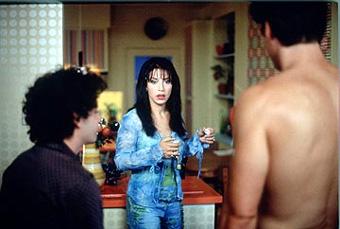 Within the cartoon framework, there are many scenes that ring true. It’s more about the stress of being a ping-pong ball among family members and community pressures than about the problems of coming out. His cop boyfriend, believably, caves in to family pressure and marries a “nice Italian girl”, an outcome made certain when you look back at his cowardly behaviour when he was in high school. There are moments in the film that are genuinely hilarious, not because of the absurdist joke-style of the film, but because they are bitter reality.