I hear (with a shudder of horror) that an American remake of this classic British Hammer Studios film is in production. Yet another insult to a fine film that underwent more than its share of insults. The original was idiotically marketed as a shock-horror picture, ensuring that the people who would have appreciated it never saw it and the people who saw it hated it. Then it was brutally re-cut in such a way as to make the film incomprehensible. That hatchet-job of a print circulated for years, an embarrassment to the director and the stars who performed brilliantly in it. The director eventually re-acquired the rights to it, and did his best to restore the original cut. I was present when the restored version was premiered in San Francisco, with the director in attendance. There have been two documentaries made about this sad chain of events, neither of which I’ve seen. If you rent the film, or see it on television, beware of the butchered print, which still circulates.
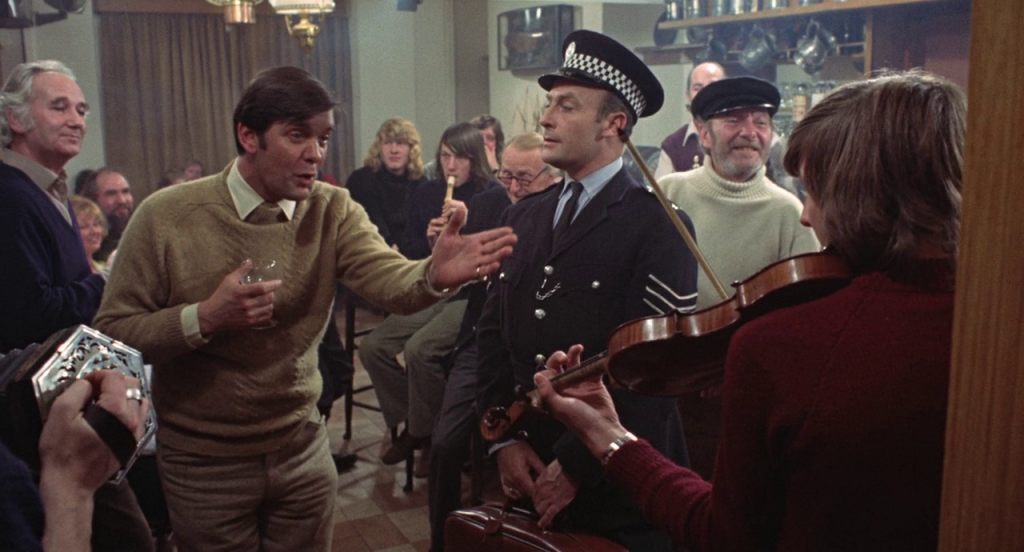 The plot of The Wicker Man is unique. A policeman (Edward Woodward) in the Scottish West Highlands gets a letter from a small island in the Hebrides. The island, under the influence of a warm current, is famous for exporting apples. The letter asserts that an island girl has gone missing. When the policeman arrives on the island to investigate, he discovers two peculiar things: 1) everyone on the island is trying to
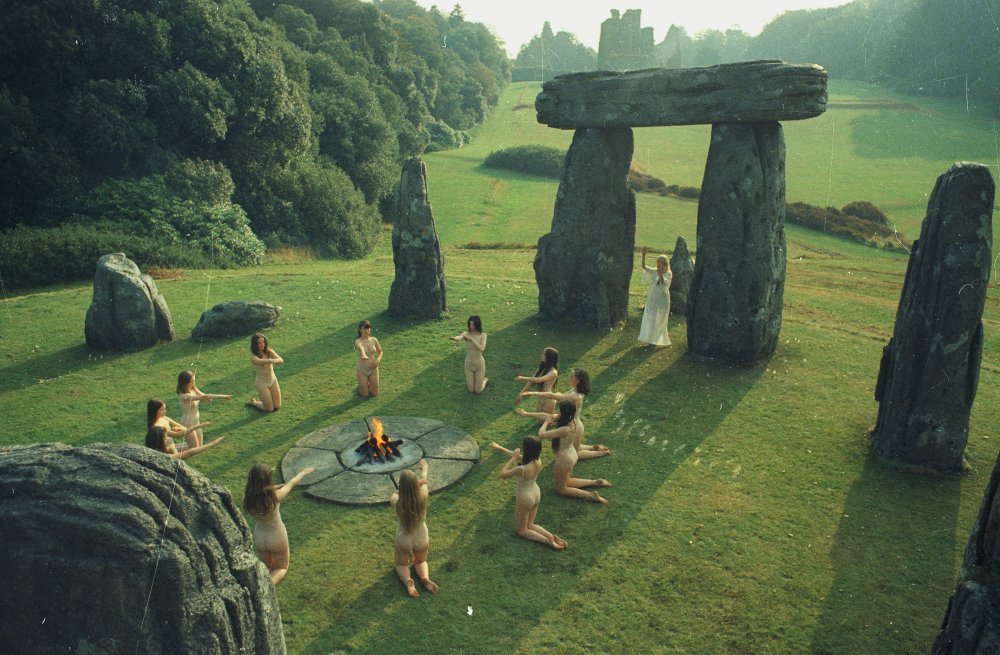
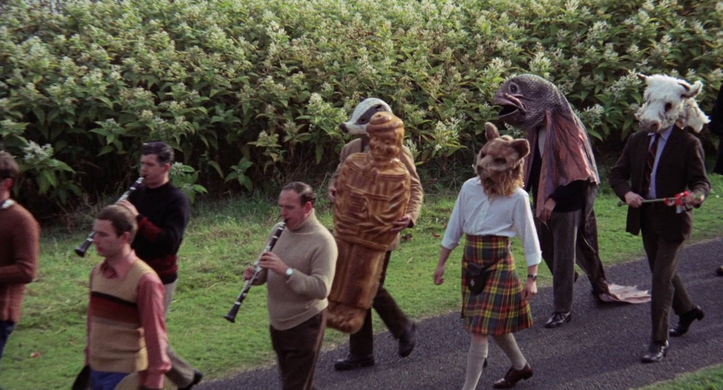
  hide something from him, and 2) the islanders have abandoned Christianity for a revived form of ancient paganism. We are given, from the beginning, a clear picture of the policeman’s character. He is priggish, piously religious, and a virgin. He is utterly shocked by the happy-go-lucky lifestyle of the neo-pagan islanders, with their joyful sexuality, bawdy pub songs, and children dancing naked. Much of the background is explained in his interchanges with the island’s Laird, brilliantly played by Christopher Lee, and with the island schoolteacher (Diane Cilento). The policeman suffers the ultimate temptation to his piety (and virginity) in the form of the ravishingly beautiful tavern-keeper’s daughter (Britt Ekland), and is eventually drawn, step-by-step, into a trap that puts him into the Wicker Man. The trick of the
 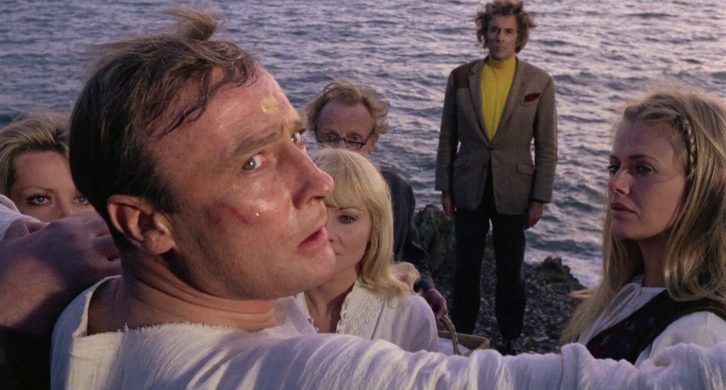 film is to take a person that one instantly feels contempt for, and put him into a situation where, eventually, you come to respect his view. I will not spoil the story for those who haven’t seen it. Suffice it to say that the tale recapitulates what must have happened a thousand times in a thousand villages of ancient Europe, as Christianity moved into and displaced pagan communities. The pagan lore presented in the film is reasonably authentic, given the explanation that it is presented as an artificial revival. The celtic music played in the film is wonderful.

![06-03-09 VIEW MidSomer Murders [television series]](http://www.philpaine.com/wp-content/uploads/2006/03/06-03-09-VIEW-MidSomer-Murders-television-series.jpg)