23548. (Havergal Brian) Symphony #2 in E Minor
23549. (Agalloch) Pale Folklore
23550. (Shye Ben Tzur, Jonny Greenwood & The Rajasthan Express) Junun
23551. (Kneebody) Kneebody [aka Break Me]
23552. (Jón Leifs) Landfall
Read more »
First-time listening for February 2016
Posted by Phil Paine
on February 29, 2016
No comments
READING — FEBRUARY 2016
Posted by Phil Paine
on February 29, 2016
No comments
23029. [3] The Book of Genesis [King James Bible]
23030. (Francis X. Hezel) Making Sense of Micronesia — The Logic of Pacific Island Culture
23031. [4] The Book of Genesis [Oxford Annotated Revised Standard Bible]
23032. (Trish Laughran) Disseminating Common Sense: Thomas Paine and the Problem of the
. . . . . Early National Bestseller [article]
Read more »
Tuesday, February 16, 2016 — Juniper and Bones
Posted by Phil Paine
on February 16, 2016
No comments
I cannot smell juniper without thinking of small bones. I have very strong smell memories, sometimes stronger than visual memories. I can still call up in my mind the smell of the north rim of the Grand Canyon, the myriad smells of different deserts, the scents of tamarack and black spruce as you get near the Wînipâkw, the smells of the blessed neem trees in Kano, the spring lilacs in Canadian towns, the comforting scents of freshly-sawn lumber, the many smells of snow in different settings.
Hold that thought, for I must digress.
I just re-read Edgar Pangborn’s A Mirror for Observers for the eighth time. The only other novel I’ve read as many times is Lewis Carroll’s Through the Looking Glass. Regular rereadings of Carroll’s masterpiece would not surprise anyone — I’m sure there are people who have read it dozens of times — but you might find it puzzling that I would give equal loyalty to a science fiction novel written in 1954, by an author who was respected in his day, but never a high-profile celebrity in the field. A Mirror for Observers is not even his best known book (though it is his best). I read the book in childhood, and it imprinted itself on my mind so vividly that I hardly needed to reread it, for I could play out every scene in my mind at will. But, at regular intervals throughout a lifetime, I have read it with full attention. Read more »

FILMS — JANUARY 2016
Posted by Phil Paine
on January 31, 2016
No comments
(Wood 1935) A Night at the Opera
(Leonviola 1963) Thor and the Amazon Women [Le gladiatrici]
(Robbins 1978) Corvette Summer
(Hartley 2014) Electric Boogaloo: The Wild, Untold Story of Cannon Films
(Gordon 1977) Empire of the Ants
(Arnold 1965) Perry Mason: Ep.227 ― The Case of the Thermal Thief
Read more »
First-time listening for January 2016
Posted by Phil Paine
on January 31, 2016
No comments
23482. (Cristóbal de Morales) Officium defunctorum Missa pro Defunctis
23483. (Alonso Lobo) Motet: Versa es in luctum
23484. (Ed Sheeran) You Need Me EP
23485. (A$AP Rocky) Live Love A$AP
23486. (Moody Blues) The Magnificent Moodies
23487. Eight Lamas from Drepung: Tibetan Sacred Temple Music
Read more »
READING — JANUARY 2016
Posted by Phil Paine
on January 31, 2016
No comments
23000. (Frs. Limbourg & Jean Colombe) Les Très Riches Heures du Duc de Berry [1412–1489]
23001. (Jean-Paul Gagnon) Non-human Democracy: Our Political Vocabulary Has No Room
. . . . . for Animals [article]
23002. (Miljana Radivojević, et al) On the Origins of Extractive Metallurgy: New Evidence
. . . . . from Europe [article]
23003. (Patrick Vinton Kirch) The Lapita Peoples: Ancestors of the Oceanic World
Read more »
Les Très Riches Heures du Duc de Berry
Posted by Phil Paine
on January 24, 2016
No comments
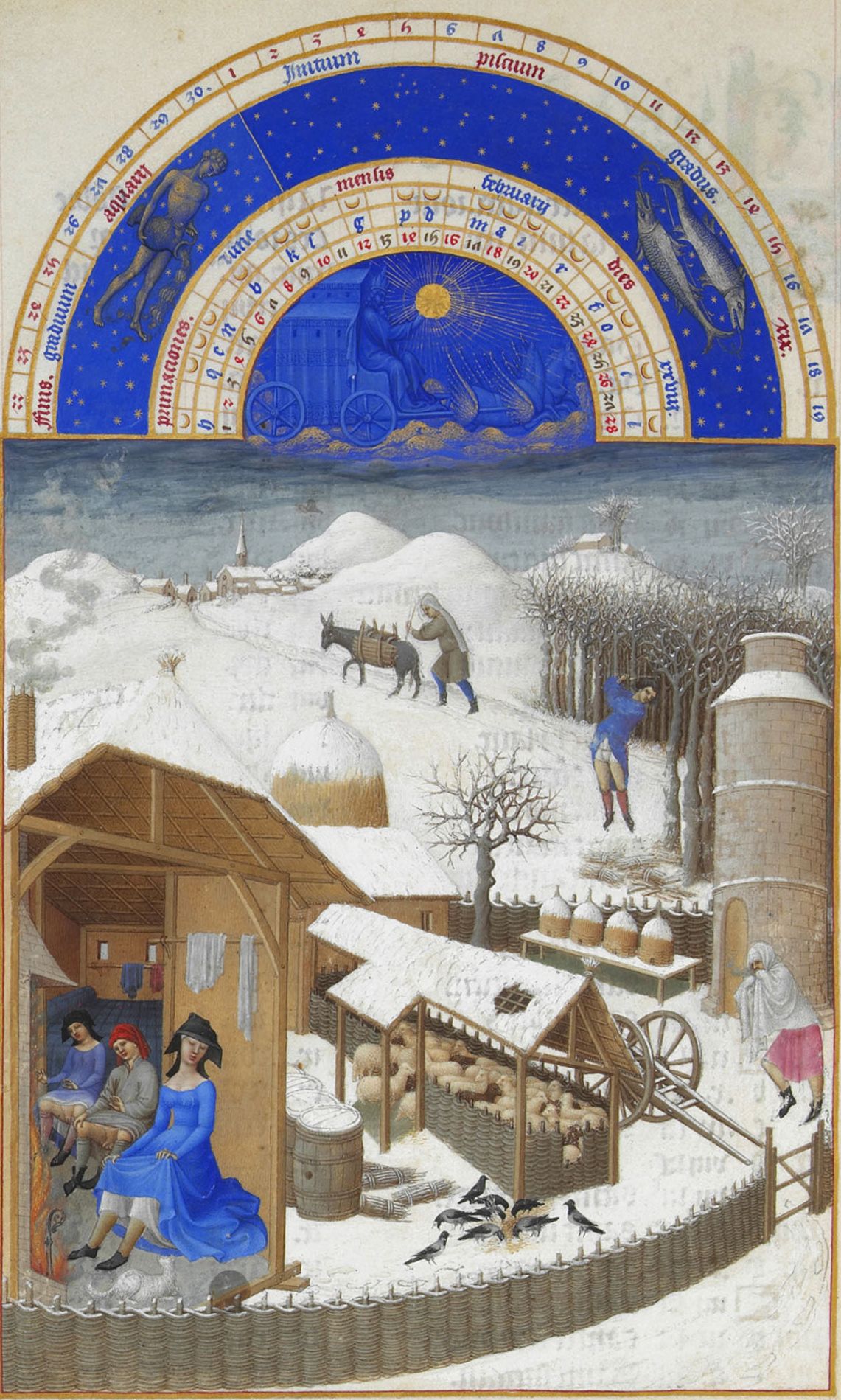 Usually, I don’t list a book as “read” unless I read the whole thing, but this is a special case. The Très Riches Heures is a medieval breviary, famous for its artistic value as an illuminated manuscript. I doubt that many people have ever read the entire text, which is merely a collection of prayers, making tedious reading. Such books were made for laymen who wished to bring some elements of monastic practice into their daily lives. They provided a calendric schedule for reading passages from the Gospels, the Psalms, and litanies, and also helped one keep track of the many feast and saints’ days. Most were in Latin, but some were in local vernaculars. Thousands of these manuscripts survive, but a handful that were produced for wealthy nobles are spectacularly illuminated. The one produced for the Duc de Berry is considered to be one of the principal masterpieces of medieval art. It is sometimes said to be the most valuable book in the world. Read more »
Some Thoughts on a Year of Reading
Posted by Phil Paine
on January 3, 2016
No comments
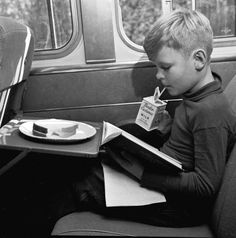 It’s been an average year of reading. 160 books and about 500 academic papers, articles, short stories and other short items. History and anthropology dominated the book reading, as usual, with an emphasis on Australia, the Pacific, the Canadian North and West, and the ideas of 19th century Canadian democratic reformers. I became particularly fascinated by the 19th century convict colonies of Australia and the French Pacific possessions, and I amplified previous readings (such as Robert Hughes venerable The Fatal Shore, and the eye-opening but little known Australia’s Birthstain, by Babette Smith). Thomas Keneally, giving Hughes a run for his money in A Commonwealth of Thieves, covers the general subject with extraordinarily vivid prose, and Siân Rees makes a closer case study in The Floating Brothel — The Extraordinary True Story of an Eighteenth- century Ship and Its Cargo of Female Convicts. Read more »
Image of the month: a Syrian refugee “menaces” Europe
Posted by Phil Paine
on January 1, 2016
No comments
 I’m proud to say that Canada is welcoming 30,000 Syrian refugees. They will make fine Canadians.