23588. (George Clinton) [Parliament] Up for the Down Stroke
23589. (Ariana Grande) Yours Truly
23590. (Ginger Baker) Stratavarious
23591. (Paul Hindemith) Ludus Tonalis, Kontrapunktische, tonal, und Klaviertechnische
. . . . . Übungen
Read more »
First-time listening for March 2016
Posted by Phil Paine
on March 31, 2016
No comments
READING — MARCH 2016
Posted by Phil Paine
on March 31, 2016
No comments
23083. (Jules Verne) Paris au xxe siècle [read in English translation at 18241]
23084. (Thijs Van Kolfschoten, et al) Lower Paleolithic Bone Tools from the “Spear Horizon”
. . . . . at Schöningen [article]
23085. (Marie-Anne Julien, et al) Characterizing the Lower Paleolithic Bone Industry from
. . . . . Schöningen 12 II: A Multi-proxy Study [article]
Read more »
Friday, March 25, 2016 [part 1] — Game of Caves
Posted by Phil Paine
on March 25, 2016
No comments
My appointment at Gargas was for early in the afternoon, so I was able to have a pleasant and leisurely breakfast. In place of the standard French baguette, there was a much more chewy local loaf known as quatre-banes, which I thought superb, perfect with the fresh country butter and jam. The cuisine of Hautes-Pyrénees, like many other aspects of its culture, is more closely in tune with that of the Basque Country and Catalonia than with northern France (and indeed, the slang expression nordiste is used by the locals with obvious disdain). Beans and spicy sausages, country soups, hard rather than soft cheeses, bread that you can get your teeth into. After breakfast, I still had plenty of time to reach the caves on foot. From Lombrès, I walked down the road to the village of Aventignan (about three times larger than Lombrès), then along a minor road to the cave’s reception center, little more than 4km.
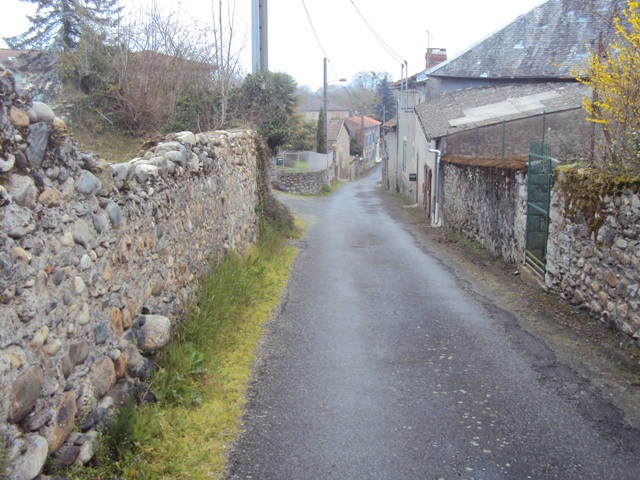
The road to the caves starting at Aventignan.
Only two cars passed me, and there was nothing much along the way but empty fields until the hills and forest started. The weather was cool and overcast. Often, when I’m walking, music pops into my head in surprisingly complete form, and this time it was the Shepherd’s Song from Canteloube’s Chants d’Auvergne, sung in Old Occitan, the language of Southern France before it was conquered, re-educated, and regimented by the nordistes. The dialect of the Auvergne was considerably different from the Gascon spoken in this region, but it neverltheless puts across the Southern mood:
As gaïré dè buon tèms?
Dio lou baïlèro lèrô,
Lèrô lèrô lèrô lèrô baïlèro lô.
Pastré lou prat faï flour,
Li cal gorda toun troupel.
Dio lou baïlèro lèrô,
Lèrô lèrô lèrô lèrô baïlèro lô.
Pastré couci foraï,
En obal io lou bel riou!
Dio lou baïlèro lèrô,
Lèrô lèrô lèrô lèrô baïlèro lô.
(“Shepherd across the river, your work there is hard. Look, the meadows here are in bloom. You should watch your flock on this side…. Shepherd, the water divides us, and I can’t cross it”). Nothing at all like French. Incomprehensible to all but a few surviving speakers of the Old Tongue, but the melody conveys such a wonderful sadness and yearning that it would be understood emotionally in Tokyo. In fact, it resembles many Japanese folk melodies. Read more »
Thursday, March 24, 2016 — A Voyage to Blefuscu
Posted by Phil Paine
on March 24, 2016
No comments
The first part of my trip was a bit of a challenge: thirty hours of continuous travel, and no sleep for forty hours. Every leg of the journey had to match the next in a short time span, and I was to be met at the Montréjeau railway station at a specific time. One missed connection would put my finances at risk. There were two flights by Icelandair (always more comfortable than most airlines because the hefty Icelanders require leg room) but, sadly, my stopover in Reikjavik was less than hour. No chance to stroll in one of my favourite towns. I could do nothing more than look out the window at the black lava fields around Keflavik. Read more »
Of Monsters and Men, and Of Men and Monsters
Posted by Phil Paine
on March 13, 2016
No comments
Iceland, considering its small population (329,100 at last count), has produced a phenomenal amount of rock music that has reached a global audience. It’s as if Oshawa, Ontario or Eugene, Oregon each had a half-dozen world-level bands. Absurdly improbable, when you think of it. Reykjavík is a lively little city, but its frisky music scene, what Icelanders call jammið, is confined to a handful of clubs in the “101” district: Café Rosenberg, Kaffibarinn, Bar 11, Dillon, Den Danske Kro, The Celtic Cross, The English Pub. After making the rounds, people stagger outside to find a hot dog or a crushed sheep’s head as a post-gig snack. The hard-drinking Icelanders take their jammið seriously. Bands and audiences mix freely in this profoundly informal and egalitarian country. This small, but intense scene has produced phenomena like the Sugarcubes and Björk, Mínus, Sigur Rós, Quarashi, Sálin, Botnleðja, Maus, Agent Fresco, Samaris, Mammút, and Jakobínarína.

Ingólfr Arnarson founds the first settlement at Reykjavík in 874 A.D., laying the groundwork for jammið and the Icelandic music scene. He appears to be standing precisely at the spot where Kaffibarinn stands today. An 1850 painting of dubious historical accuracy by Johan Peter Raadsig.
Sunday, March 13, 2016 — Where I Stand
Posted by Phil Paine
on March 13, 2016
No comments
I will make my position plain. I am a Canadian, not an American, but like all Canadians I must pay close attention to the politics of the country that borders mine for 8,891 kilometres (5,525 miles), has ten times our population, with which we have (by far) the largest-scale trading relationship in the world, and with which we share a considerable degree of our culture. Our economies are so intertwined that every political decision that occurs in the U.S. immediately and sometimes profoundly influences our life. I have at times lived in the U.S., and have many friends there, as do most Canadians. But we are not Americans, and sometimes all has not been well between us. When the United States entered its disastrous war in Vietnam, and we were pressured to join in with that debacle, a majority of Canadians were opposed to it, and we stayed out of it. When, subsequently, many young Americans resisted the slavery of conscription, and the corruption of the war, we welcomed them as honourable refugees, just as we had welcomed refugees from slavery in the 19th century. They were the true American patriots, and we respected them.
One of those great moral divisions is upon us. The United States has accomplished many great and noble things, but in recent times, it has reached its lowest moral ebb in a hundred years. The upcoming election in the United States is crucial to both our countries. If the Republican Party wins, then the U.S. is washed up as a country, every decent principle it has fought for will be defeated, degraded and destroyed. This is a profound threat to my country, which I love. Read more »
Some Concert Chestnuts
Posted by Phil Paine
on March 6, 2016
No comments

Ivan Bilbin’s illustration to Pushkin’s Tale of the Golden Coquerel
Sometimes one’s own unconscious snobbery can deprive one of delightful experiences. When I first started to listen to classical music, as a teenager, I scrimped and saved to purchase recordings from the “bargain bins” in record stores. These were mostly cheap re-issue labels that had performances from a generation before — often brilliant ones, but with audio quality that was no longer acceptable to audiophiles. The pieces were the standard concert repertoire, including many pieces that were extremely popular with concert-goers, but not considered particularly “deep.” When you listen to a lot of music, you eventually tire of these concert work-horses, heard so many time, and stop playing them. As other, more arcane musical interests engage you, you forget about them. You “know” them, of course, but they sit in your record collection unplayed for years. Read more »
Wednesday, March 2, 2016 — Looking back at Alvar Aalto
Posted by Phil Paine
on March 2, 2016
No comments
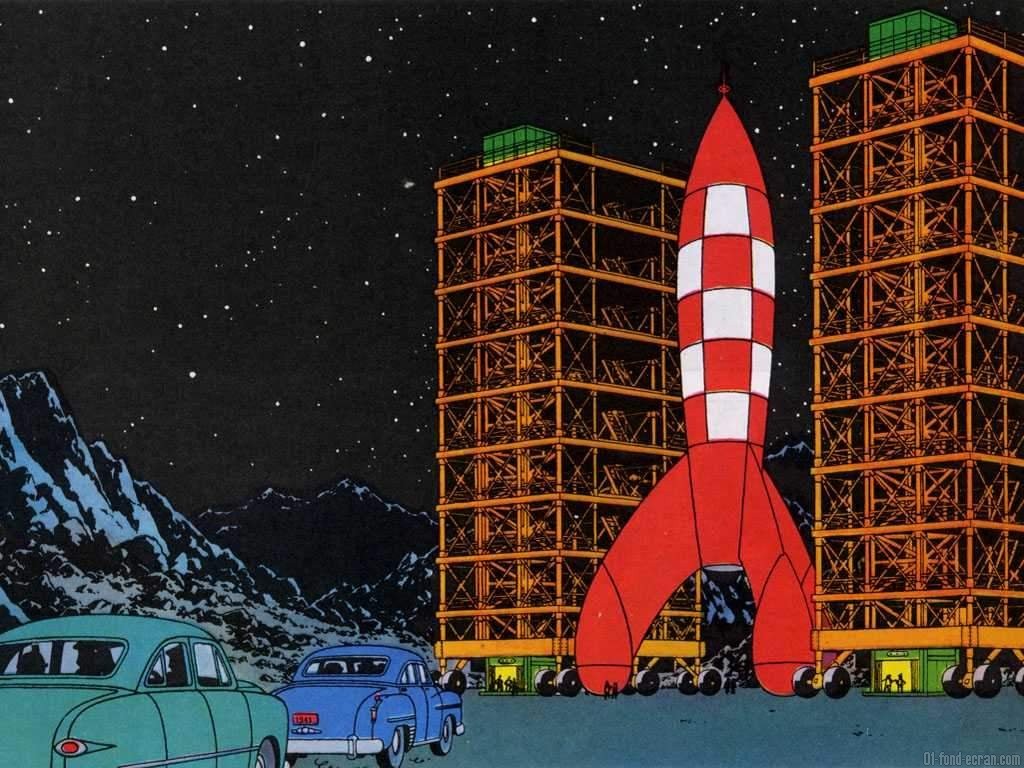
What used to be called the “International Style of Modernism” in architecture may have filled the planet with identical glass boxes, but there were always some architects who never quite fit into its straightjacket. Among them, the one that appealed to me most when I first started being interested in architecture (as a teenager) was the Finnish architect and industrial designer Alvar Aalto (1898–1976). The International Style worked with the credo of “form follows function,” but it was, I could see, a hollow slogan. The rigid orthoxy of that kind of “modernism” had nothing to do with “function,” since all buildings, no matter what their purpose, location, or context, were the same. Buildings in rain-soaked places that needed eaves couldn’t have eaves. The “function” of cheapness, of course, determined building layouts, not the function of what you were going to do in them. At first, Aalto paid lip-service to the modernist orthodoxy, but soon his buildings started to deviate from it. Eventually he evolved a fluid style, often working closely with his wife Aino, in which every aspect of a building was considered, including internal surfaces, lighting, and furniture, as an integral whole. His scale was human, outer forms were playful and visually interesting. He loved curving, fluid lines, so that even today much of his work feels “science fiction-ish.” Whiteness dominated the aesthetic, but it was never a boring blankness.


These three images illustrate what I mean. The one on the left is a tuberculosis sanatorium designed for the small Finnish town of Paimio in 1928, and completed in 1932. At this time, Aalto was still in the orbit of official Modernism, following Le Corbusier’s basic rules, but he was already laying the foundations of his more holistic approach. Note the date of the design —- it still looks modern. The second and third images show the kind of interior space that Alvar and Aino conceived when the silent film had barely been displaced by the talkie. Notice that the forms are simple, but not sterile. Humanity and comfort are the “functions” being served, not ideological conformity, cheapness, or manufacturing convenience. It still looks good.
FILMS — FEBRUARY 2016
Posted by Phil Paine
on February 29, 2016
No comments
(Tors 1954) Gog
(Polcino 2015) Rick and Morty: Ep.17 ― The Ricks Must Be Crazy
(Newton 2015) Rick and Morty: Ep.18 ― Big Trouble In Little Sanchez
(Barton 1949) Abbott and Costello Meet the Killer, Boris Karloff
(Kirkland 1996) The Simpsons: Ep.147 ― A Fish Called Selma
(Donner 1965) Perry Mason: Ep.237 ― The Case of the Gambling Lady
(Taylor 1934) The Return of Chandu [serial]: Chapter1 ― The Chosen Victim
(Taylor 1934) The Return of Chandu [serial]: Chapter 2 ― The House in the Hills
Read more »