21899. (Thomas Piketty) Le Capital au XXIe siècle
21900. (John Dryden) An Essay of Dramatic Poesy
21901. (Jan Michal Burdukiewicz) Microlith Technology in the Stone Age [article]
Read more »
READING – JUNE 2014
Posted by Phil Paine
on June 30, 2014
No comments
Sibelius Quartets
Posted by Phil Paine
on June 21, 2014
No comments
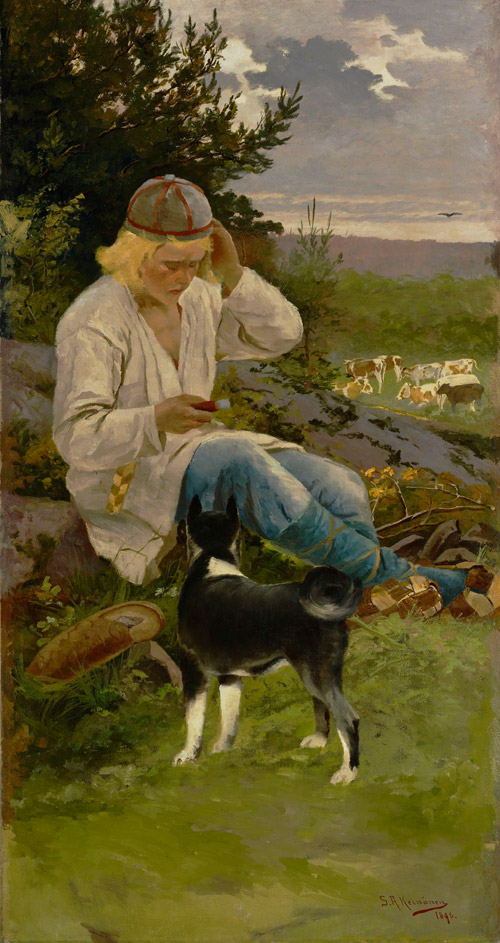
“Kullervo paimenessa” (1896) by Sigfrid August Keinänen
The concert-going public doesn’t associate Sibelius with chamber music, but he actually composed quite a bit of it, including four string quartets. One of them, the Quartet in D Minor, Op.56, known as “Voces Intimae”, has made it into the standard repertoire. With it’s jaunty rhythms, peculiar twists and turns, and frenetic passages that must work up a sweat among the players, it has won a place in the sun, though it’s not in the same league with the famous Beethoven, Bartók, or Dvořák quartets. It’s always been a favourite of mine, because it seems to convey a mood that hits me occasionally, for which there is no common name. It was composed around the time of the stark, introspective Fourth Symphony, and it shares some of its strangeness. But Sibelius composed three others, seldom performed. The first, in E‑flat, is a youthful effort with little to commend it. It’s just warmed-over Hayden, constructed by the book. But the second and third ones, in A Minor and B‑flat, are listenable and entertaining. Sibelius pretty obviously drew his inspiration from Dvořák, but you can hear distinctively Sibelian elements in both. The B‑flat one has evolved sufficiently to stand next to Voces Intimae without shame, and it should be played more.
Image of the month: petroglyphs, central Sahara
Posted by Phil Paine
on June 1, 2014
No comments
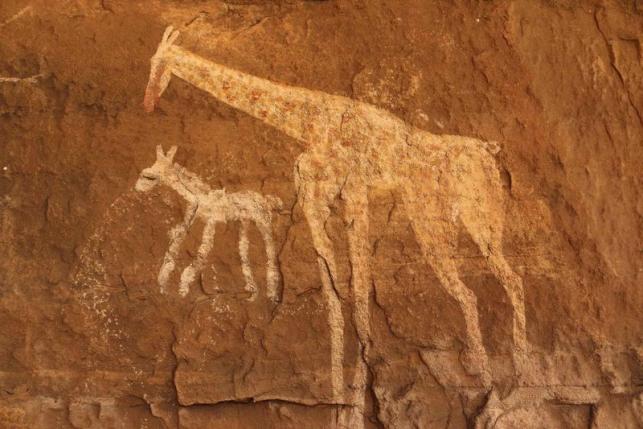 This ancient rock art found in the Tadrart Acacus, a mountain range in exact center of the Sahara, was photographed on May 30, 2014 by Aimen Elsahli, and put out by Reuters News. Religious fanatics had been attempting to destroy the art by scrubbing them with acid. The art portrays animals such as these giraffes that flourished in the Sahara when it was filled with lakes and grasslands. Below is a picture shows an approach route to the Tadrart Acacus, showing its present climate:

FILMS – MAY 2014
Posted by Phil Paine
on May 31, 2014
No comments
(Stephani 1936) Flash Gordon [aka Space Soldiers]: Ep.4 ― Battling the Sea Beast
(Stephani 1936) Flash Gordon [aka Space Soldiers]: Ep.5 ― The Destroying Ray
(Stephani 1936) Flash Gordon [aka Space Soldiers]: Ep.6 ― Flaming Torture
(Stephani 1936) Flash Gordon [aka Space Soldiers]: Ep.7 ― Shattering Doom
(Stephani 1936) Flash Gordon [aka Space Soldiers]: Ep.8 ― Tournament of Death
(Scardino 2013) The Incredible Burt Wonderstone
(Stern 2013) jOBS Read more »
First-time listening for May 2014
Posted by Phil Paine
on May 31, 2014
No comments
22901. (Penn Kazh) mesKad
22902. (Giuseppe Verdi) Aïda [complete opera: von Karajan; Tebaldi, Simionato, Bergonzi]
22903. (Denez Prigent) Irvi
Read more »
READING – MAY 2014
Posted by Phil Paine
on May 31, 2014
No comments
21862. (Th. Hersart de La Villemarqué) Barzaz-Breiz: chants populaires de la Bretagne
21863. (Hervé Lossec) Les Bretonnismes
21864. (Khashchuluun Chuluundorj) Current Status of Mongolia’s Economic and Social
. . . . . Development and Future Trends [article]
Read more »
Sunday, May 5, 2014 — In Search of Gildas
Posted by Phil Paine
on May 4, 2014
No comments
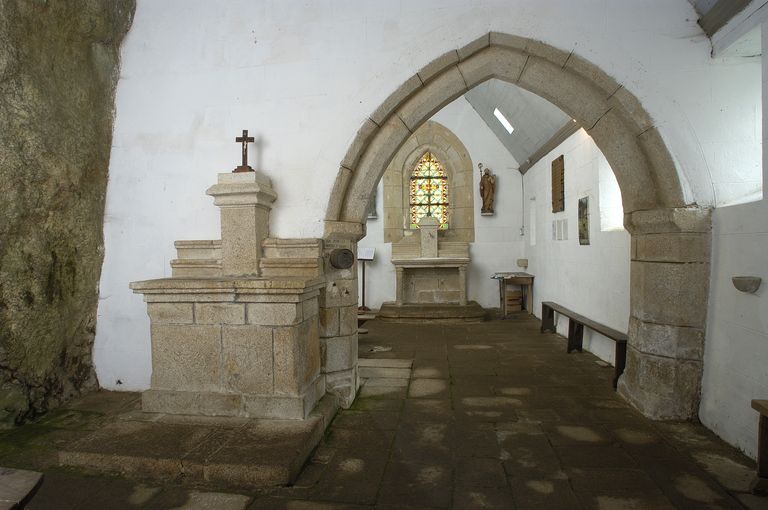
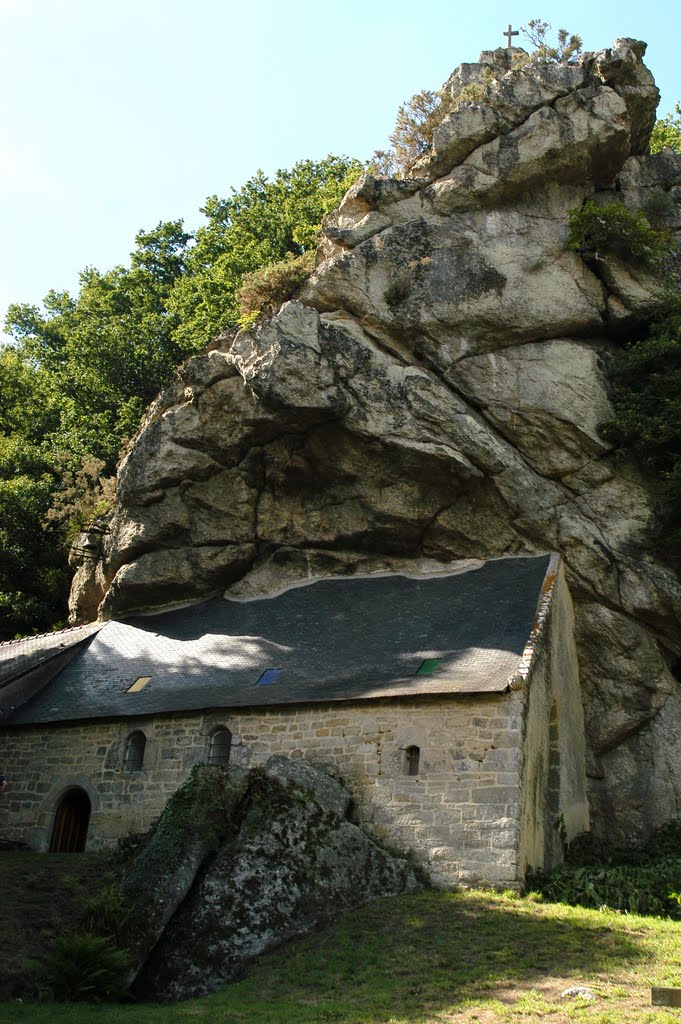 One special trip, at my request, was to the chapel of Saint Gildas. Gildas is well-known to those who study English history in the “dark ages”, because his De Excidio et Conquestu Britanniae is the first written history of Britain. In fact, it is pretty much the only documentary source for fifth and sixth century Britain. Bede’s History doesn’t appear until the year 731. But Gildas spent part of his career on the continent (he is supposed to have slain a dragon on a brief visit to Rome), and specifically in Morbihan, where he died. There are two written biographies of Gildas on which we depend for information, but they were written respectively in the ninth and twelfth centuries, and tell very dissimilar stories. The earliest life relates that Gildas converted the heathen of the Blavet valley by standing upon a great rock overlooking the river and shouting his exhortations. That sort of thing, apparently, worked in those days. When someone has already slain a dragon, he probably has a sufficiently forceful personality to pull it off. Anyway, the rock is still there, with a medieval chapel at its foot, and the place is wonderfully atmospheric. It being before the tourist season, Didier and I had it all to ourselves. Gildas lived, with one acolyte, in a tiny grotto underneath the rock, still accessible, until he returned to his monastery on the coast and completed Conquestu Britanniae. While the late medieval chapel was closed, I have found a picture of its interior.
Saturday, May 3, 2014 — Some Architecture
Posted by Phil Paine
on May 3, 2014
No comments
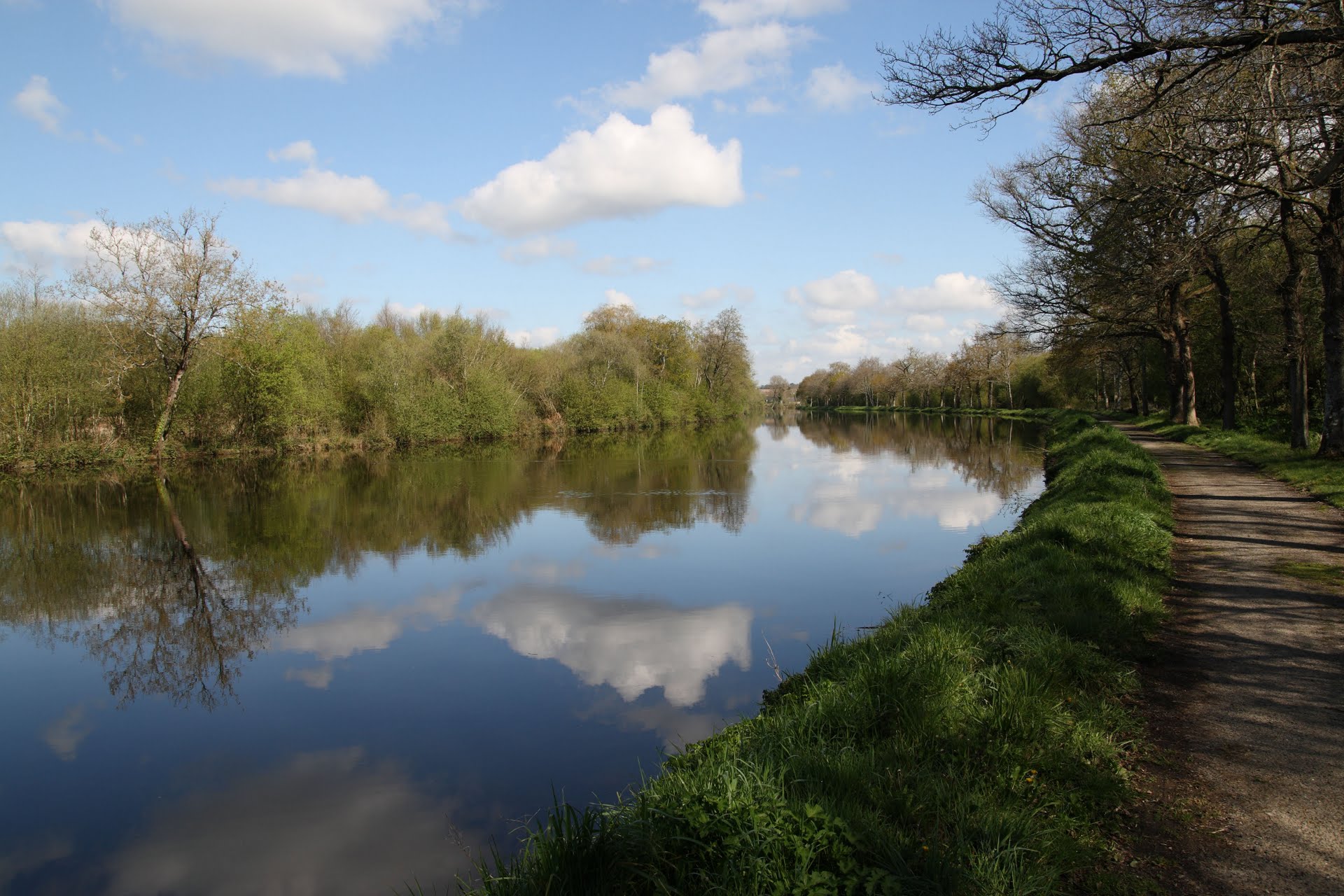
The Blavet on a quiet bend. I walked the path for a km and met nobody.
For such a short visit, I was able to see a good deal of the countryside of Morbihan. Didier drove me to a number of wonderful places, and I also covered a considerable amount on my own, on foot, and did some hitch-hiking as well.
But rather than attempt to reconstruct where I visited chronologically, or trip by trip, I think I’ll just present a gallery of images, with a few comments. Read more »
Thursday, May 1, 2014 — Rue de Kergallic
Posted by Phil Paine
on May 1, 2014
No comments
“Art is not freedom from discipline, but Disciplined Freedom.” — Edward Catich
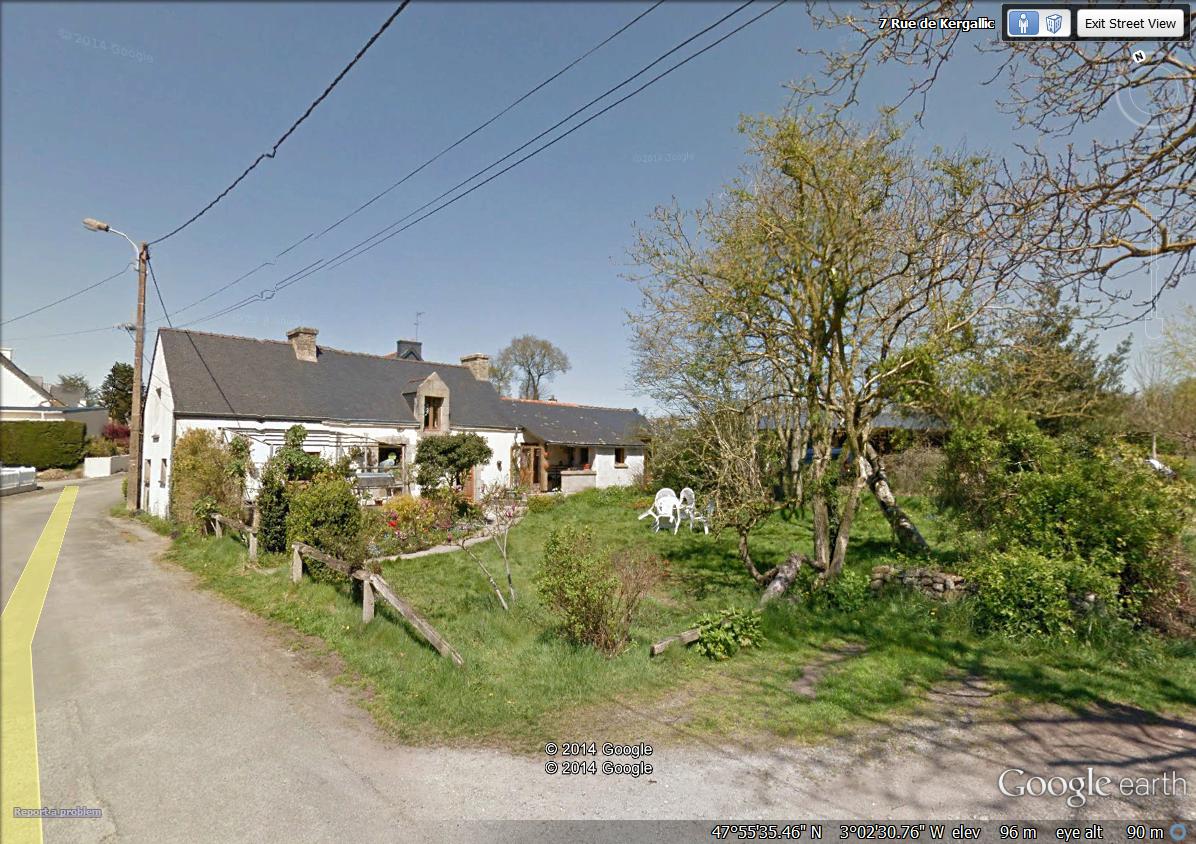 I must tell you something of the people I’m staying with. Nothing I write could possibly convey the pleasure I experienced in meeting them.
Delphine Decloedt and Didier Durassier live in a little bungalo in Saint Barthélemy, on the quiet lane that leads to l’étan (the pond) de Kergallic. The house, true to medieval tradition, combines the functions of home and atelier, and opens onto a delightfully anarchic garden. Their children are intelligent, polite (well, little Arthur can be stubborn, sometimes!) and talented. Didier is well known in Breton music circles as a performer on biniou, veuse and bombarde, as a member of the band Penn Kazh, and as Brittany’s most accomplished craftsman-sculptor of traditional instruments. Delphine is a painter and calligrapher (Grand prix du prestige Européen des Arts et Belles Lettres, Commandeur de l’ordre de l’Etoile de l’Europe). When, I stepped into the house, Mélissande was playing some Satie on the piano. She came across as quiet, but not timid. Liam already has the “cool” of French cinema idols. Arthur is a reincarnation of Christopher Robin. Read more »