(Mikels 1968) The Astro-Zombies
(Mankiewicz 1972) Sleuth
(Archer & Kirby 2004) The Ancient World: Ep.3 — The Minoans
(Hughes 1955) Timeslip [aka The Atomic Man] Read more »
FILMS – OCTOBER 2011
Posted by Phil Paine
on October 31, 2011
No comments
First-time listening for October, 2011
Posted by Phil Paine
on October 31, 2011
No comments
22780. (John Lee Hooker) House of the Blues
22781. (A Split Second) Ballistic Statues
22782. (Fripp & Eno) Evening Star Read more »
READING – OCTOBER 2011
Posted by Phil Paine
on October 31, 2011
No comments
 22917. (Didier Viviers) Economic and Territorial Dynamics in Crete from
. . . . . . the Archaic to the Hellenistic Period [article]
22918. (Sara Paton & Rolf M. Schneider) Imperial Splendour in the
. . . . . . Province: Imported Marble on Roman Crete [article]
22919. (Philip P. Betancourt) Pseira and Knossos: The Transformation of
. . . . . . an East Cretan Seaport [article]
22920. (Alfonso Moreno) Feeding the Democracy ― The Athenian Grain
. . . . . . Supply in the Fifth and Fourth Centuries B.C.
22921. (Margaret S. Mook) From Foundation to Abandonment: New
. . . . . . Ceramic Phasing for the Late Bronze Age and Early Iron Age on
. . . . . . the Kastro at Kavousi [article]
22922. (Maria C. Shaw) Religion at Minoan Kommos [article]
22923. (Rodney Castleden) Mycenaeans
22924. (James D. Muhly) Chrysokamino and the Beginnings of Metal
. . . . . . Technology on Crete and in the Aegean [article]
22925. (Paula J. Perlman) Writing on the Walls. The Architectural Context
. . . . . . of Archaic Cretan Laws [article] Read more »
Sunday, October 23, 2011 — Protests, Unreal and Real
Posted by Phil Paine
on October 23, 2011
No comments
I’ve passed by the “Occupy Toronto” campsite a few times, this week. Normally, I’m not much impressed by political demonstrations. In North America, they have proven woefully ineffectual over the last generation. The people who organize them are usually far more interested in the pastime of demonstrating that in accomplishing any goals. In fact, they are mostly counter-productive, because the Powers That Be long ago figured out how to turn them to their own advantage. So I always wince when I see the usual band of scruffy teenagers wearing circle-As, the aging hippies, the predictable “political theatre” stunts, the meaningless slogans, and the dreary chants. Those in power lovethese people, especially the self-styled “anarchists,” because they re-inforce authority, rather than threaten it. Nothing discredits real opposition in the eyes of the public more effectively than a few seconds of TV footage showing a teenager with his face painted, screaming unintelligeable slogans. They see what appears to them to be a mob of brainless pranxters. The issues can then be safely buried by the media. Read more »

FILMS – SEPTEMBER 2011
Posted by Phil Paine
on September 30, 2011
No comments
(Robbins 2008) Meet Dave
(Nolfi 2011) The Adjustment Bureau
(Rodriguez 2001) Spy Kids
(Apted 2005) Rome: Ep.1 ― The Stolen Eagle Read more »
First-time listening for September, 2011
Posted by Phil Paine
on September 30, 2011
No comments
22769. (George Frederick Händel) Dank sei dir, Herr!
22770. (Wolfgang Amadeus Mozart) Vesperae solemnnes de confessore, K.339: “Laudate Dominum”
22771. (Giuseppe Giordani) Caro mio ben Read more »
READING – SEPTEMBER 2011
Posted by Phil Paine
on September 30, 2011
No comments
22884. [2] (Edith Hamilton) The Greek Way
(George O. Smith) Venus Equilateral, Volume One:
. . . . 22886. (John W. Campbell, Jr.) Introduction [preface]
. . . . 22887. (George O. Smith) QRM ― Interplanetary [story] Read more »
Friday, September 10, 2011 — Mycenae, Nafplios, Corinth
Posted by Phil Paine
on September 10, 2011
No comments
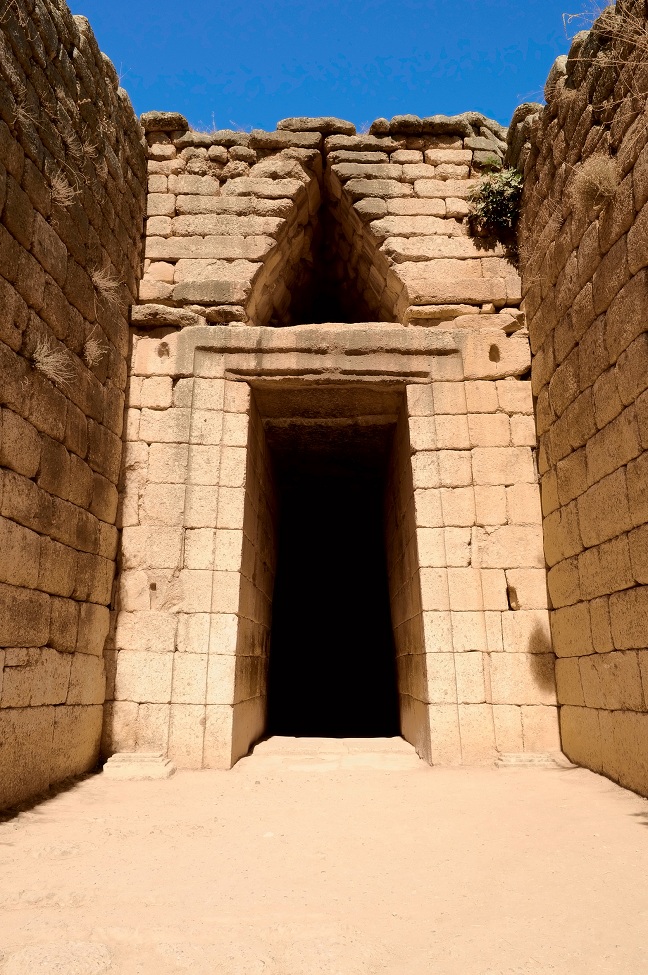 We chose to visit Mycenae during our limited time on the mainland. As the Mycenaeans were the successors (and perhaps conquerors) of the Minoans, their most impressive ruins of were a fitting choice. They are dramatically located on a steep hill, flanked by a deep canyon, from which you can see the entirety of the Argolid plain, and even a fleet approaching by sea would have been visible. The “cyclopean” walls are extremely impressive, many of the blocks weighing over twenty tons. I thought the famous “Gate of the Lions” would be one of those iconic images that disappoints in real life, but it lives up to its reputation. It was visible in historic times without excavation. The excavations and very cautious reconstructions by Greek archaeologists have not involved the laisse-majesté practiced by Evans at Knossos. What you see is largely the citadel as it was in Late Helladic IIIa (circa 1250–1200 BC), open to the public with only enough reconstruction, pathways, fencing and educational plaquing to make it comprehensible to the public and yet keep it from being destroyed by visitors. Read more »