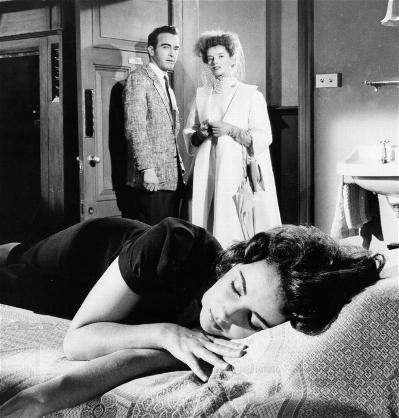
 It’s fascinating to see the twisting and turning in this film adaptation of Tennessee Williams’ play. In the 1950’s, American film was subject to government censorship under the notorious Hays Act, and to even more disgusting self-imposed censorship under the studios’ “voluntary code”. “It was like writing for Pravda,” said Gore Vidal, who scripted the film. In a wonderful documentary called The Celluloid Closet, he describes his repeated meetings with a Jesuit priest who, apparently, had life-and-death powers over any film production. Apparently, the very concept of homosexuality could not be allowed to appear on film. Since this was the central element of the plot, the result is a strange, almost hallucinatory atmosphere in which characters talk for ten minute stretches of oblique hints and enigmatic grimaces, merely to avoid mentioning that an absent character (who is dead) was gay! All this rigamarole is being done by Elizabeth Taylor during the period when she was a brilliant actress, Katherine Hepburn (who was always a brilliant actress), and Montgomery Clift. Clift was also a gifted actor, but at the time, he was recovering from a car accident that had disfigured his face, and was saturated with pain killers. He was also a closeted gay, himself. The scenes when all three of them are together are so filled with repression and tension that they count among the most bizarre and intense in film history. A viewer who is under twenty-five will probably find the whole thing incomprehensible. “What the hell are these people talking about, or more precisely, why are they not talking about it, what is everybody upset about it, and what on earth is going on?” was the response of one younger friend of mine. The whole thing was so alien to his experience and sensibilities that he could make no sense of it. And I couldn’t have explained it without undertaking a five hour discourse on the transformations in North American society in the lasty fifty years.
Author Archives: Phil Paine - Page 41
(Mankiewitz 1959) Suddenly, Last Summer
Fourth Meditation on Democracy [written Saturday, September 22, 2007] REPUBLISHED
 In the beginning years of this blog, I published a series of articles called “Meditations on Democracy and Dictatorship” which are still regularly read today, and have had some influence. They still elicit inquiries from remote corners of the globe. They are now buried in the back pages of the blog, so I’m moving them up the chronological counter so they can have another round of visibility, especially (I hope) with younger readers. I am re-posting them in their original sequence over part of 2018. Some references in these “meditations” will date them to 2007–2008, when they were written. But I will leave them un-retouched, though I may occasionally append some retrospective notes. Mostly, they deal with abstract issues that do not need updating.
 Recently, two Canadian high school students did a remarkable thing. It was remarkable enough to generate a large amount of comment in the blogosphere. According to the original news item in the Halifax Chronicle Herald [1], a grade 9 student “arrived for the first day of school last Wednesday and was set upon by a group of six to 10 older students who mocked him, called him a homosexual for wearing pink and threatened to beat him up.” Anyone who has attended high school knows the usual outcome of such situations. But in this case, it was different. Two senior students, Travis Price and David Shepherd, were disgusted by this crude bullying. “It’s my last year. I’ve stood around too long and I wanted to do something,” David explained. The two students bought 75 pink tank-tops and, rallying students through the internet, persuaded half the student body to wear them, or to supply their own. When the bullies next came to school, they were confronted by an ocean of pink solidarity. “The bullies got angry,” said Travis. “One guy was throwing chairs (in the cafeteria). We’re glad we got the response we wanted.” Read more »
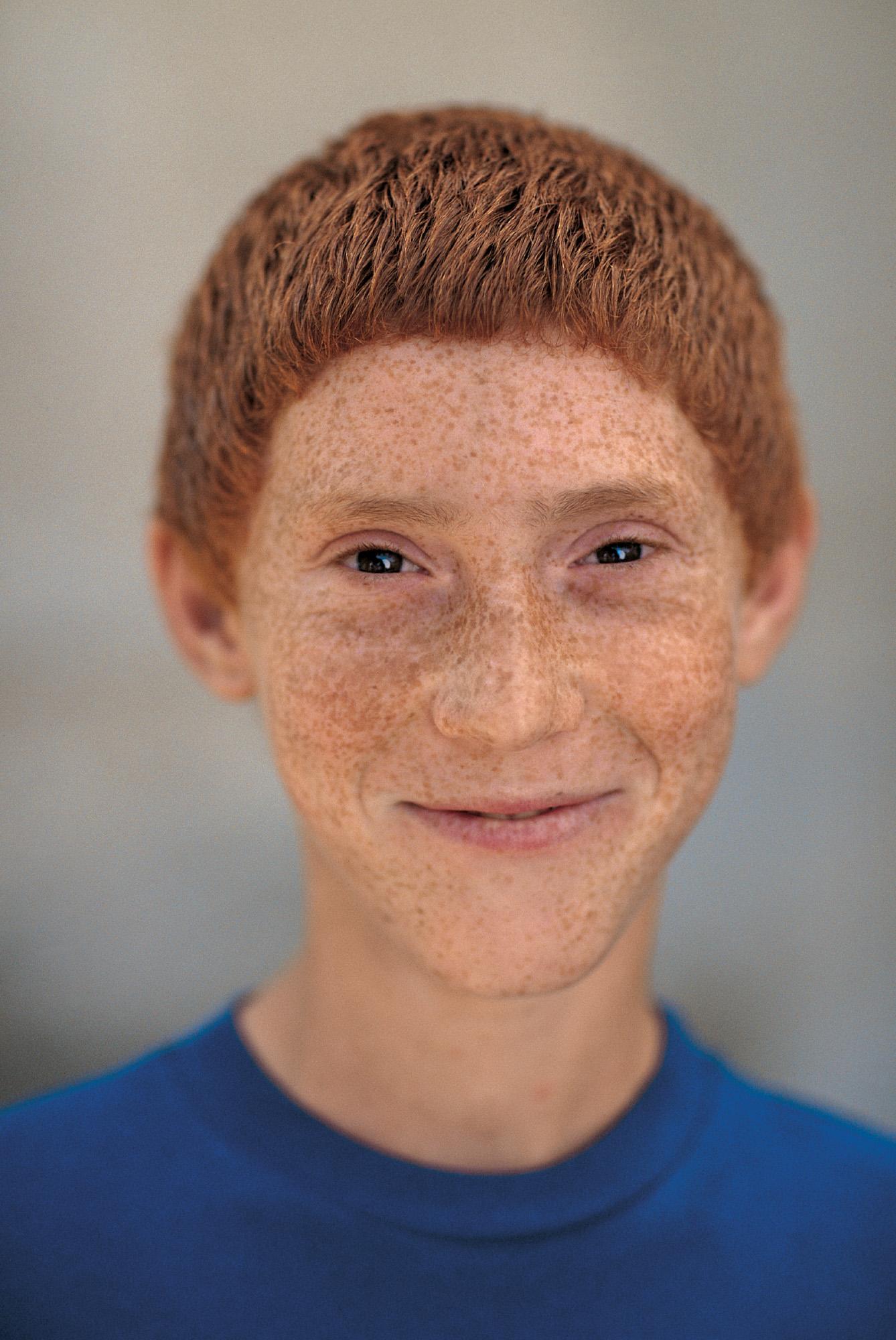
Image of the month: You can’t have too many freckles.
FILMS – MAY 2018
(Yeaworth 1958) The Blob
(Crossland 2010) Murdoch Mysteries: Ep.30 ― Rich Boy, Poor Boy
(Meza-León 2017) Rick and Morty: Ep.30 ― The ABC’s of Beth
(Dein 1960) The Leech Woman [Mystery Science Theatre version]
(May 1976) Mikey and Nicky
(Berke 1958) The Lost Missile
Read more »
First-time listening for May 2018
25081. (Arthur Sullivan) Suite from the Incidental Music to The Merry Wives of Windsor
25082. (Afghan Whigs) Big Top Halloween
25083. (Gioacchino Rossini) Armida [complete opera; d. Serafin; Callas, Albanese, Filippeschi]
25084. (Sleater-Kinney) The Hot Rock
Read more »
READING — MAY 2018
23908. (Judea Pearl) Causality ― Models, Reasoning, and Inference [2nd ed.]
23909. (Chris Loendorf, David Jacobs & Glen E. Rice) Petroglyphs, Grinding Slicks, and
. . . . . Cupules of the Rock Island Comples: U:8:3e92/862 [article]
23910. (Steve Muhlberger) [in blog Muhlberger’s World History] When Does Anyone Ever
. . . . . Appologize Like This? [article]
Read more »
Third Meditation on Democracy [written Saturday, August 18, 2007] REPUBLISHED
In the beginning years of this blog, I published a series of articles called “Meditations on Democracy and Dictatorship” which are still regularly read today, and have had some influence. They still elicit inquiries from remote corners of the globe. They are now buried in the back pages of the blog, so I’m moving them up the chronological counter so they can have another round of visibility, especially (I hope) with younger readers. I am re-posting them in their original sequence over part of 2018. Some references in these “meditations” will date them to 2007–2008, when they were written. But I will leave them un-retouched, though I may occasionally append some retrospective notes. Mostly, they deal with abstract issues that do not need updating.
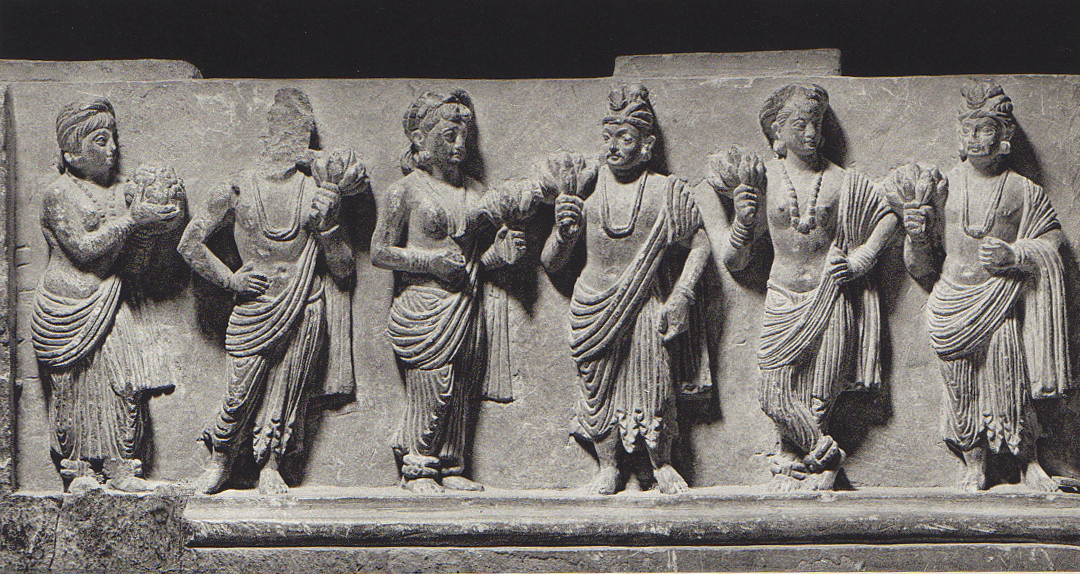
A convivial gathering of men and women in ancient Pakistan, during the Gandharan era, a time of intellectual and artistic synthesis. Gandharan art, drama and philosophy drew on influences from India, Persia and Greece.
Western Europe, and lands culturally derived from it, have made some relatively successful approximations of democracy and civil society, and combined them with noticeable prosperity. People both inside and outside this favoured zone wonder why, and they have often sought the answer in two particular areas: religious traditions, and the dramatic intellectual era called “the Enlightenment”. As someone who has written about the universal aspects of democracy, I’ve often felt some annoyance at what I consider parochial views of history, and dubious ideas of causality. I feel great sympathy for people outside the favoured zone, who are hopeful that they can have a democratic future, but are discomfited by the “second-banana” status that it seems to imply for their cultural heritage. This is especially true in the Islamic world, where past cultural glories and present embarrassments combine to make the search for democratic reform a touchy subject. I think that an excessively cartoonish view of the Enlightenment, and of the relationship between religion and democracy, is part of the problem. Read more »
Image of the Month: Canadian Women’s Army Corps posed photo of Mary Greyeyes and Harry Ball, 1942.
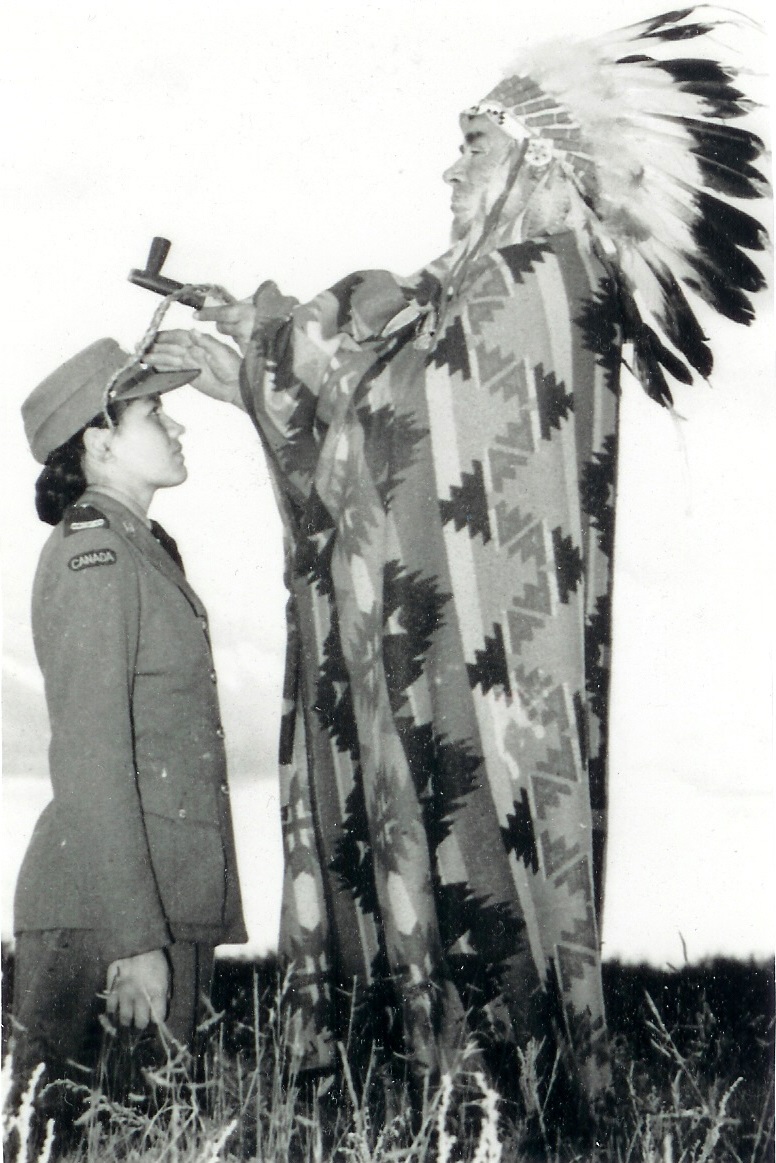 This photograph hung for decades in the National War Museum in Ottawa with its subjects labeled “unidentified”, until Mary’s daughter-in-law learned of its existence in 1995. The photo was taken to encourage more women to join the army, and its staged “Indian blessing” proving popular, it was widely reprinted during the war, then forgotten.
Mary Greyeyes was from Muskeg Lake Cree Nation in Saskatchewan. This tiny community (only 367 people live on the reserve) has a remarkable military history. 56 of its youth served in the armed forces, including seven women, most of them named Greyeyes, Arcand or Lafond. Mary Greyeyes joined about the same time that my mother joined the Air Force. Muskeg Lake Cree have fought in Europe, Korea, and Afghanistan. Muskeg Lake is also the birthplace of the ballet dancer, choreographer and film actor Michael Greyeyes.
Mary returned to Canada after finishing her service in 1946, married, and made a career as an industrial seamstress in Vancouver. She died in 2011. The other participant in the staged photo was Harry Ball, a Cree from Piapot First Nation, who was a World War I veteran. His Plains Chief regalia was scrounged up on that reserve, where the photo was taken.
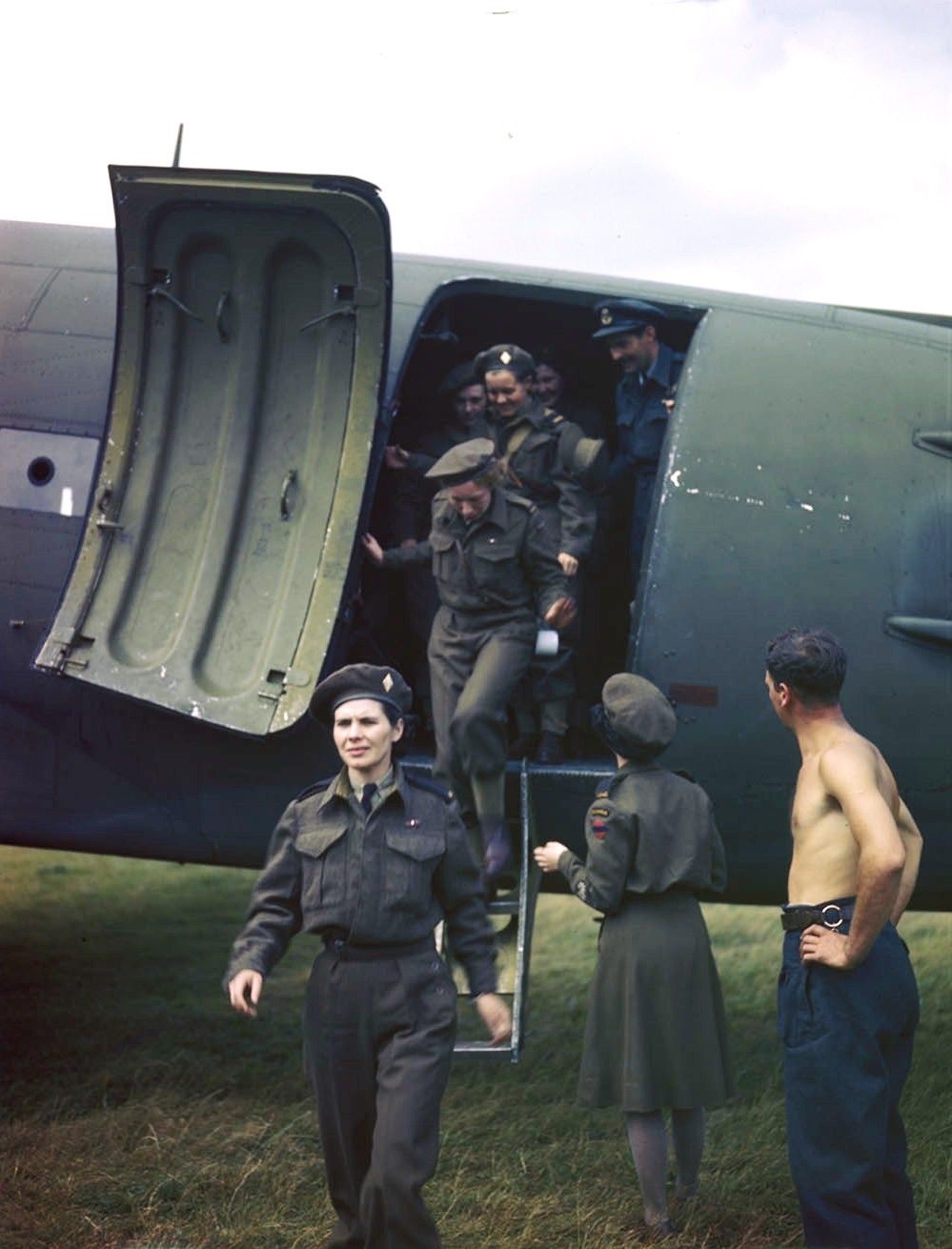
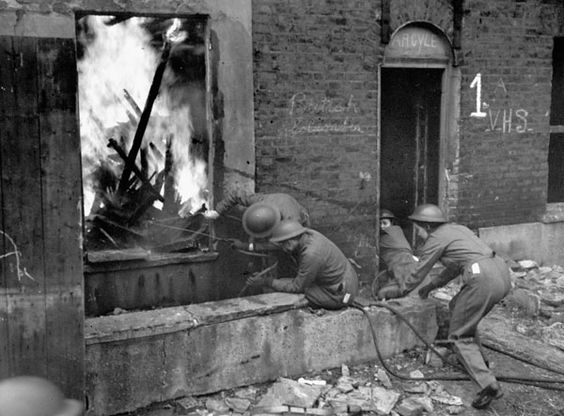
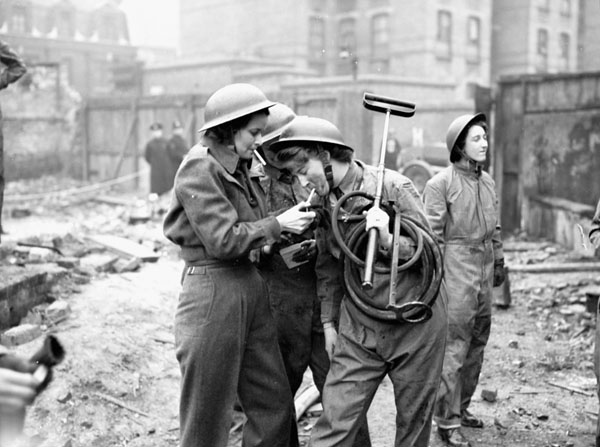
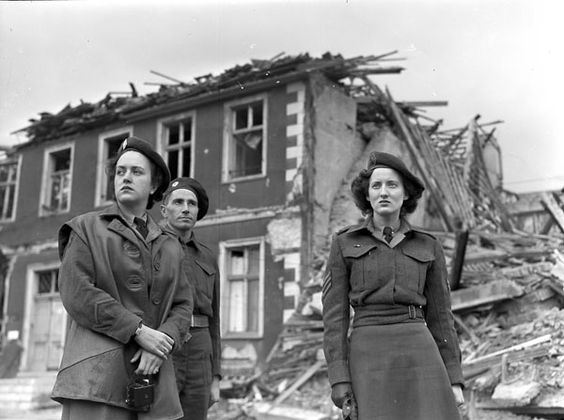
Photos of CWACS in action. Many were involved in dangerous work. They were not just clerk-typists and tea-brewers:
FILMS – APRIL 2018
(Spielberg 1981) Raiders of the Lost Ark
(Wilder 1954) Killers from Space
(Trelfer 2017) Dark Corners Review: (38) Killers from Space
(Reitman 1984) Ghostbusters
Read more »
First-time listening for April 2018
25061. (John Dunstaple) Beata Mater à 3
25062. (Giuappe Sammartini) Recorder Concerto in F
25063. (Bruce Kurnow) Sky Passage
25064. (Ken Johnson) The Natural Piano
Read more »