23233. (Poul Anderson) The Dancer from Atlantis
23234. (Antonio Currais, et al) Amyloid Proteotoxicity Initiates an Inflammatory Response
. . . . . Blocked by Cannabinoids [article]
23235. (Richard Wilk) Towards an Anthropology of Bad Business [article]
23236. (Jesús Carrobles Santos, et al) Toletum. Configuración y evolución urbana de la capital
. . . . . visigoda: urbs et territorium [article]
Read more »
Category Archives: B - READING - Page 14
READING — JULY 2016
Posted by Phil Paine
on July 31, 2016
No comments
READING — JUNE 2016
Posted by Phil Paine
on June 30, 2016
No comments
23206. (M. C. Ricklefs) A History of Modern Indonesia Since C.1200
23207. (Paul McLeary) The Fight for Fallujah’s Highway 11 [article]
23208. (Ľubomír Novák) Archaeology of Viking Age Færoe Islands [article]
23209. (Bret Stern) How to Shoot a Feature Film for Under $10,000 and Not Go to Jail
23210. (M. J. Walker, et al) Combustion at the late Early Pleistocene site of Cueva Negra del
. . . . . Estrecho del Río Quípar [article]
Read more »
READING — MAY 2016
Posted by Phil Paine
on May 31, 2016
No comments
23169. (Thomas Paine) A Letter Addressed to the Abbé Raynal on the Affairs of North America
23170. (O. Sigmarsson, et al) Dynamic Magma Mixing Revealed by the 2010 Eyjafjallajökull
. . . . . Eruption [article]
23171. (Witold Rybczynski) City Life
23172. (Torben Bjarke Ballin) Rising Waters and the Processes of Diversification and
. . . . . Unification in Material Culture — the Flooding of Doggerland and Its Effect on NW
. . . . . European Prehistoric Populations between c. 13,000 and 1,500 cal BC [article]
Read more »
READING — APRIL 2016
Posted by Phil Paine
on April 30, 2016
No comments
23113. [3] (Jonathan Swift) Gulliver’s Travels [Travels Into Several Remote Nations of the
. . . . . World, in Four Parts, by Lemuel Gulliver]
23114. (Michel de Montaigne) De l’amitié [article] [read in English at 9575]
23115. (Torsten Günther, et al) Ancient Genomes Link Early Farmers from Atapuerca in Spain
. . . . . to Modern-day Basques [article]
(Étienne de La Boétie) Oeuvres complètes d’Estienne de la Boétie [ed. Paul Bonnefon]:
Read more »
READING — MARCH 2016
Posted by Phil Paine
on March 31, 2016
No comments
23083. (Jules Verne) Paris au xxe siècle [read in English translation at 18241]
23084. (Thijs Van Kolfschoten, et al) Lower Paleolithic Bone Tools from the “Spear Horizon”
. . . . . at Schöningen [article]
23085. (Marie-Anne Julien, et al) Characterizing the Lower Paleolithic Bone Industry from
. . . . . Schöningen 12 II: A Multi-proxy Study [article]
Read more »
READING — FEBRUARY 2016
Posted by Phil Paine
on February 29, 2016
No comments
23029. [3] The Book of Genesis [King James Bible]
23030. (Francis X. Hezel) Making Sense of Micronesia — The Logic of Pacific Island Culture
23031. [4] The Book of Genesis [Oxford Annotated Revised Standard Bible]
23032. (Trish Laughran) Disseminating Common Sense: Thomas Paine and the Problem of the
. . . . . Early National Bestseller [article]
Read more »
READING — JANUARY 2016
Posted by Phil Paine
on January 31, 2016
No comments
23000. (Frs. Limbourg & Jean Colombe) Les Très Riches Heures du Duc de Berry [1412–1489]
23001. (Jean-Paul Gagnon) Non-human Democracy: Our Political Vocabulary Has No Room
. . . . . for Animals [article]
23002. (Miljana Radivojević, et al) On the Origins of Extractive Metallurgy: New Evidence
. . . . . from Europe [article]
23003. (Patrick Vinton Kirch) The Lapita Peoples: Ancestors of the Oceanic World
Read more »
Les Très Riches Heures du Duc de Berry
Posted by Phil Paine
on January 24, 2016
No comments
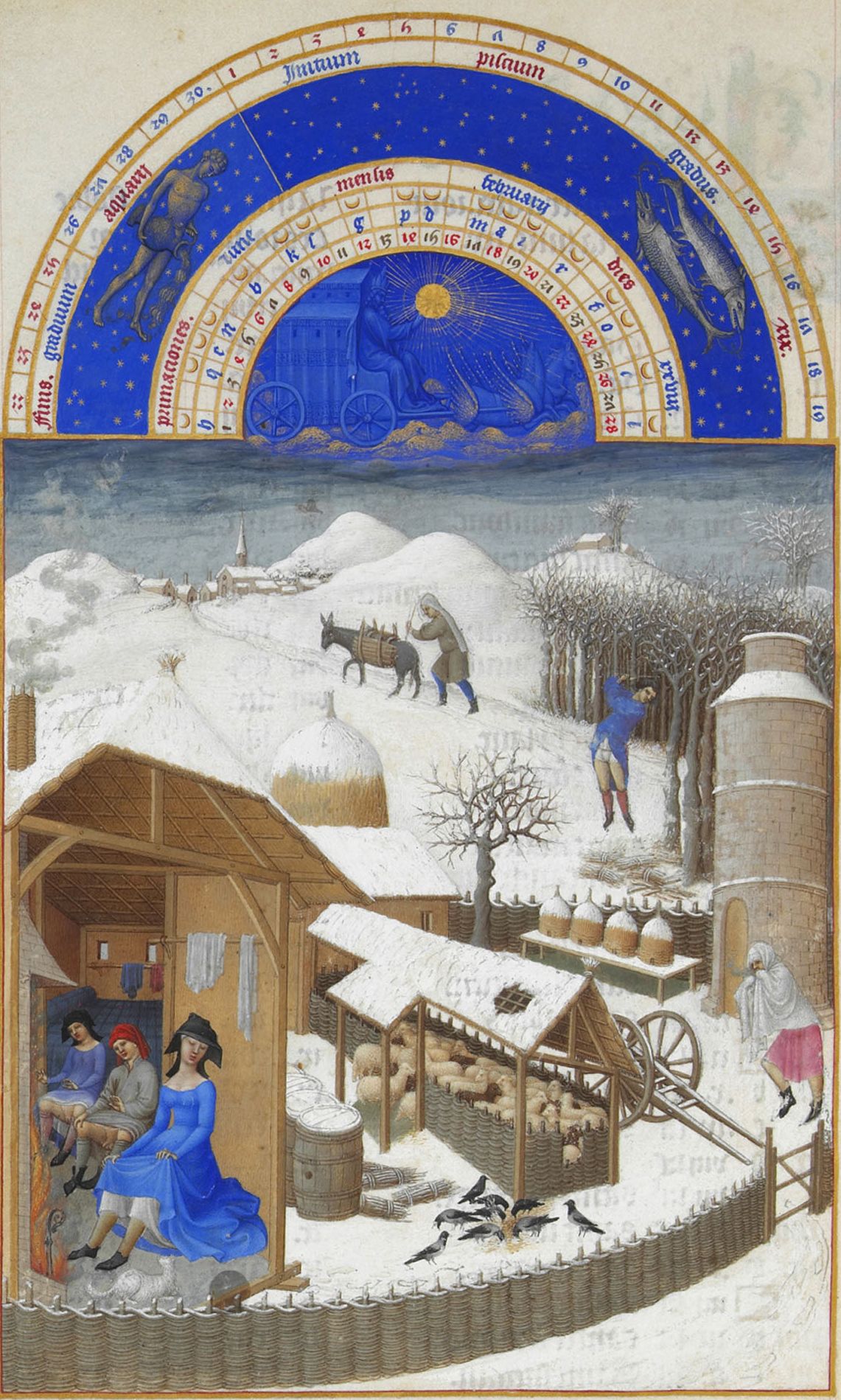 Usually, I don’t list a book as “read” unless I read the whole thing, but this is a special case. The Très Riches Heures is a medieval breviary, famous for its artistic value as an illuminated manuscript. I doubt that many people have ever read the entire text, which is merely a collection of prayers, making tedious reading. Such books were made for laymen who wished to bring some elements of monastic practice into their daily lives. They provided a calendric schedule for reading passages from the Gospels, the Psalms, and litanies, and also helped one keep track of the many feast and saints’ days. Most were in Latin, but some were in local vernaculars. Thousands of these manuscripts survive, but a handful that were produced for wealthy nobles are spectacularly illuminated. The one produced for the Duc de Berry is considered to be one of the principal masterpieces of medieval art. It is sometimes said to be the most valuable book in the world. Read more »
Some Thoughts on a Year of Reading
Posted by Phil Paine
on January 3, 2016
No comments
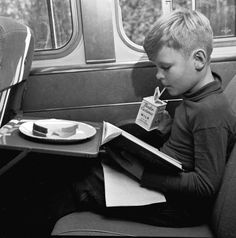 It’s been an average year of reading. 160 books and about 500 academic papers, articles, short stories and other short items. History and anthropology dominated the book reading, as usual, with an emphasis on Australia, the Pacific, the Canadian North and West, and the ideas of 19th century Canadian democratic reformers. I became particularly fascinated by the 19th century convict colonies of Australia and the French Pacific possessions, and I amplified previous readings (such as Robert Hughes venerable The Fatal Shore, and the eye-opening but little known Australia’s Birthstain, by Babette Smith). Thomas Keneally, giving Hughes a run for his money in A Commonwealth of Thieves, covers the general subject with extraordinarily vivid prose, and Siân Rees makes a closer case study in The Floating Brothel — The Extraordinary True Story of an Eighteenth- century Ship and Its Cargo of Female Convicts. Read more »
READING – DECEMBER 2015
Posted by Phil Paine
on December 31, 2015
No comments
22963. (Jonathan Safran Foer) Extremely Loud & Incredibly Close
22964. (Philipp W. Stockhammer, et al) Rewriting the Central European Early Bronze Age
. . . . . Chronology: Evidence from Large-Scale Radiocarbon Dating [article]
22965. (Robert M. Kerr) Coït sacré ou deuil rituel? Quelques remarques préliminaires sur
. . . . . l’apthéose chez les Phéniciens [article]
Read more »