17078. (David Liss) A Conspiracy of Paper
17079. (Darrell Markewitz) [in blog Hammered Out Bits] Blacksmithing Skills in the Viking Age
. . . . . [article]
17080. (Lithium Cola) [in blog Daily Kos] Hits and Misses 2008 [article]
17081. (Lithium Cola) [in blog Daily Kos] Of ICBMs, Sesame Street, and Arrogance [article]
17082. (Lebanon Daily Star) Beirut Seems to Have Upper Hand Against Extremists [article]
17083. (Juan Cole) [in blog Informed Comment] Top Ten Good News Stories in the Muslim
. . . . . World, 2008 {That Nobody Noticed} [article]
Read more »
Category Archives: B - READING - Page 28
READING JANUARY 2009
Posted by Phil Paine
on January 31, 2009
No comments
(Lucian of Samosata) Selected Satires of Lucian [ed. & tr. Lionel Casson]
Posted by Phil Paine
on January 20, 2009
No comments
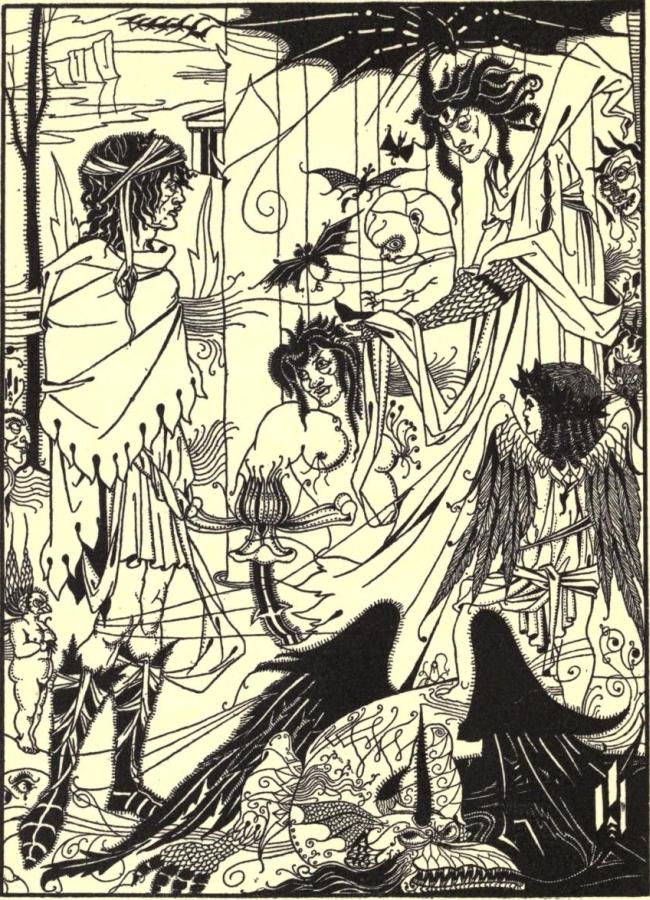 Lucian seems to have been the Kurt Vonnegut of the Roman World, poking fun at philosophers and the classics of Greek literature with a cheerful cynicism. Though he was an Assyrian from Mesopotamia, living in the second century A.D., he wrote in Classical Greek (the equivalent of someone today writing in Elizabethan English). His most famous work is the True History, sometimes listed as the first science fiction story, since it incorporates a trip to the moon and the sun, and an interplanetary war. But it’s really a shaggy-dog story intended to spoof the credulity of Homer and Herodotus. The narrator repeatedly tells you something absurd, then says he won’t tell you another, more absurd detail because you won’t believe him. It employs techniques of farce and burlesque later perfected by Baron Münchausen and Mark Twain. Lucius the Ass, the attribution of which is occasionally questioned, is noticeably different in style, and contains passages that are obviously intended to be read as porn. The same story (the hero is transformed into a donkey: trouble follows) was also told by Apuleius. It’s interesting in that it draws attention to the suffering of an animal, something to which most Roman writers were oblivious. Most of the other pieces are comic dialogues in which the Gods are spoofed in all-too-human terms. Lucian seems to have considered all religion charlatanism, and did not have much good to say about philosophers, either. Christians are satirized in The Death of Peregrinus. The autobiographical My Dream reveals that a stone-mason’s son from a backwater part of the Empire could educate himself into a success. Lucian was able to settle down and write spoofs after a career as a lecturer that took him across the Empire. A modern reader with a routine exposure to Greek mythology will get at least half of Lucian’s allusions, though not, of course, his puns. This anthology contains less than half of his known works. Read more »
17083. (Juan Cole) [in blog Informed Comment] Top Ten Good News Stories in the Muslim World, 2008 [That Nobody Noticed] [article]
Posted by Phil Paine
on January 5, 2009
No comments
Steve Muhlberger’s site exposed me to the blogging of Juan Cole, who is a University of Michigan historian specializing in contemporary Middle Eastern and South Asian studies. He counts as one of the major historians of, and policy experts on the Middles East. His blog, Informed Comment, is the best source of insightful comment and hard-to-find crucial information in this field that I’ve seen, anywhere. I recommend checking out this entry, since it exemplifies his ability to sort out the “big picture” from a blizzard of data. I was not surprised to learn that Cole is an avid Science Fiction fan .…it seems that all today’s best historians are.
17078. (David Liss) A Conspiracy of Paper
Posted by Phil Paine
on January 3, 2009
No comments
This is an excellent, entertaining novel set in England in 1720, at the time of the “South Sea Bubble.” This was a financial crisis caused by a complex stock market swindle, which was cooked up by an alliance of private and government interests. Reading the book today, now that we have witnessed the biggest armed robbery in human history, in the form of the Wall Street bailouts, is a more piquant experience than it would have been if I had picked it up when it was published, eight years ago. [Last November, I reviewed an interesting biography of John Law, the man at the heart of the financial meltdown of France that occurred in the same year.] Read more »
READING – DECEMBER 2008
Posted by Phil Paine
on December 31, 2008
No comments
16974. (Vanni Beltrami) Il Sahara centro-orientale Dalla Preistoria ai tempi dei nomadi Tubu
. . . . . [The Central-Oriental Sahara From Prehistory to the Times of the Nomadic Tubus]
16975. Hittite document: Apology of Ḫattušili III [Donation of the Estate of Arma-Tarḫunta to
. . . . . the Cult of Šaušga of Šamuḫa]
16976. (Françoise Thibaut) Le chevalier Jean Charles de Borda, scientifique et navigateur
. . . . . [article]
16977. (Doug Saunders) This is India’s 9/11? Think Again [article]
16978. (Ufuk Tavkul) A Good Sample For Cultural Diffusion: A Hero Who Carries The
. . . . . Characteristics Of Prophet David In The Nart Epos Of Karachay-Balkar People ―
. . . . . Nart Debet, The Smith [article]
16979. (Arkady & Boris Strugatski) Hard to Be a God
Read more »
17077. (Debra Hamel) Trying Neaira, the True Story of a Courtesan’s Scandalous Life in Ancient Greece
Posted by Phil Paine
on December 28, 2008
No comments
Using the fragmentary evidence of a trial which took place in Athens c.340 B.C., Debra Hamel creates a vivid picture of the place of women in Classical Greek society. This book is entirely free of post-modern platitudes and jargon, and concentrates on helping the reader visualize and empathize with the past. Along the way, many collateral issues, such as just how ancient litigation worked in real life, and what sexual laws and customs meant for real people, are illuminated. I would strongly recommend this book to anyone who wants to dig deeper than the standard battles-and-big-shots approach to Greek history. This was a delightful Christmas gift from my friend Ruta Muhlberger.
17055. (Gene Sharp) From Dictatorship To Democracy: A Conceptual Framework for Liberation
Posted by Phil Paine
on December 20, 2008
No comments
It’s odd that I haven’t read Gene Sharp’s work until now. I’ve known about him for years, and I’ve been aware of his ideas at second hand. He has been preoccupied with the issue of how people can resist or overthrow dictatorships for longer than I have (and that’s saying quite a bit). His ideas are fairly close to my own, and come from similar influences. So I’m embarrassed to say that I have neglected reading his works, an error that I will hastily correct.
Unlike most academics, Sharp has a common-sense grasp of what is possible and what is not, what is relevant and what is not, and what works and what does not. This short work, which he keeps in the public domain and encourages to be translated, is an extremely useful vademecum for those who want to overthrow dictatorships. He urges the use of what he calls “Political Defiance”, a strategic form of planned non-violent resistance. As he points out, over-reliance on violence, rather than on more sophisticated techniques of resistance, does not have a good record of success. This document has influenced democracy advocates in a number of quarters. I strongly recommend it.
17043. (Marie-Jean-Antoine-Nicolas Caritat de Condorcet) Condorcet’s Advice to His Daughter [written in hiding, 1794] 17044. (Marie-Jean-Antoine-Nicolas Caritat de Condorcet) Condorcet’s Testament [written in hiding, 1794] 17045. (Marie-Jean-Antoine-Nicolas Caritat de Condorcet) Vie de Voltaire, par M. le marquis de Condorcet; suivie des mémoires de Voltaire, écrits par lui-mème.
Posted by Phil Paine
on December 16, 2008
No comments
I’ve been reading a lot of Condorcet, lately, in dribs and drabs. He was not a great writer, or particularly entertaining, but what he had to say is worth paying attention to. He was primarily a mathematician and scientist, who found himself continuously caught up in political issues (for which he would ultimately pay with his life, in Robespierre’s terror), and he was a shy, socially inept man with no talent for cultivating celebrity. Condorcet is a much more important figure than most think. I have elsewhere complained that the actual balance of intellectual influences in the Enlightenment and the period of the American and French revolutions is probably not much like the image of it that most of us have inherited from textbooks, or old chestnuts like Rousseau and Revolution. The small attention paid to Condorcet illustrates this. Recently there has been a modest growth of interest in him because of his writings on the mathematical theory of voting, and its relevance to modern ballot reform. In France, he is better known as a theorist of public education. But, still the interest is relatively small, considering the degree of his actual influence. Read more »
17015. (Luc Laeven & Fabian Valencia) IMF Working Paper: Systemic Banking Crises, A New Database [report]
Posted by Phil Paine
on December 13, 2008
No comments
This a working document issued this week by the IMF. It’s essentially an internal report by their statisticians analyzing all national liquidity crises that have occurred since 1970. There are things worth calling attention to, in it: There were 124 “systemic banking crises” spread across dozens of countries between 1970 and 2007. Almost every nation on Earth is in the list — except Canada. We’ve never had one. Read more »
17003. (Günter Hägele & Friedrich Pukelsheim) Llull’s Writings On Electoral Systems [article]
Posted by Phil Paine
on December 10, 2008
No comments
![08-12-10 READ 17003. (Günter Hägele & Friedrich Pukelsheim) Llull’s Writings On Electoral Systems [article]](http://www.philpaine.com/wp-content/uploads/2008/12/08-12-10-READ-17003.-Günter-Hägele-Friedrich-Pukelsheim-Llull’s-Writings-On-Electoral-Systems-article-257x300.jpg)
Ramon Lull, Medieval polymath from the Balaeric Islands
This important paper on medieval electoral theory doesn’t come from historians, but from mathematicians. Their interest is that the medieval Catalan scholar Ramon Lull (or Llull) (b.1232‑d.1315) anticipated the mathematical theories of electoral systems of the eighteenth century known to us through Borda and Condorcet. Apparently, recently discovered medieval manuscripts reveal that Lull had developed a quite similar theory. This interests me, of course, as the history of electoral systems is part of what I explore, but more important than the mathematical accomplishment is the implication that monastic institutions in the Middle Ages took election procedures very seriously.