This album was recorded during June-November 2008, but it hasn’t been released yet. Grammatics is a British indie rock band from Leeds with a complex sound. Owen Brinley (guitar/vocals), Emilia Ergin (cello), Dominic Ord (drums) and Rory O’Hara (bass) have an orchestral approach to their rock, quite far off from the minimalist style dominant in the British Indie scene. Emilia Ergin uses the cello much like a lead guitar. The rhythm section is very strong: this is Rock, not mushy orchestrated pop. There’s a wee bit of Queens Of The Stone Age and other American indie bands perceptible in this mix, but on the whole, Grammatics is an original band, trying to do things on its own terms. Every song is different, every song is interesting. I’ll be listening to anything I can get from this group.
Category Archives: C - LISTENING - Page 31
Charles Ives: the “Universe Symphony”
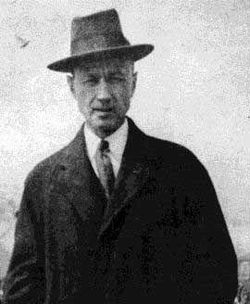
Charles Ives on the Outside

and on the Inside
We’re an odd bunch, those of us who have the taste for the eccentric music of Charles Ives, the amateur composer and insurance salesman who independently developed (ahead of everyone else) virtually every musical innovation of the 20th century. Unrecognized and unperformed during most of his lifetime, he composed bizarre concoctions of polyrythms, polytonality, quarter tones, and tone clusters, including aleatoric elements, long before anyone else dreamed of doing so. Read more »
First-time listening for December, 2008
19234. (Charlie Haden) Liberation Music Orchestra
19235. Sundanese Jaipong and Other Popular Music
19236. (Bud Powell) Jazz Giant
19237. (We Are Standard) We Are Standard
19238. (Thomas Tallis) Beati immaculati
19239. (Thomas Tallis) Introit — Puer natus est nobis
19240. (Thomas Tallis) Kyrie — Deus creator 2
19241. (Juno Reactor) Shango Tour Tokyo, 2001
Read more »
Beethoven’s “Waldstein” Sonata
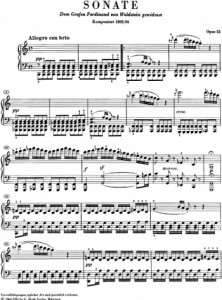 Beethoven’s Piano Sonata No. 21 in C major, Op.53, known as the “Waldstein”, is my favourite of the lot. It first came to my attention when I read Edgar Pangborn’s neglected science fiction masterpiece, A Mirror For Observers. Pangborn, a composer and pianist himself, used a performance of the piece as a key device in the plot. It remains one of the pieces I play most often.
It starts softly, with a series of rhythmic chords devoid of melody, then plays around teasingly, until the second subject, a warm E‑major melody comes in. From there, it goes through many odd modulations, twists, and mood changes, right up to the sparkling coda (it was written in 1804, right when Beethoven was busily tossing the Classical rules out the window). The short, contemplative second movement explores every ambiguous and unclassifiable emotion you can feel.
The final movement is marked allegro moderato, and poor pianists often spoil it by playing the beginning too fast. This spoils the effect of the prestissimo finale. Andras Schiff does it right. That ending sneaks up on you like a cat, and pounces. In no other sonata does the piano sound so much like an entire orchestra: passages mimic strings, horns, tympany.The arpegios aren’t cake decorations: each one is essential to the reasoning of the piece. There is every Beethoven in it: the fist-shaking Beethoven, the sweet Beethoven, the contemplative Beethoven, the trickster Beethoven. Time and again there are moments of profound beauty, including every goddam note of the coda.
I would count this sonata as one of the very greatest piano works of all time.
First-time listening for November, 2008
19139. (Johann Sebastian Bach) Sonata for Viola da Gamba & Keyboard #1 in G, bwv.1027
. . . . . [piano version; harpsichord version at 15867, cello version 10512]
19140. (Johann Sebastian Bach) Sonata for Viola da Gamba & Keyboard #2 in D, bwv.102
19141. (Johann Sebastian Bach) Sonata for Viola da Gamba & Keyboard #3 in G Minor,
. . . . . bwv.1029 [piano version; harpsichord version at 15869, cello version 10514]
Read more »
Daughter Darling: Sweet Shadows
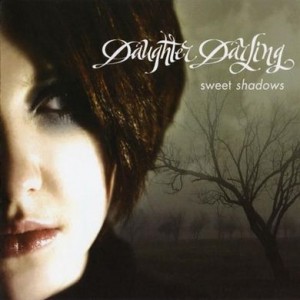 Trip Hop is a slippery genre, the name being applied to a bizarre variety of musicians, from Massive attack to Björk. Starting as a reaction against the American dominance of Hip Hop, it has found voices right in the heart of the Imperium. Prominent among them is Philadelphia based Daughter Darling, the collaborative effort of dj/producer brothers Travis and Steven Fogelman with vocalist Natalie Walker. Walker’s vocals hark back to many individualistic female singer-songwriters, but the resemblance to both Sarah McLaughlan and Björk is pretty obvious. I like her voice, and the way in articulates the lyrics, but I find some of the electronic nest its embedded in occasionally annoying. But most of the songs work well. The opening title track is fine, putting across a Leonard Cohen‑y world-weary loneliness to good effect. So is the clever re-working of Kansas’ “Dust In the Wind”. “Broken Bridge”, with it’s well-placed piano accompaniment, and “Sad And Lonely”, where horns and snares are used with equal taste, can’t be faulted. “Let Me Speak” is probably the strongest song. This album was widely hyped when it came out, but I didn’t hear it. Now I’m playing catch-up. My taste doesn’t focus on this kind of music, but if it’s well done, as this is, I’ll listen.
Modul’s Dots
This is the only album I’ve heard by this touted electronica trio (Evgenii Shchukin, Evgenii Fomin, and Aleksandr Tochilkin) from Russia’s “sunny south”, the old Cossack city of Krasnodar. I don’t know if it’s representative of their work but this album offers a distinctly “old school” electronica, with lots of beeps, zzzz’s and bleeps. I even suspect the influence of the old Soviet-era electronic experiments of Nemtin, Kreichi and Artemyev. These quaint electonic noises are well put together, however, and sustain interest to the end.
Reefer
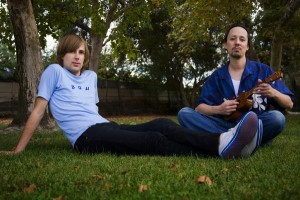 This is the eponymous debut album of a Hawaiian band fronted by Nicholas Thorburn, a.k.a. Nick Diamonds, formerly with the indie-pop bands Islands and The Unicorns. The sound is a trippy layed-back, marijuana-celebrating tribute to the beach bum ethos. Most appealing cuts: a delightful, and not the least sarcastic, rendition of “Blue Moon”, and a loopy quasi-reggae song (the term in vogue is “subaquatic”) called “May Baleen”.
Item 20,000: Crowded House’s Farewell to the World — Live from Sydney Opera House
It’s quite irrational, but I wanted to listen to something special for the 20,000th entry in my “first time listening” list. I received some suggestions, including the only major Mozart opera I had never heard, but chance brought a solution. I’ve written elsewhere about my long-term love affair with the New Zealand-Australian band Crowded House. The only important Crowded House item missing from my collection was their farewell concert in Sydney Opera House. Thanks to a reader (who wishes to remain anonymous) I finally acquired this wonderful recording. Read more »
Dark Captain Light Captain — Miracle Kicker
This debut album was only released a few days ago, in the U.K., but I can safely make the bet that it will be a big success. Close harmony vocals reminiscent of Simon & Garfunkle are combined with superb guitar playing and judiciously used bits of woodwind (I think there’s a flugelhorn in there) and electronics. The lyrics are real poetry. DCLC are listed as “experimental, folk, lounge”, which I suppose is fair enough, but is inadequate to express the number of nodes they connect to. Every song on the album, from the first, “Jealous Enemies”, to the last, “Miracle Kicker” shows an extraordinary craftsmanship, getting every little detail just right. “Robot Command Centre” and the profoundly original “Spontaneous Combustion Pact” in particular had an emotional impact on me. This is intelligent music.
Dark Captain Light Captain is a London-based band currently touring the boonies in the U.K. —and I eagerly anticipate them breaking out internationally so they can show up here. I’ll be first in line for tickets when they play Toronto. Dan Carney (guitar, voice), Giles Littleford (guitar, voice), Neil Kleiner (electronics, woodwind, voice), Chin Of Britain (drums), Mike Cranny (bass, voice) Laura Copsey (brass, voice), shown above, are the line-up.