
First-time listening for November, 2008
Posted by Phil Paine
on November 30, 2008
No comments
19139. (Johann Sebastian Bach) Sonata for Viola da Gamba & Keyboard #1 in G, bwv.1027
. . . . . [piano version; harpsichord version at 15867, cello version 10512]
19140. (Johann Sebastian Bach) Sonata for Viola da Gamba & Keyboard #2 in D, bwv.102
19141. (Johann Sebastian Bach) Sonata for Viola da Gamba & Keyboard #3 in G Minor,
. . . . . bwv.1029 [piano version; harpsichord version at 15869, cello version 10514]
Read more »
READING – NOVEMBER 2008
Posted by Phil Paine
on November 30, 2008
No comments
16731. (Chief Electoral Officer of Canada) A History of the Vote in Canada
16732. (Terje Anderson) [in blog Daily Kos] Why We Stand in Lline to Vote ― A Historical
. . . . . Photo Essay [article]
16733. [4] (Walt Whitman) Leaves of Grass: Inscriptions [verse]
16734. (Jamie Coomarasamy) No Apathy on U. S. Election Day [article]
16735. (Alastair Lawson) Profile: Jigme Khesar Namgyel Wangchuck [article] Read more »
16967. (Janet Gleeson) Millionaire ― The Philanderer, Gambler, and Duelist Who Invented Modern Finance
Posted by Phil Paine
on November 29, 2008
No comments
In 1720, France suffered a banking and credit crisis, and an economic meltdown, because of a bubble in its newly contrived stock market. The crisis spread through the banking and credit systems of Europe. The super-rich, who had been speculating wildly and making money through special deals with the State, war finance, and an un-monitored and un-regulated stock market, were quick to get themselves bailed out and their interests protected, but for millions the crisis meant ruin and starvation. At the center of this story, which should be strangely familiar-sounding to a reader in 2008, was the Scottish professional gambler, John Law, who became France’s “Chairman of the Fed”, as well as the creator of the infamous Mississippi Company, which was at the center of the market bubble.
Read more »
Daughter Darling: Sweet Shadows
Posted by Phil Paine
on November 27, 2008
No comments
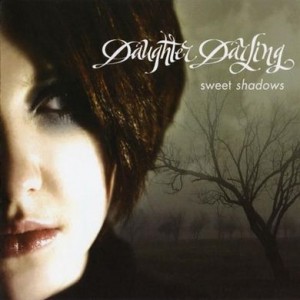 Trip Hop is a slippery genre, the name being applied to a bizarre variety of musicians, from Massive attack to Björk. Starting as a reaction against the American dominance of Hip Hop, it has found voices right in the heart of the Imperium. Prominent among them is Philadelphia based Daughter Darling, the collaborative effort of dj/producer brothers Travis and Steven Fogelman with vocalist Natalie Walker. Walker’s vocals hark back to many individualistic female singer-songwriters, but the resemblance to both Sarah McLaughlan and Björk is pretty obvious. I like her voice, and the way in articulates the lyrics, but I find some of the electronic nest its embedded in occasionally annoying. But most of the songs work well. The opening title track is fine, putting across a Leonard Cohen‑y world-weary loneliness to good effect. So is the clever re-working of Kansas’ “Dust In the Wind”. “Broken Bridge”, with it’s well-placed piano accompaniment, and “Sad And Lonely”, where horns and snares are used with equal taste, can’t be faulted. “Let Me Speak” is probably the strongest song. This album was widely hyped when it came out, but I didn’t hear it. Now I’m playing catch-up. My taste doesn’t focus on this kind of music, but if it’s well done, as this is, I’ll listen.
Monday, November 24, 2008 — Rangzen or “Middle Way”?
Posted by Phil Paine
on November 24, 2008
No comments
While the world was preoccupied with the financial crisis, the UK Government took advantage of public inattention to write off Tibet. In a little publicized parliamentary statement on October 29, Foreign Secretary David Miliband claimed that Tibet has actually “always been a part of China, and that it has no claim whatsoever to be viewed in anyway differently from the rest of China.” Everyone understands that the elected governments of Europe and North American have never had any serious intention of supporting democratic reform in China, or of giving any tangible support to the conquered and colonialised Tibetan people. But, until now, a nudge-nudge-wink-wink pretense of concern for human rights has been considered good public relations. Apparently, it is no longer de rigeur. Gordon Brown’s government in London seized on the distraction of the global financial meltdown to signal to Beijing that its imperialist conquests are a‑okay, and gave it carte-blanche to proceed with any human rights violations it wants, against its own people, or others. Read more »
Modul’s Dots
Posted by Phil Paine
on November 22, 2008
No comments
This is the only album I’ve heard by this touted electronica trio (Evgenii Shchukin, Evgenii Fomin, and Aleksandr Tochilkin) from Russia’s “sunny south”, the old Cossack city of Krasnodar. I don’t know if it’s representative of their work but this album offers a distinctly “old school” electronica, with lots of beeps, zzzz’s and bleeps. I even suspect the influence of the old Soviet-era electronic experiments of Nemtin, Kreichi and Artemyev. These quaint electonic noises are well put together, however, and sustain interest to the end.
Reefer
Posted by Phil Paine
on November 18, 2008
No comments
 This is the eponymous debut album of a Hawaiian band fronted by Nicholas Thorburn, a.k.a. Nick Diamonds, formerly with the indie-pop bands Islands and The Unicorns. The sound is a trippy layed-back, marijuana-celebrating tribute to the beach bum ethos. Most appealing cuts: a delightful, and not the least sarcastic, rendition of “Blue Moon”, and a loopy quasi-reggae song (the term in vogue is “subaquatic”) called “May Baleen”.
16778. (David Rothkopf) Superclass: The Global Power Elite and the World They are Making
Posted by Phil Paine
on November 17, 2008
No comments
Rothkopf has created an intentional reincarnation of C. Wright Mills’ old Power Elite, but without Mills’ ideological foolishness. With his unusually broad experience in business, journalism, Wall Street, the American military, the Intelligence community, and government ― but never in a position where he was sublimated into, or identified with the circles of power ― Rothkopf is in an ideal position to give a realistic description of the roughly six thousand people who exercise the most power and influence on our globe. I don’t always agree with his analysis, and his conceptual categories are thoroughly conventional, but the book is essential for anyone who wants to form a plausible picture of how the world works. This has always been the aim of my researches. Most things in this book ring true, as far as I’m concerned.
Item 20,000: Crowded House’s Farewell to the World — Live from Sydney Opera House
Posted by Phil Paine
on November 15, 2008
No comments
It’s quite irrational, but I wanted to listen to something special for the 20,000th entry in my “first time listening” list. I received some suggestions, including the only major Mozart opera I had never heard, but chance brought a solution. I’ve written elsewhereabout my long-term love affair with the New Zealand-Australian band Crowded House. The only important Crowded House item missing from my collection was their farewell concert in Sydney Opera House. Thanks to a reader (who wishes to remain anonymous) I finally acquired this wonderful recording. Read more »