16616. (Marion Zimmer Bradley) The Mists of Avalon
16617. (O. R. Gurny, tr.) Hittite document: The Annals of Ḫattušili III
16618. (Steve Muhlberger) [in blog Muhlberger’s Early History] The World Turned Inside
. . . . . Out [article]
16619. (Karen Joy Fowler) Wit’s End
16620. (Chris Wood) Dry Spring: The Coming Water Crisis in North America
16621. (David Rothkopf) 9/11 Was Big. This Is Bigger [article]
16622. (Andrew J. Bacevich) He Told Us to Go Shopping. Now the Bill Is Due. [article]
16623. (Richard Dawkins) The God Delusion
Read more »
READING – OCTOBER 2008
Posted by Phil Paine
on October 31, 2008
No comments
Elgar, Mozart and Tchaikovsky at Grace Church On-the-hill
Posted by Phil Paine
on October 28, 2008
No comments
Circumstances have prevented me from attending many live concerts, recently, so I jumped at the chance when Isaac White and his parents kindly invited me to a concert at Grace Church On-the-hill, a handsome Anglican church built in 1912. I arrived early, so I spent an hour wandering around Forest Hill, in Suydam Park, Relmar Gardens, and the Cedarvale ravine before meeting Isaac at the Second Cup. Forest Hill is like a small town embeded in the city, with its own little “main street” and a thick canopy of maples. In the crisp autumn air, the village seems like a Ray Bradbury story re-written by Margaret Atwood. Among the stacks of pumpkins and the drifting red and gold fallen leaves, the Anglican, United Church and Jewish versions of Toronto Respectability compete. No place could seem farther from the woes of the world. The local book store has a strangely morbid display of highly literary titles in its window, with each title accompanied by a card explaining how the author died (did you know that Roland Barthes was run over by a laundry truck?). There are very comfortable public benches on the sidewalks, a rarity in the rest of penny-pinching Toronto. In the ravine, I saw a dog chasing a cat chasing a squirrel chasing a leaf. Read more »
Monday, October 27, 2008 — Sense and Nonsense About “Socialism”
Posted by Phil Paine
on October 27, 2008
No comments
The word “socialism” is used to mean virtually anything imaginable, but if it means anything at all intelligible, it is “control of productive enterprise by the state”. More exactly, it means that the people who control production and the people who control the state are the same people. Most states in human history have been predominantly socialist. In most pre-modern societies, the state had direct control of production. Peasants worked land owned by an aristocracy, and that aristocracy constituted state power. Industries were owned by the king or relatives of the king, by barons, by the Church, or by corporate bodies, all of which exercised the authority of the state. Read more »
The Mannheim School
Posted by Phil Paine
on October 24, 2008
No comments
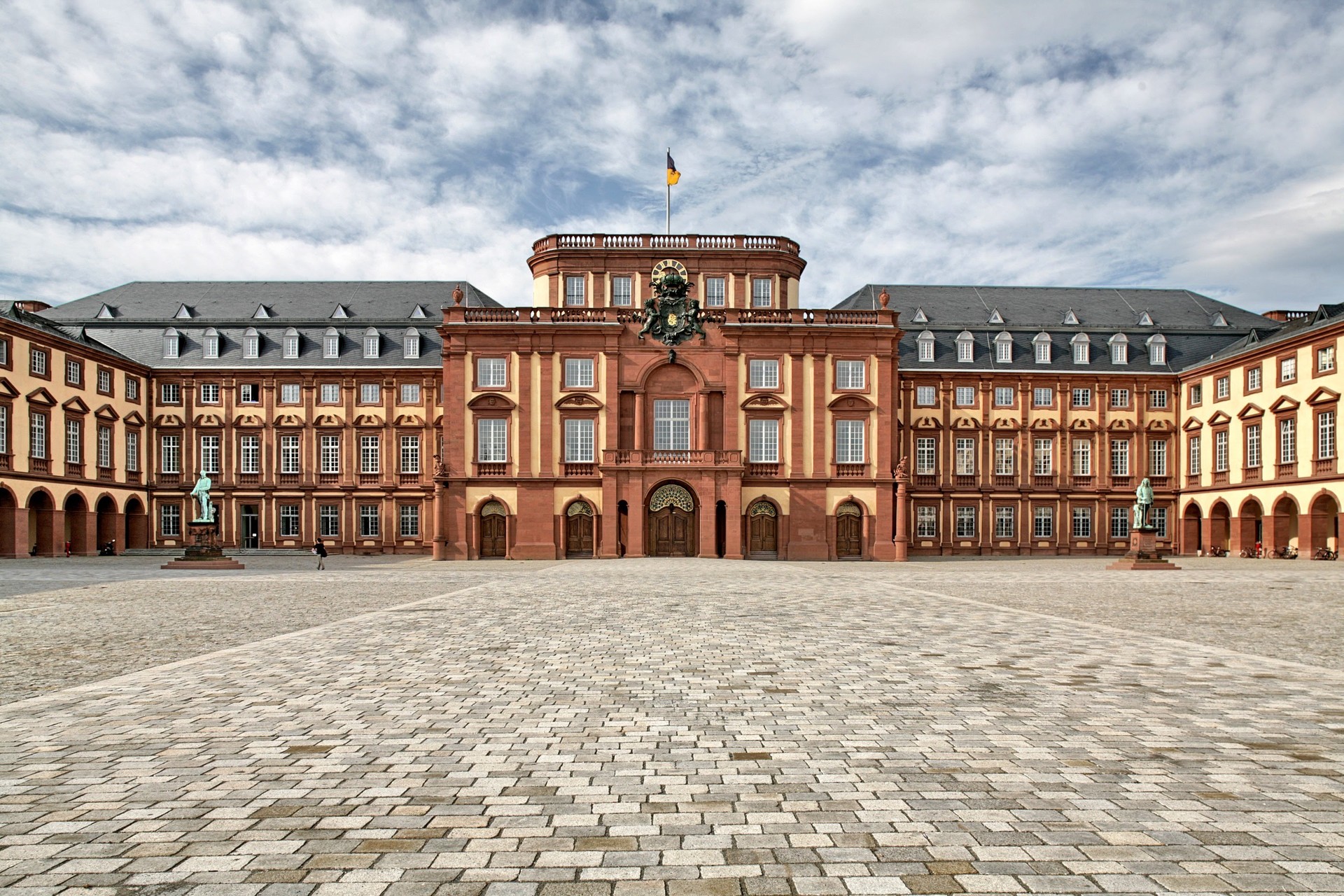
The palace of the Elector of the Palatinate at Mannheim, where its resident orchestra was the heart of the “Mannheim School”.
Haydn and Mozart did not transform baroque music in a vacuum. Change was in the air, and a number of minor composers contributed to it. Among them were the men clustered in the court of the Elector Carl Philipp, at Mannheim. The best musicians from across northern Europe were drawn there in the mid 1700’s. Composers of the Mannheim school introduced a number of novel ideas into orchestral music, such as a more independent role for wind instruments, adding the newly invented clarinet, and much more variable dynamics (the orchestral crescendo is a Mannheim invention). Haydn picked up on these techniques. As a matter of fact, his famous “Paris” symphonies were commissioned for the Mannheim orchestra. I’m listening to a representative selection of Mannheim orchestral music by the Camerata Bern, under the direction of Thomas Füri: Die Mannheimer Schule, a 1980 box set from Archiv. It includes Franz Xaver Richter’s Sinfonia in B‑flat, and his Concerto for Flute and Orchestra in E minor; Johann Stamitz’s Violin Concerto in C, and Orchestral Trio in B‑flat, Op.1; Anton Filtz’s Violin Concerto in G; Ignaz Holzbauer’s Sinfonia Concertante in Aand Sinfonia in E‑flat, Op.4; Christian Cannabich’s Sinfonia Concertante in Cand Sinfonia in B‑flat; and Ludwig August LeBrun’s Oboe Concerto in D minor. Johann Stamitz, the effective founder of the school, stands out as the most immediately enjoyable in this set. His superb violin concerto merits comparison with Mozart’s. It’s loaded with virtuosity, simplicity, freedom and feeling, characteristics we associate with the next age. Tedious basso continuo and formal ornament are nowhere to be heard in it. I was also charmed by Cannabich and LeBrun’s warm oboe concerto. Other Mannheim composers of note, not represented in this set, were Franz Ignaz Beck, and Johann’s son Carl Stamitz.
16710. (August Derleth) Return to Walden West
Posted by Phil Paine
on October 22, 2008
No comments
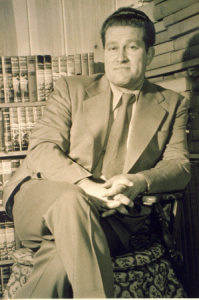
August Derleth
This is a minor masterpiece by a neglected American novelist and essayist who is better known as the editor and advocate of H. P. Lovecraft than for his own work. It is firmly in the tradition of Thoreau’s journals, and simultaneously in that of Sherwood Anderson’s Winesburg Ohio, though his beautifully styled evocations of desperate lives don’t have the bitterness that Anderson’s had. Derleth’s feeling for nature, both the human kind and the animals and plant kind, is intense and meticulously observant. His prose is so precise and natural that you don’t hear it as another’s voice, but as your own thought. It’s one of those books that you read with profound pleasure on a quiet night, with an animal snoozing nearby and a single malt at your elbow.
Gabe Desrosiers’s round dance songs for jingle dress
Posted by Phil Paine
on October 15, 2008
No comments
The Jingle Dress dance is a women’s round dance which the Anishnaabe (Ojibway) of north-western Ontario take special pride in. “Jingle Dress” is the common term on the pow-wow circuit, but folks in the Kenora-Rainy River region of Ontario usually call it “medicine dress”. Gabe Desrosiers has composed numerous songs in honour of the Jingle Dress and the women who wear it. The songs are deeply rooted in northwest Ontario and Minnesota tradition, but these are modern songs. Desrosiers is accompanied by a solid team of drummers and singers from the Whitefish Bay and North West Angle #33 reserves, known as the Northern Wind. The Anishnaabe drumming style is characterized by sudden volume changes and caesura. Expect impromptu shouts, hoots and exclamations to be thrown in at psychologically apt moments, giving these dances sort of hot jazz sensibility. I don’t have the group’s award winning album Whispering Winds, but I can recommend my newly acquired Medicine Dress, which can be gotten from Arbor Records in Winnipeg. Read more »
Tuesday, October 14, 2008 — The Notorious Overhead Projector
Posted by Phil Paine
on October 14, 2008
No comments
Ever wonder about that “three million dollar earmark for an overhead projector” that is such an important talking point in John McCain’s election campaign? According to an article in this week’s Science News, it turns out that the “overhead projector” is the Zeis star projector in the venerable Adler Planetarium in Chicago. Like the other two major American planetariums in New York and Los Angeles, the Adler must replace its fifty-year old instrument, which the original German manufacturer will no longer service. As with the other two, the request for federal funding is routine, and no politician would dream of voting against it. The three planetariums teach the fundamentals of astronomy to millions of urban school children who have never seen a clear night star-filled sky, and are basic amenities of major cities. The cost of a few million dollars amortized over half a century is trivial. No politician in any of the three states involved would have voted otherwise. Could anything better demonstrate the dishonesty and the mind-boggling ignorance of the McCain campaign?
16632. (Nancy M. Wingfield) Flag Wars and Stone Saints: How the Bohemian Lands Became Czech
Posted by Phil Paine
on October 11, 2008
No comments
Ethnic nationalism is one of the most diseased and obnoxious ideas contrived by human beings, rivaled only by Marxism and religious fanaticism in its potential for creating human suffering. The stage was set for the horrors of the twentieth century by the passionate ethnic hatreds of the 19th century. It was in this era that collective loyalties among Europeans shifted from obsessions with God to obsessions with Race and Nation. And it was in this era that most of the “national identities”, which now seem so fixed, were concocted.
Read more »
(Davidson / Palin 2004) Himalaya With Michael Palin [six episodes]
Posted by Phil Paine
on October 10, 2008
No comments
 I want to kill Michael Palin — purely out of envy. He gets to travel everywhere, see the coolest things, and talk to fascinating people, and makes a fortune doing it. Palin was recently ranked number nine in the list of the world’s top ten travelers of all time by Wanderlust Magazine. It’s been claimed that travel agencies anticipate sharp spikes in bookings for any destination that he visits, after an episode of one of his documentaries. Himalaya is his best documentary series to date. This one takes him to the Northwest Frontier states of Pakistan, to Amritsar in the Punjab, to Simla, to Kashmir and Ladakh, through Nepal into Tibet, and from thence eastward to Yunnan in China, back through Nagaland and Assam, into Bhutan, and finally to the shores of the Bay of Bengal. In this spectacular journey, he meets and talks to a variety of people: an enterprising dentist in Peshawar; the Dalai Lama; Namu, a pop singer from the matrilocal Mosuo people of Yunnan; a Southern Baptist headhunter in Nagaland; dancing monks in Assam. Palin’s easygoing affability gives everyone he talks to dignity, which I think is the secret of his success. You always get more than just scenery and platitudes. The series tiptoes around politics, but its focus on individual lives and personalities makes it an impressive document. For example, his visit to the Sikh Golden Temple doesn’t focus on the splendour of the building, but on the volunteers preparing the customary meal, given to anyone who comes to it.
Hossein Alizadeh and Djivan Gasparyan’s Endless Vision
Posted by Phil Paine
on October 6, 2008
No comments

Djivan Gasparyan
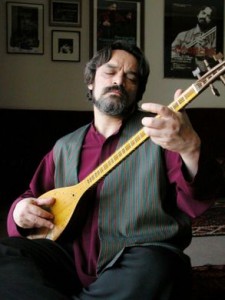
Hossein Alizadeh
This quite beautiful album of slow-paced, deeply romantic music combines the virtuosity of Djivan Gasparyan, the venerable master of the Armenian duduk, and Hossein Alizadeh, the superstar of the Persiantar. The duduk is a nine-holed oboe made of apricot wood, somewhat resembling the medieval European shawm, and Gasparyan is its unrivaled master. Alizadeh is the younger dynamo of the Persian lute. However, for this amazing performance recorded in Tehran in September of 2003, Alizadeh employed a variant form of the tar known as the shurangiz. The concert alternated Armenian and Persian songs, and included Alizadeh’s familiar orchestra, and three vocalists — one female, something considered a bit daring in contemporary, mullah-infested Iran. Iran and the United States share a common affliction: both are nations with a deep and multifaceted musical heritage, and an innate vitality of popular culture, which have the misfortune of being ruled by wicked, ignorant, stupid old men, and tormented by moronic religious zealots. Yet the underlying vitality and beauty always seems to survive. Relax with a book of verse, a cup of wine, and any agreeable thou at your disposal, and put on this album.