Stephen Fry has the kind of effortless talent that makes me envious. He is a brilliant actor and comedian (Blackadder; Jeeves and Wooser; A Bit of Fry and Laurie), and fine writer of fiction, non-fiction, screenplays and plays (I’m in the middle of his novel Making History). Naturally, such a person would be expected to write an interesting biography. But I was unprepared for the extreme honesty and sparkling wit of this book. It’s devoted entirely to his childhood and teenage years, always the most interesting parts of an autobiography, if it is honest. His description of his first experience of feeling love is among the finest I’ve read. His self-evaluations strike me as spot-on, his confessions to misdeeds are not twisted into self-glamorizing. The book is absolutely engrossing. For the aspects of human culture that offend him, he reserves a special, eloquent anger: Read more »
(Moore 2001 [released 2004] ) Ian Rankin’s Rebus: Mortal Causes
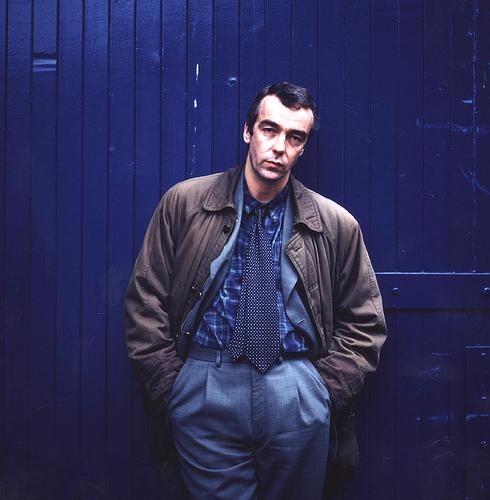 I’ve been reading some of Ian Rankin’s fine hardboiled detective novels, and this BBC television adaptation is a fair rendering of them. The innovative camera work turns the alleys and housing projects of Edinburgh into an expressionist nether-world. The main character, inspector Rebus (ably played by John Hannah), is represented a bit younger, and the musical references that fill the books are only given an occasional nod. But watching the dramatizations will not spoil the books for you. They are not “who-done-its” nearly as much as “why-done-its”.
14800. (Jon George) Zootsuit Black
This is Jon George’s second novel, which I read eagerly after being very pleased by Faces of Mist and Flame. This one is much more complicated, juggling several characters and situations. The plot involves a sudden alteration in the fabric of reality, experienced by the whole earth, a character trying to pin down the nature of psychic abilities, and characters flashing on events in the past. Among those events is the assassination of SS–Obergruppenführer Reinhard Heydrich, who was perhaps the principal architect of the Holocaust. This fascinated me. I not only made a study of the Wansee Conference, where Heydrich consolidated his plans, but a friend showed me the exact spot in the Prague suburb of Kobylisy where he was shot by Czech partisans. I will recommend this novel, especially to anyone who has already read Faces of Mist and Flame, with the caveat that its narrative complexity requires more attentive reading.
Ivor Gurney
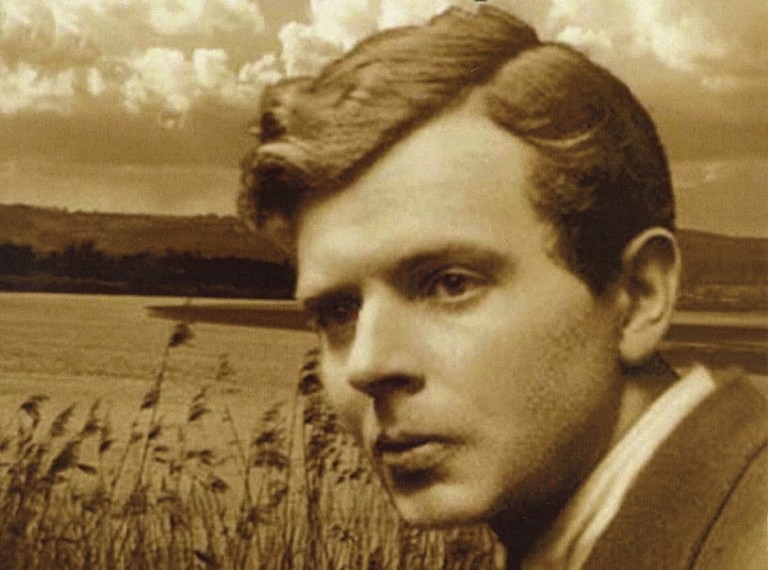 England produces lots of wimpy art-song cycles, and even the best ones, like Vaughan William’s On Wenlock Edge, seem a bit cutesy-poo. You can’t say this about Ivor Gurney’s cycles The Western Playgroundand Ludlow and Teme. They both have a definite “edge”. These are settings of A.E. Housman, like V.W.’s Wenlock, but much more like Schubert lieder in design. Gurney was himself a poet of considerable power, whose work, much of it written on the battle-front in WWI, is presently being rediscovered. Gurney’s life was tragic. At fifteen, he was already a very promising composer. Within a few years, he was on the war front, being wounded and gassed. His poetry from the period was published as, Severn and Somme(1917) and War’s EmbersAfter the war, he began studies with Vaughan Williams, but by 1922 was committed to a mental asylum for what would now be diagnosed as extreme bi-polar disorder. The last third of his life was lived in institutions, and he died in 1937. Oddly, he only once set his own verse to music. His grave, in the small village of Twigworth, Gloucestershire, reads “a lover and maker of beauty”. (1919).
Thursday, October 5, 2006 — The Great Abandonment
Yesterday (Oct.4), Tim Kyger, life-long friend and expert on space policy, wrote:
“49 years ago today, the very first thing of any sort was put into Earth orbit by we puny humans. The beginning of a new age; a breakpoint in history.”
Next year will be the half-century mark since the beginning of space exploration. While it began with a Soviet project, and there have been important contributions to it in several countries, the United States put the most effort into exploring space. Some people, myself included, consider the exploration of space to be a critically important human activity, one which is congruent with the responsible stewardship of the earth’s ecology, respect for human rights, and the fostering and creation of the arts. To us, it is saddening to contemplate how little has been accomplished in that half century, compared to what could have been accomplished. Read more »
(L’Ecuyer 2004) Prom Queen ; (Gaudreault 2003) Mambo Italiano
Two recent Canadian movies about gay issues. One is a docu-drama about the 2002 Charter of Rights court challenge made by Mark Hall, a high school student who was forbidden to take his male date to the prom at a Catholic school. On the whole, this is done with a light touch, treating it as a romantic comedy, rather than instructive melodrama. The court case was pretty much a forgone conclusion (the Canadian Charter of Rights is pretty damn clear on the matter), and the boy’s parents and school mates were on his side. The school authorities merely looked foolish to everyone.
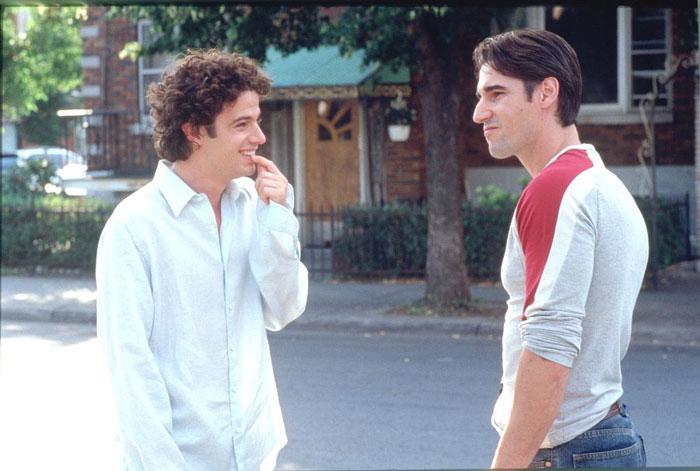 Mambo Italiano, is intended as an offbeat comedy, but it has some genuinely moving dramatic scenes. It’s done in a style reminiscent of the TV show Arrested Development, mixed with a bit of My Big Fat Greek Wedding. Angelo (Luke Kirby) has two problems. A small one: he’s gay, in the closet, and romancing a cop. A big one: his family is Italian. Specifically, his family is part of that intense subculture of Montreal’s la petite Italie. (“When I came to this country, nobody told me there were two Americas, the real one, America, and a fake one, Canada. And then they didn’t tell me there were two Canadas, the real one, Ontario, and the fake one, Quebec!”). The Italian-Canadian comedy is painted in broad, exaggerated strokes, but the whole story is done in such a way as to demonstrate the fundamental absurdity of all the hero’s problems.
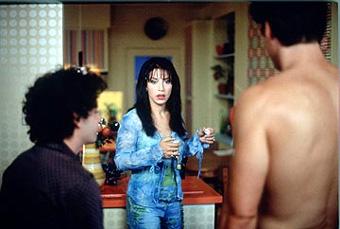 Within the cartoon framework, there are many scenes that ring true. It’s more about the stress of being a ping-pong ball among family members and community pressures than about the problems of coming out. His cop boyfriend, believably, caves in to family pressure and marries a “nice Italian girl”, an outcome made certain when you look back at his cowardly behaviour when he was in high school. There are moments in the film that are genuinely hilarious, not because of the absurdist joke-style of the film, but because they are bitter reality.
Tuesday, October 4, 2006 — A Matter of Pride
 On the National News, a tour through the completed renovations of the Library of Parliament, in Ottawa. This is no ordinary library. Completed only nine years after Confederation (the formation of Canada as a nation-state), it is a magnificent High Victorian Gothic fantasy, a circular cone of flying buttresses and multi-coloured stone that rises atop the cliffs along the Ottawa river. The interior is very beautiful, employing a circular, radiant plan. Light streams into it from the sky, in the manner of a cathedral. In the nineteenth century, Canada still retained its tradition of fine craftsmanship in wood, and the work that was done in this library is the equal of anything in the world. On the news item, one Member of Parliament, who was a journeyman carpenter in his youth, said “this stuff is porn for any carpenter”. Read more »
Sativa Luvbox
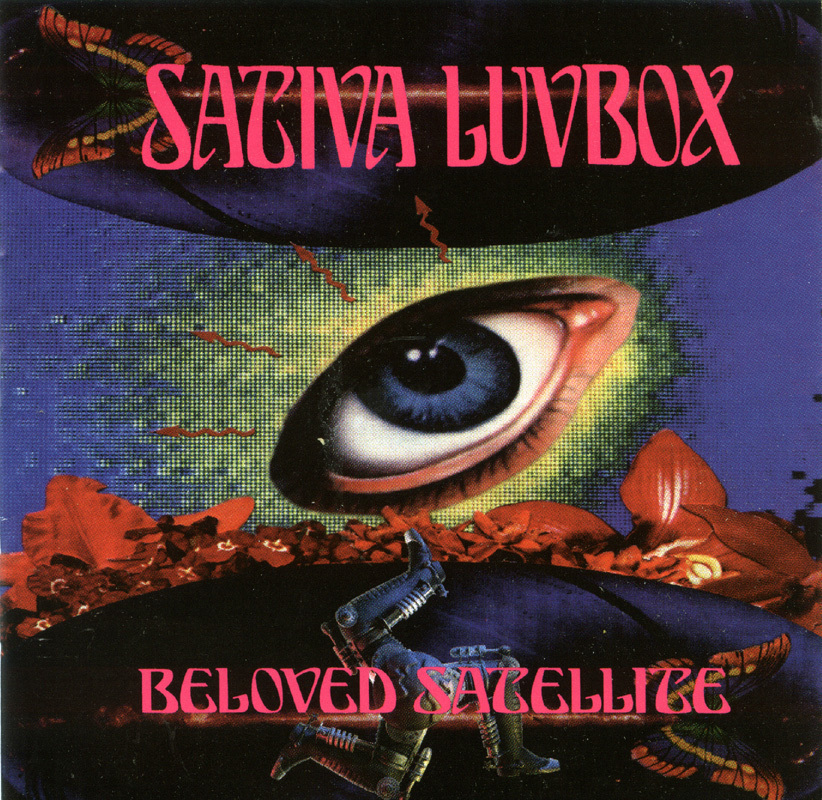 Guitarist/vocalist Patrick Mata, first came into view in Los Angeles’ horror punk-rock scene of the early 1980s, with his band Kommunity Fk. This band sounded a bit like Christian Death. After nearly a decade, Mata formed Sativa Luvbox with drummer M.P. and bassist Steve Brundege. This band played for a couple of years, and was better described as “acid punk”. It sounded as if an eighties punk band had received a drug-induced epiphany from King Crimson. They did a couple of independent albums, one of which, Close One Sad Eye, I remember liking, but can’t find anywhere. Beloved Satellite was their 1993 MCA release, and it’s a nice album to play while entertaining low-maintenance friends, along with a bong and a box of donuts on the living room table.
Sunday, October 1, 2006 — Many In One Room
I’m stretched out on the couch. At the other end, sphinx-posed above my right foot is a cat — not mine, but a long term visitor. Next to the other foot is my rabbit Stampy. They are both staring at me, with that air of aristocratic disdain that both have perfected. Cat owners are familiar with it, but they may be surprised that rabbits can be just as proud. I’m not going to disturb them. I’m grateful for the calm. Normally they would be chasing each other around the room.
I’m reading a novel, and listening to some choral music by Christos Hatzis, who may be Canada’s answer to Arvo Pärt. A mug of hot chocolate (made properly with cocoa, not some instant junk), cheese and crackers on the table beside me. Electric lights have been dimmed and replaced with a small oil lamp, which emits a hint of roses from its scented lamp oil.
So I can’t work up any anger over any political news. At the back of my mind, an idea for a new novel is starting to take form, so I’m not concentrating too strictly on the book. In fact, I should probably set it aside and read it properly later, when my head is not drifting into my own fiction writing. I do a lot of writing in my head. Not from laziness. My right wrist was severely damaged many years ago (broken in twenty places), and it is physically painful for me to spend too much time at a keyboard. Those long stretches of work for clients, where I spend many hours filling out databases on Excel tables, are really hard on me. So I do as much writing in my head as I can, before actually sitting down to type. I’ll sometimes have entire pages in my head, composed while walking or riding a bike, before they are put down, though that very process will generate all sorts of errors, which have to be cleaned up on rewrite.
Things are improving, financially, very very gradually. I’m determined to travel next year, and I’m laying the groundwork to do so.
Stampy suddenly desires a Maria Biscuit. For some reason, he is obsessed with these tea biscuits, imported from Spain. He would rather eat them than carrots. He jumps on my chest, pushes his face underneath my book and into mine, and pulls at the frame of my glasses with his teeth. This is his method of issuing a non-negotiable demand. I’ve always suspected that Stampy has trained in special camps in Afghanistan, or Wisconsin, or wherever rabbit terrorists do it.
I cave in to terrorism. The Maria biscuits are kept in a brown cookie jar which is within reach. The music has shifted to Hatzis’ Footprints In New Snow, which incorporates that peculiar form of Innuit throat-singing where two women sing directly into each others’ mouths. The atmosphere in the room has changed from serene to spooky. The oil lamp, burning down to a short wick, is flickering, and throwing unstable shadows on the wall. I have a flash of memory or a lonely evening on top of a mountain in northern Quebec, at the back of the north wind, besieged by cold shivers and thoughts of Wendigo.
The lamp goes out. The cat and the rabbit disappear, off to the bedroom for some secret game. The room has grown dark. I hear voices laughing in the street. Red LEDS on the computer and audio equipment, burn like fireflies.
You can be in so many places, within one room.
Image of the month: Frankie Lymon
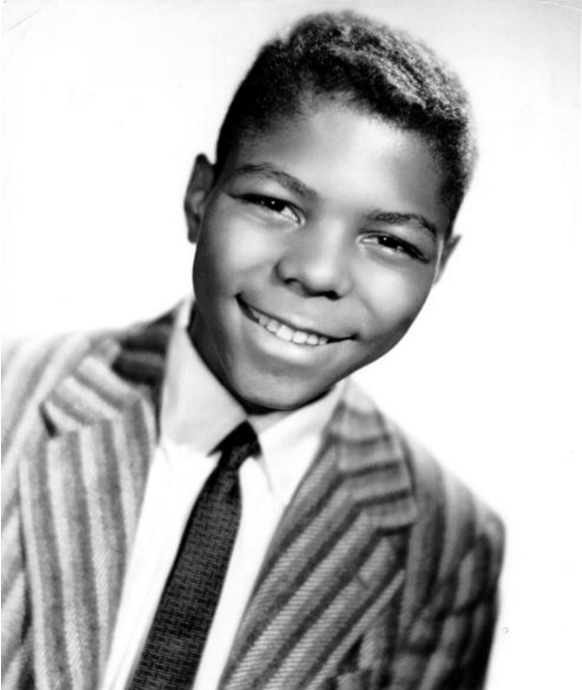
The amazingly talented Frankie Lymon. Frankie Lymon & The Teenagers scored a huge hit in 1956 with “Why Do Fools Fall In Love?”, but Lymon had perfected the song and its fantastic dance number two years before, when he was twelve years old.