14835. (Kenneth Hsien-yung Pai [Bái Xiānyǒng] ) Crystal Boys

Bai Xiany­ong is said to be the best styl­ist among today’s Tai­wanese writ­ers, and among the best writ­ing in Chi­nese today. This is not some­thing I’m in a posi­tion to judge. This nov­el trans­lates well, part­ly because the sub­ject mat­ter, the sub­cul­ture of gay hus­tlers in Taipei, is eas­ily com­pared to sim­i­lar set­tings in Europe or North Amer­ica. Chi­nese soci­ety, for most of the thou­sands of years of its his­tory, was not infect­ed by the bar­baric homo­pho­bia that obsessed Chris­t­ian Europe. Unfor­tu­nately, Euro­pean cul­tural norms, and of course the vicious gay-hatred of Com­mu­nism on the main­land, have had their influ­ence, and today the gay sub­cul­ture of Tai­wan occu­pies much the same social posi­tion that it does in Amer­ica. Bai’s hus­tler char­ac­ters could as eas­ily be found in Toronto’s Church and Welles­ley vil­lage, or in West Hol­ly­wood. The per­fume of Chi­nese imagery, of jade and plum blos­soms and so on, makes it seem a bit dif­fer­ent. So do the numer­ous ref­er­ences to con­tem­po­rary Chi­nese pop cul­ture. Is it a good nov­el? Yes. The char­ac­ters seem real, and you care about what hap­pens to them. I rec­om­mend it.

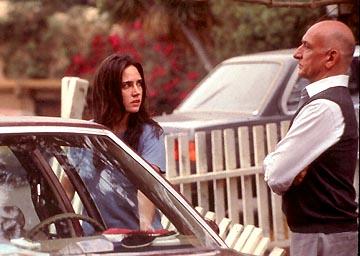
(Perelman 2003) House of Sand and Fog

This is a good film. It’s based on a nov­el by Andre Dubus III, which I haven’t read*. It was the first fea­ture film of Cana­di­an direc­tor Vadim Perel­man, who had made a rep­u­ta­tion with music videos and com­mer­cials. Appar­ent­ly, nov­el­ist and direc­tor worked togeth­er inti­mate­ly. The cast, Jen­nifer Con­nel­ly, Ben Kings­ley, Shohreh Agh­dashloo, Ron Eldard, Frances Fish­er, Kim Dick­ens, and Jonathan Ahd­out, find every sub­tle­ty pos­si­ble in the char­ac­ters. This was pos­si­ble because the char­ac­ters are well con­ceived, mul­ti-dimen­sion­al, and real. The sto­ry is pure Shake­speare. Two peo­ple have equal­ly just claims to own­ing a house. Noth­ing spe­cial, just an ordi­nary lit­tle house with a view of the sea. One is an Iran­ian immi­grant, played to per­fec­tion by Ben Kings­ley, who des­per­ate­ly needs the house to hold his fam­i­ly togeth­er and retain his much injured pride. The oth­er is a lone­ly woman who has both iso­lat­ed her­self and been iso­lat­ed, and in the course of the strug­gle earned the love of a psy­cho­log­i­cal­ly frag­ile cop. What begins as a low-key dis­pute grad­u­al­ly builds in ten­sion and com­plex­i­ty, and unfolds with the inex­orable steps to tragedy that Shake­speare per­fect­ed, and few drama­tists since have learned. 

*[I read it the next month]

Image of the month:

06-11-01 BLOG Image of the month

First-time listening for October, 2006

16587. (Béla Fleck & Edgar Mey­er) Music For Two
16588. (Chris­tos Hatzis) De Ange­lis
16589. (Chris­tos Hatzis) Ever­last­ing Light
16590. (Chris­tos Hatzis) Fer­til­i­ty Rites
16591. (Chris­tos Hatzis) Hunter’s Dream
16592. (Chris­tos Hatzis) Foot­prints In New Snow
16593. (Chris­tos Hatzis) String Quar­tet #1 “The Awak­en­ing”
16594. (101 Strings) Back­beat Sym­pho­ny
16595. (George Rochberg) Con­cer­to for Oboe and Orches­tra
16596. (Jacob Druck­man) Prism Read more »

READING – OCTOBER 2006

14797. (Akdi Ros­tag­no, Julian Beck & Judith Mali­na) We, The Liv­ing The­atre
14798. (Will Bunch) The Media Is Help­ing Bush Scare the Pop­u­lace [arti­cle]
14798. (Lisa Finnegan) No Ques­tions Asked – News Cov­er­age Since 9/11 [intro­duc­tion and chap­ter
. . . . . out­lines of book to be pub­lished in Decem­ber, 2006]

14799. (Robert Bowring) Chi­na’s grow­ing might and the spir­it of Zheng He [arti­cle]
14800. (Jon George) Zoot­suit Black Read more »

(Wallace 1990) Stephen King’s It, Part 2

06-10-29 VIEW (Wallace 1990) Stephen King’s It, Part 2My friend Isaac and I howled with laugh­ter through­out this long and absurd film. Chil­dren in a small town are men­aced by evil cos­mic forces in the form of a leer­ing clown, played by Tim Cur­ry. When they grow up, they have to do it all over again. The cos­mic forces, appar­ent­ly, can be defeat­ed by group hugs.

Friday, October27, 2006 — Tread Softly

I’ve nev­er been a big fan of William But­ler Yeats — from that peri­od, Ger­ard Man­ley Hop­kins is more to my taste — but this short poem pleas­es me. If you have ever been qui­et­ly, unselfish­ly and vul­ner­a­bly in love with anoth­er per­son, you will know that he has cap­tured the sen­sa­tion exactly.

He wish­es for the cloths of heav­en
Had I the heav­ens’ embroi­dered cloths,
Enwrought with gold­en and sil­ver light,
The blue and the dim and the dark cloths
Of night and light and the half-light,
I would spread the cloths under your feet:
But I, being poor, have only my dreams;
I have spread my dreams under your feet;
Tread soft­ly, because you tread on my dreams.

No tedious cycles of his­to­ry, slough­ing beasts, or celtic blar­ney, here. Appar­ent­ly, Yeats occa­sion­al­ly stepped off the cos­mic mer­ry-go-round to feel some­thing in an ordi­nary way. Love is not a top­ic that poets of the twen­ti­eth cen­tu­ry han­dled well. Too plebian, I guess. And it takes courage.

[Adden­dum: A read­er informs me that Yeat’s poem is actu­ally reli­gious in nature, and not about love at all. He explained the ref­er­ences in the phras­ing that iden­tify it as actu­ally being about con­tri­tion, repen­tance and “hid­den evil”. *sigh* Why are poets attract­ed to such tedious non­sense? I guess it was to good to be true to think a twen­ti­eth cen­tury poet would be will­ing to address an issue that real­ly mat­ters, and requires real thought, rather than the end­less re-arrange­ment of inane reli­gious twaddle.]

Sunday, October 23, 2006 — The Fate of Canadian Gaelic

I was look­ing up some bio­graph­i­cal data on Thomas Robert McInnes, a Lieu­tenant Gov­er­nor of British Colum­bia at the turn of the pre­vi­ous cen­tu­ry, when I came across an extra­or­di­nary piece of Cana­di­an leg­is­la­tion, one that tells us a lot about 19th Cen­tu­ry Canada. 

Whycocomagh, in Inverness County, Nova Scotia, Canada.  It's name is from the aboriginal Mi'kmaq language, but is locally known by a Gaelic rendering of Hogamagh.  The village is in the heart a formerly Gaelic-speaking region.  A small number of people still speak that language in a distinctly Canadian dialect.

Why­co­co­magh, in Inver­ness Coun­ty, Nova Sco­tia, Cana­da. It’s name is from the abo­rig­i­nal Mi’k­maq lan­guage, but is local­ly known by a Gael­ic ren­der­ing of Hoga­m­agh. The vil­lage is in the heart a for­mer­ly Gael­ic-speak­ing region. A small num­ber of peo­ple still speak that lan­guage in a dis­tinct­ly Cana­di­an dialect.

McInnes was born in Lake Ainslie, Nova Sco­tia, and lived an adven­tur­ous youth. He was one of the cel­e­brat­ed “Rush Doc­tors” trained in Chica­go at the Rush Insti­tute, and served in the Union Army dur­ing the Amer­i­can Civ­il War. But he returned to Cana­da and, along with a promi­nent med­ical prac­tice, became May­or of New West­min­ster, British Colum­bia, and then an inde­pen­dent nation­al Mem­ber of Par­lia­ment. Sub­se­quent­ly, he served as a Sen­a­tor, then Lieu­tenant Gov­er­nor of BC. His career as Lieu­tenant Gov­er­nor was stormy and eccen­tric, rather typ­i­cal of BC politi­cians. He made many ene­mies. In 1890, Prime Min­is­ter Lau­ri­er asked him to ten­der his res­ig­na­tion in favour of the tamer Hen­ri-Gus­tave Joly de Lot­binière. He attempt­ed to get back into Fed­er­al pol­i­tics in 1903, but failed.

His most inter­est­ing deed was his attempt, in 1890, to make Gael­ic the third offi­cial lan­guage of Cana­da. His pro­posed Act to pro­vide for the use of Gael­ic in Offi­cial pro­ceed­ings would have made the Cana­di­an ver­sion of the Gael­ic lan­guage legal­ly equal with Eng­lish and French. The bill made it through first read­ing, but when the Orders of the Day were called, McInnes had not yet arrived in the Cham­ber. In his absence, the bill was dropped. When it was restored to the order paper, mem­ber R.B. Dick­ey of Nova Sco­tia moved an amend­ment that the read­ing be delayed for three months, after which it failed on final read­ing. Read more »

5566

The Tai­wanese boy-band “5566”, led by Tony Sun has dom­i­nated the Chi­nese pubes­cent pop mar­ket since 2002. If you think that boy-bands like N’Sync had overblown arrange­ments and stu­dio glitz, they were noth­ing com­pared to this. Every­thing from piano glis­sandi and heav­enly choirs to tech­no nois­es accom­pany these mushy songs. Some of the lyrics are in Eng­lish, though most are in Man­darin Chi­nese (peo­ple in Tai­wan usu­ally speak a vari­ety of Fukienese at home, but Man­darin is the offi­cial lan­guage, taught in school). The melodies are some­times bor­rowed. Dis­con­cert­ingly, the last song on the album is to the tune of “What a Friend We Have in Jesus”.…. Actu­ally, it would be fun to have this stuff in the back­ground at a noisy party.

(Wood 1959) Plan 9 From Outer Space

06-10-17 VIEW (Wood 1959) Plan 9 From Outer Space pic 1

It grows on you with every view­ing. Plan 9is the most noto­ri­ous film by Ed Wood, Jr., who was vot­ed the worst film direc­tor or all time. It is loved by all who aspire not to be Ed Wood, and gives a shiv­er to those of us who come fright­en­ing­ly close to beingEd Wood. It com­bines the inabil­i­ty to mas­ter the most ele­men­tary film tech­niques with a sur­re­al­is­tic man­gling of the Eng­lish lan­guage. Some of Wood’s bizarre and hor­ri­ble phras­ing approach­es acci­den­tal poetry.

I had the great plea­sure of show­ing it to a first-time view­er, my good friend Isaac White. Watch­ing him react to the film — espe­cial­ly the sci­en­tif­ic expla­na­tions “this can of gaso­line, the sun, is con­nect­ed to this rub­ber ball, the Earth by a line of gaso­line.…” “a par­ti­cle of light is com­posed of many atoms” — gave me more fun than I’ve had in awhile. You can only see Plan 9for the first time once in your life. The expe­ri­ence can­not be repeat­ed, and you can­not be the same per­son, after it has hap­pened. Read more »