(Hibbs 1965) Perry Mason: Ep.249 ― The Case of the 12th Wildcat
(Silberston 2002) Foyle’s War: Ep.1 ― The German Woman
(McEveety 1982) Voyagers: Ep.7 ― The Day the Rebs Took Lincoln
(Crane & Pintoff 1982) Voyagers: Ep.8 ― Old Hickory and the Pirate
(Wiseman 2007) Die Hard 4: Live Free or Die Hard
(de Leon 1959) Terror Is a Man
(Trivas 1959) The Head [Die Nackte und der Satan]
Read more »
FILMS — MAY 2016
Posted by Phil Paine
on May 31, 2016
No comments
First-time listening for May 2016
Posted by Phil Paine
on May 31, 2016
No comments
23670. (Pierre de Manchicourt) Missa Veni Sancte Spiritus
23671. (Pierre de Manchicourt) Motet: Reges terrae
23672. (Pierre de Manchicourt) Motet: O virgo virginum
23673. (Pierre de Manchicourt) Chanson: Long temps mon coeur languissoit
Read more »
READING — MAY 2016
Posted by Phil Paine
on May 31, 2016
No comments
23169. (Thomas Paine) A Letter Addressed to the Abbé Raynal on the Affairs of North America
23170. (O. Sigmarsson, et al) Dynamic Magma Mixing Revealed by the 2010 Eyjafjallajökull
. . . . . Eruption [article]
23171. (Witold Rybczynski) City Life
23172. (Torben Bjarke Ballin) Rising Waters and the Processes of Diversification and
. . . . . Unification in Material Culture — the Flooding of Doggerland and Its Effect on NW
. . . . . European Prehistoric Populations between c. 13,000 and 1,500 cal BC [article]
Read more »
Handel’s Fireworks
Posted by Phil Paine
on May 30, 2016
No comments
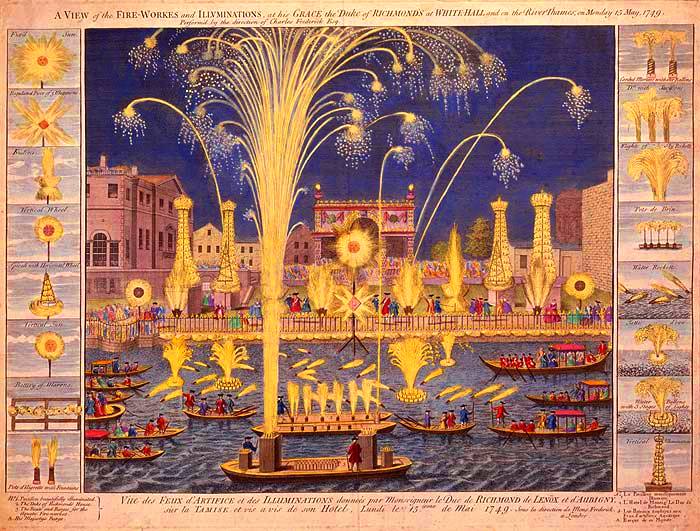
Well, I have no shortage of recordings of this, one of the most popular works of baroque music. I have performances conducted by Fennell, Gardiner, Hogwood, Marriner, Maier, Pinnock, Savall, Stokowski, and Warchal, and I’ve probably heard a dozen others. Most listeners divide them into two categories: 1) recordings using original period instruments, or an approximation thereof; 2) recordings using twentieth century instruments in a standard concert format. I’m not going to sneer at the latter group. Handel was as pragmatic a showman as music ever produced, and he would have been perfectly happy hearing Stokowski’s wonderful and totally inauthentic version, though he might have told Marriner to give his performance a little more zetz. But on the whole, I prefer the period instrument versions, and of those, I’d pick Jordi Savall’s for my desert island music collection. This version has zetz-aplenty. Read more »

FILMS — APRIL 2016
Posted by Phil Paine
on April 30, 2016
No comments
(Hitchcock 1951) Strangers on a Train
(Meza-Leon 2015) Rick and Morty: Ep.19 ― Interdimensional Cable 2: Tempting Fate
(Polcino 2015) Rick and Morty: Ep.20 ― Look Who’s Purging Now
(Cardiff 1964) The Long Ships
(Archer 2015) Rick and Morty: Ep.21 ― The Wedding Squanchers
(Affleck 1998) The Simpsons: Ep.196 ― This Little Wiggy
(Gray 1998) The Simpsons: Ep.197 ― Simpson Tide
(Hughes 1987) Planes, Trains & Automobiles
Read more »
First-time listening for April 2016
Posted by Phil Paine
on April 30, 2016
No comments
23642. (Louis-Albert Bourgault-Ducoudray) Rhapsodie cambodgienne
23643. (Arca) Mutant
23644. (Kishori Amonkar) Raga Gaud Malhar
23645. (Rae Sremmurd) SremmLife
23646. (Florence Price) Mississippi River Suite
Read more »
READING — APRIL 2016
Posted by Phil Paine
on April 30, 2016
No comments
23113. [3] (Jonathan Swift) Gulliver’s Travels [Travels Into Several Remote Nations of the
. . . . . World, in Four Parts, by Lemuel Gulliver]
23114. (Michel de Montaigne) De l’amitié [article] [read in English at 9575]
23115. (Torsten Günther, et al) Ancient Genomes Link Early Farmers from Atapuerca in Spain
. . . . . to Modern-day Basques [article]
(Étienne de La Boétie) Oeuvres complètes d’Estienne de la Boétie [ed. Paul Bonnefon]:
Read more »
Image of the month: a sublime moment
Posted by Phil Paine
on April 1, 2016
No comments
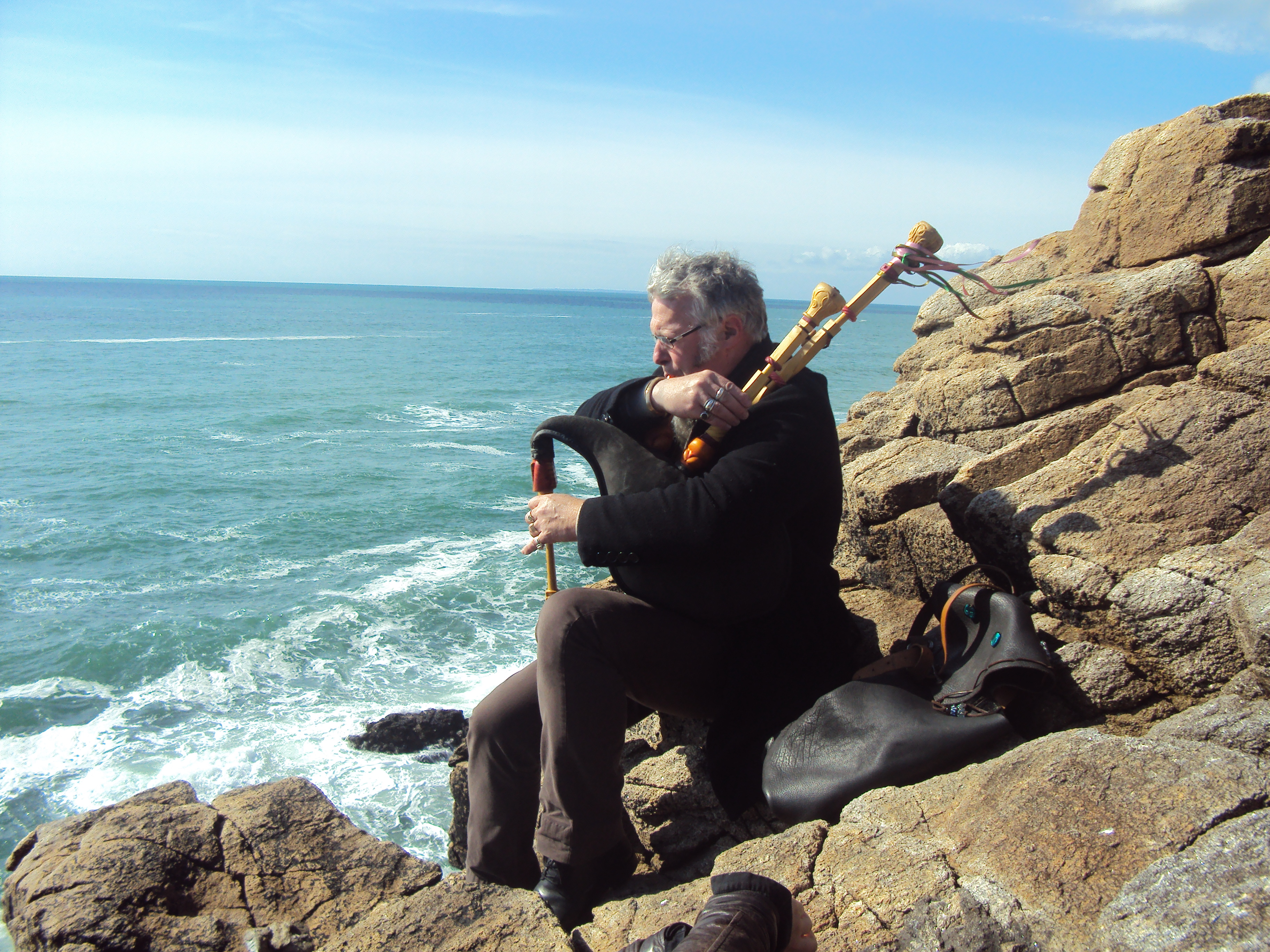 Didier Durassier, master of the Breton bagpipe, plays for me on the seashore at, if memory serves the peninsula of Quiberon.
FILMS — MARCH 2016
Posted by Phil Paine
on March 31, 2016
No comments
(Cameron 1991) Terminator 2: Judgment Day
(Polcino 1997) The Simpsons: Ep.173 ― The Canine Mutiny
(Kirkland 1997) The Simpsons: Ep.174 ― The Old Man and the Lisa
(Band 1982) Parasite
(Moore 1997) The Simpsons: Ep.175 ― In Marge We Trust
(Marton 1966) Around the World Under the Sea
(Gilbert 1962) H. M. S. Defiant [aka Damn the Defiant!
(Reardon 1997) The Simpsons: Ep.176 ― Homer’s Enemy
(Newton 2014) Rick and Morty: Ep.5 ― Meeseeks and Destroy
(King 1940) The Case of the Frightened Lady