FILMS – JULY 2016
Posted by Phil Paine
on July 31, 2016
No comments
(Davis 1981) Clash of the Titans
(Carr 1952) The Adventures of Superman: Ep.5 ― The Monkey Mystery
(McKissock 2005) Islands of Scotland: Ep.4 ― The Shetland Islands
(Iwerks 1930) Fiddlesticks [Flip the Frog Cartoon #1]
(Tuttle 1930) The Benson Murder Case
(Groening & Sandoval 2012) Futurama: Ep.106 ― Fun on a Bun
Read more »
First-time listening for July 2016
Posted by Phil Paine
on July 31, 2016
No comments
23706. (Wolfgang Amadeus Mozart) La clemenza di Tito [complete opera; d. Davis;
. . . . . w. Constable, Burrows, Baker, Popp]
23707. (Courtney Barnett) Sometimes I Sit And Think, And Sometimes I Just Sit
23708. (The 1975) The 1975 [2 cd version]
Read more »
READING — JULY 2016
Posted by Phil Paine
on July 31, 2016
No comments
23233. (Poul Anderson) The Dancer from Atlantis
23234. (Antonio Currais, et al) Amyloid Proteotoxicity Initiates an Inflammatory Response
. . . . . Blocked by Cannabinoids [article]
23235. (Richard Wilk) Towards an Anthropology of Bad Business [article]
23236. (Jesús Carrobles Santos, et al) Toletum. Configuración y evolución urbana de la capital
. . . . . visigoda: urbs et territorium [article]
Read more »
Wednesday, July 27, 2016 — Danger
Posted by Phil Paine
on July 27, 2016
No comments
 Things are getting very dangerous. There is now a serious possibility that the people of the United States will elect Caligula as President. The entire world is endangered by this folly.
I will repeat what I have said before. I consider any American who votes Republican in the coming election to be a traitor to his country. There is simply no excuse conceivable for an act so immoral, so disgusting, so vile, as to vote to make Donald Trump the most powerful person in the world. Furthermore, I count it a moral obligation for any American to act to prevent it. Nobody can claim to be a patriot unless they actively oppose this monster at least to the extent of going to the polls to vote against him. There can be no sitting this one out.
Image of the month: L’Ange du Foyer
Posted by Phil Paine
on July 1, 2016
No comments
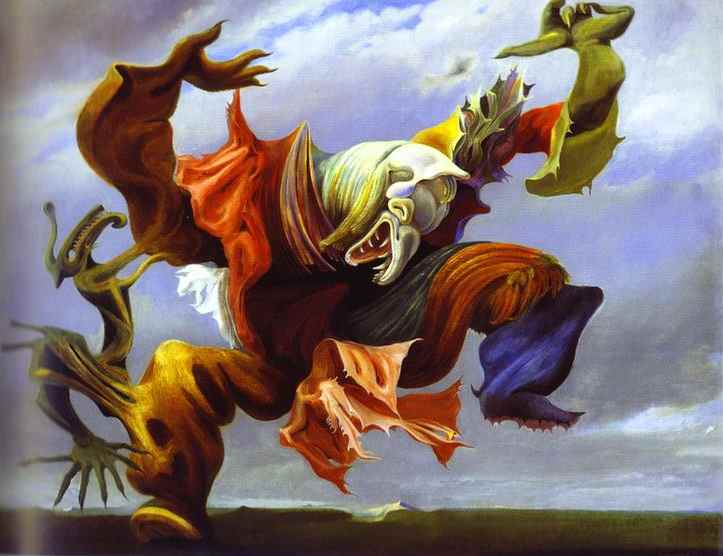 Max Ernst — L’Ange du Foyer, (1937)
FILMS – JUNE 2016
Posted by Phil Paine
on June 30, 2016
No comments
(Maté 1950) D.O.A.
(Marks 1966) Perry Mason: Ep.267 ― The Case of the Dead Ringer
(Bennett 1989) Agatha Christie’s Poirot: Ep.10 ― The Dream
(Kirkland & Nastuk 1998) The Simpsons: Ep.209 ― D’Oh-in’ in the Wind
(Hopper 1966) Perry Mason: Ep.268 ― The Case of the Misguided Model
(Groening & Marino 2011) Futurama: Ep.91 ― Yo Leela Leela
(Rye 2016) MidSomer Murders: Ep.109 ― Saints and Sinners
(Anderson 1998) The Simpsons: Ep.210 ― Lisa Gets an “A
(Losey 1963) The Servant Read more »
First-time listening for June 2016
Posted by Phil Paine
on June 30, 2016
No comments
23686. (Junko Ueda) The Epic of Heike [L’épopée des Heike]
23687. (Mr. Oizo & Sebastien Tellier) Steak
23688. (Maroon 5) Hands All Over
23689. (Incredible Fred Banana Combo) FBS
23690. (Alan Hovhaness) Saturn for Soprano, Clarinet & Piano, Op.243
Read more »
READING — JUNE 2016
Posted by Phil Paine
on June 30, 2016
No comments
23206. (M. C. Ricklefs) A History of Modern Indonesia Since C.1200
23207. (Paul McLeary) The Fight for Fallujah’s Highway 11 [article]
23208. (Ľubomír Novák) Archaeology of Viking Age Færoe Islands [article]
23209. (Bret Stern) How to Shoot a Feature Film for Under $10,000 and Not Go to Jail
23210. (M. J. Walker, et al) Combustion at the late Early Pleistocene site of Cueva Negra del
. . . . . Estrecho del Río Quípar [article]
Read more »