23849. (Petros C. Benias, et al) Structure and Distribution of an Unrecognized Interstitium in
. . . . . Human Tissues [article]
23850. (Mark Bourie) Flim Flam ― Canada’s Greatest Frauds, Scams, and Con Artists
23851. (Maciej T. Krajcarz, Magdalena Krajcarz & Hervé Bocherens) Collagen-to-collagen
. . . . . Prey-predator Isotopic Enrichment {Δ 13 C, Δ 15 N} in Terrestrial Mammals ― A
. . . . . Case Study of a Subfossil Red Fox Den [article]
Read more »
Author Archives: Phil Paine - Page 42
READING — APRIL 2018
Posted by Phil Paine
on April 30, 2018
No comments
Rough Guide to the Music of the Indian Ocean
Posted by Phil Paine
on April 14, 2018
No comments
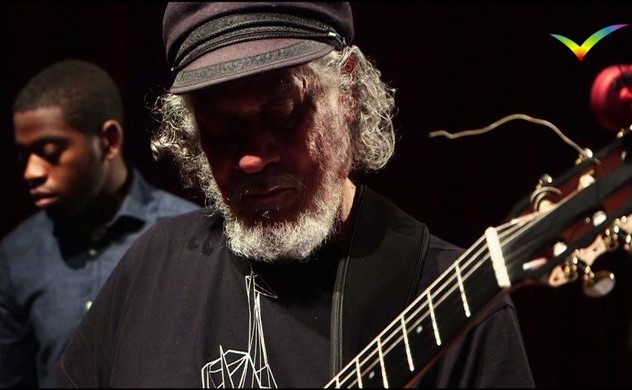
The venerable René Lacaille
There is a Mauritian restaurant in Toronto (there used to be two). Can you picture Mauritian food? Probably not. Few places sound more exotic and out-of-the-way. But Mauritius was a key point on the sea lanes of the British Empire. A former British colony with a population speaking a French patois, but descended from South Asians, Africans, Portuguese, Dutch, Arabs, and whatever else wandered by, Mauritius provides a sophisticated, cosmopolitan cuisine. Very tasty. Much the same can be said of the music.
But there is not just Mauritian music to listen to. There is Réunion, an overseas département of France, settled by Africans, Chinese, Malays, and Tamils. There are the Islamic Comoros, and the closely related French possession of Mayotte. There is the Republic of the Seychelles, largely Catholic, though formerly a British colony, and the most indebted country, per capita, in the world. There is tiny Rodrigues. And finally, there is the huge and populous island of Madagascar, whose culture and language come originally from Borneo, half-way around the world from them. The diversity of the nations at the western end of the Indian Ocean produces a delightful variety of music. The performers in this collection include Tarika, Feo-Gasy, Ricky Randimbiarison, Jean-Noël, and Lego from Madagascar; Denis Azor, and Kaya from Mauritius; Danyel Ward, Françoise Guimbert, Baster, Tam-Tam Des Cools from Réunion; Kaskavel from Rodrigues; M’Toro Chamou er les Watoro from Mayotte; Belle Lumière from Comoros; Seychelles String Band and Seychelles All Stars; and even a band from Zanzibar (Culture Music Club), which is part of Tanzanyia, but an offshore island. But if there is anyone who could be called a big star, it is René Lacaille, the master of the spicy séga rhythms of Réunion, here performing with American guitarist Bob Brozman. Lacaille is well known in the French music scene, and has successfully toured here in Canada.
Rough Guide compilations are always well chosen. It is unlikely that you will come across most of the this material, even in a well-stocked “world music” store. The music is mostly upbeat and danceable. After Lacaille, I was most drawn to the Malagasy musicians, especially Feo-Gasy, but it would be hard to choose favourites. All the bands are good.
Second Meditation on Democracy [written Monday, August 7, 2007] REPUBLISHED
Posted by Phil Paine
on April 10, 2018
No comments
 In the beginning years of this blog, I published a series of articles called “Meditations on Democracy and Dictatorship” which are still regularly read today, and have had some influence. They still elicit inquiries from remote corners of the globe. They are now buried in the back pages of the blog, so I’m moving them up the chronological counter so they can have another round of visibility, especially (I hope) with younger readers. I am re-posting them in their original sequence over part of 2018. Some references in these “meditations” will date them to 2007–2008, when they were written. But I will leave them un-retouched, though I may occasionally append some retrospective notes. Mostly, they deal with abstract issues that do not need updating.
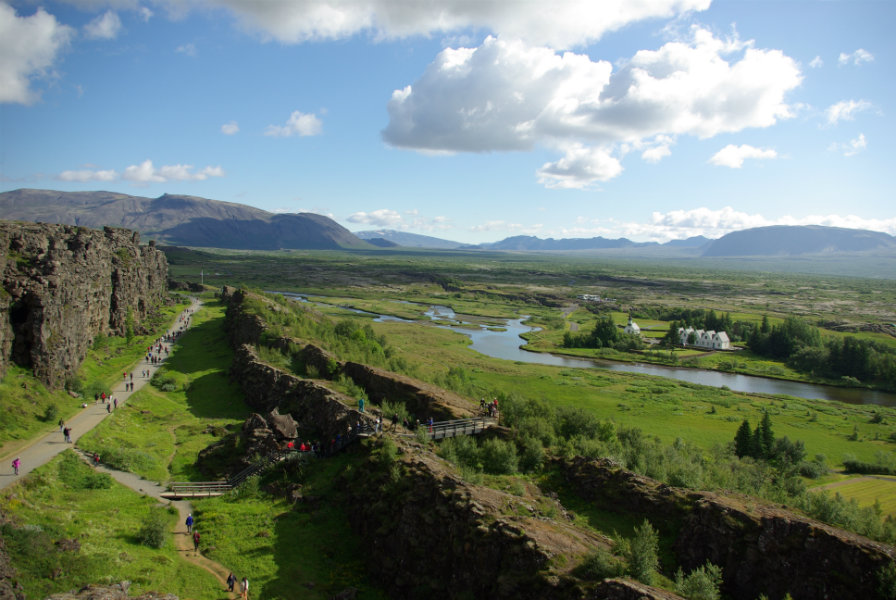
Þingvellir, the outdoor site of the medieval Icelandic elected parliament. Þingvellir, the outdoor site of the medieval Icelandic elected parliament.
“Civilization is the process in which one gradually increases the number of people included in the term ‘we’ or ‘us’ and at the same time decreases those labeled ‘you’ or ‘them’ until that category has no one left in it.” — Howard Winters, an American archaeologist who studied ancient settlement and trade patterns [quoted by Anne-Marie Cantwell in Howard Dalton Winters: In Memoriam]
“Voice or no voice, the people can always be brought to the bidding of the leaders. That is easy. All you have to do is to tell them they are being attacked, and denounce the pacifists for lack of patriotism and exposing the country to danger. It works the same in any country.” — Hermann Wilhelm Göring, second in command to Adolf Hitler. Read more »
Image of the Month: Pluto
Posted by Phil Paine
on April 1, 2018
No comments
 We are in a great era of space exploration. This magnificent photo of Pluto (colour-enhanced, but otherwise a true visual image) was taken by the New Horizons probe, which is now more than six billion kms from Earth. New Horizons, launched in 2006, is entering the vast outer regions of our solar system, which we are discovering is far bigger and more complex than was ever imagined. The heart-shaped plain called Sputnik Planitia is an ocean of nitrogen ice, which is semi-fluid and shows dynamic features similar to those that occur in polar pack-ice on Earth. Adjacent to it is a mountainous region charmingly named Cthulhu Macula, which seems to be coloured by hydrocarbon tars.
FILMS – MARCH 2018
Posted by Phil Paine
on March 31, 2018
No comments
(Berkeley 1939) They Made Me a Criminal
(Marshall 1961) The Phantom Planet [Mystery Science Theatre version]
(Dante 2013) Trailers from Hell: Joe Dante on Giant from the Unknown
(Cunha 1958) Giant from the Unknown
(Trelfer 2017) Dark Corners Review: (17) Giant from the Unknown
Read more »
First-time listening for March 2018
Posted by Phil Paine
on March 31, 2018
No comments
25011. (Shpongle) Museums of Consciousness
25012. (Atomic Rooster) Death Walks Behind You
25013. (Johann Sebastian Bach) Cantata #77 “Du sollt Gott, deinen Herren, lieben”, bwv.77
25014. (Johann Sebastian Bach) Cantata #78 “Jesu der du meine Seele”, bwv.78
25015. (Miles Davis) Dig [with Sonny Rollins]
Read more »
READING — MARCH 2018
Posted by Phil Paine
on March 31, 2018
No comments
23836. (David Cay Johnston) It’s Even Worse Than You Think: What the Trump
. . . . . Administration Is Doing to America
23837. (Yrsa Sigurðardóttir) My Soul to Take [Sér grefur gröf — tr. B. Scudder & A. Yates]
23838. (Frosti Ólafsson, Björn Brynjúlfur Björnsson & Sigurður Tómasson) The Icelandic
. . . . . Economy: Current State, Recent Developments and Future Outlook [report]
Read more »
Friday, March 23, 2018 — Lóa fiðurgisin
Posted by Phil Paine
on March 23, 2018
No comments
Engis biður ein á strönd
— elsk að friði— þysinn,
Stormaklið né lýð um lönd
lóa fiðurgisin.
[Alone on the beach, the feathers worn and shabby, the peace loving bird tries to evade the noise and the storms that blow through the lands.]
̶ Guðmundir Friðjónsson
The above is from an amazing recording of rímur sung by Steindór Andersen, a renowned kvæðamaður, or traditional chanter. This verse is from an old recording, but it is followed by additional verses in a modern, rock-like orchestration by Hilmur Örn Hilmarsson. Both men have worked with Sigur Rós. The sentiment is appropriate to my investigations in Iceland. This small, peace-loving island country has weathered many storms blowing across the sea from powerful continental tempests. While mistakes have been made, Iceland is a place where people seem to believe that problems can be solved. This attitude is in sharp contrast to the morbid passivity and defeatism that enshrouds some of the larger and louder nations. To understand this, I’ve been speaking with a variety of Icelanders. It is just a first step. I have been merely introducing myself and establishing some rapport so that these issues can be explored in greater depth by correspondence. It has proven both informative and delightful. The egalitarian Icelanders care not that I have little prestige — I’m merely a curious Canadian. People ranging from civic and national politicians and civil servants to academics, musicians, and filmmakers, have all given me precious time and honest talk. I must thank, among them, Ásgrímur Sverrisson, Kári Gunnarsson, Sveinn Guðmundsson, Herdis Sigurjonsdottir, Stefán Baldursson, Sibeso Imbula, and Sigurður Bjorn Blondal. There will be others to thank in the days to come.
Solving the problems that face a nation is not served by concocting utopias, but by observing sound principles of fairness and reason. I was delighted that everyone I spoke with seemed to take that approach. There was no whining. As one of my informants observed, in the wake of the financial crisis of 2008 some of the people responsible for the debacle were later instrumental in correcting it. Apparently, the well-being of the country in the end overruled stubborn pride. This was a remarkable point to make. Every nation, like every extended family, has its fools, and even the wisest have their moments of foolishness. But it is a strong family indeed that has fools who learn from their folly. When I was in Iceland the first time, shortly after the crisis, I did not find people in a panic or a rage. I found people who knew that they had made mistakes, and were determined to correct them. Now that I am back, I see the results of those efforts, and they are impressive. Canadians could learn from this. We are not a small, tightly bound together country like Iceland. Indeed, we are loose and sprawling, with many factions barely aware of each others’ existence. But we are not a torpid giant like our neighbour to the south, and not condemned to moral and intellectual paralysis — unless we so choose.
We are now entering a time of much greater perils than mere stock market crashes. We will have to step nimbly to survive.
Friday, March 9, 2018 — Ghosts and Zombies
Posted by Phil Paine
on March 9, 2018
No comments
 According to the Eyrbyggja Saga, when the Icelandic peninsula of Snæfellsnes was plagued with ghosts and zombies (specifically Thorir Wooden-leg and his undead companions) disrupting daily life and harming the economy, Snorri Þorgrímsson solved the problem by taking them to court and submitting them to trial by jury. Always the proceduralist, Snorri was best known for his fair judgements in cases of blood feuds, boundary disputes and the endless squabbles over firewood. The zombie problem was just another such case. The Eyrbyggja Saga is not one of the best known of the Icelandic sagas, but it would appeal to any lawyer or political journalist. I read it in 1992, and then twenty years later I hiked extensively in Snæfellsnes, treading footsteps in most of the places the saga mentions. I’m returning to Iceland ten days from now, for another visit to that magical little country, so it’s much on my mind, and so is old Snorri. Today, Canada is menaced by a plague of ghosts and zombies, originating south of the border. The ghosts are an assortment of old and stupid ideas, the zombies are the marching morons of Trumpism and the morally corrupt legislators of the U.S. (mostly Republican, but quite a few Democrats as well). We could use a Snorri to sort things out. Read more »