FIRST MEDITATION ON DICTATORSHIP (written Thursday, February 7, 2008)

We are so hamyd,
For-taxed and ramyd,
By these gentlery-men!

― The Wake­field Sec­ond Shep­herds’ Play, c.1425–1450 [1]

We are men the same as they are:
Our mem­bers are as straight as theirs are,
Our bod­ies stand as high from the ground,
The pain we suffer’s as pro­found.
Our only need is courage now,
To pledge our­selves by solemn vow,
Our goods and per­sons to defend,
And stay togeth­er to this end…

Robert Wace, Le roman de la Rou et des ducs deNor­mandie, 1160–70s [2]

On my return to Prague, last year, after tramp­ing in Hun­gary and Tran­syl­va­nia, my friend Fil­ip Marek took a day off for some more explo­rations of the Bohemi­an coun­try­side. This turned out to be the most emo­tion­al­ly charged day in my trav­els, and I’ve delayed describ­ing it because of its per­son­al impor­tance to me.

The land­scape around Prague is not much dif­fer­ent, at first glance, from that of South­ern Ontario. It’s rich farm­land, gen­tly rolling hills, and patch­es of mixed for­est sim­i­lar to those around Toron­to. Most of it was so pleas­ant that I couldn’t help replay­ing snatch­es of Dvořák, Smetana and Janáček in my head as the car rolled under the dap­pled sun­lit trees, past fields and vil­lages that seem to be both ancient and brand new at the same time. How­ev­er, our quest was to extract some­thing incon­gru­ous­ly dis­turb­ing and trag­ic from Bohemia’s woods and streams.[3] We were going to see two places that do not loom large in the his­to­ry books, but loom large in the kind of his­to­ry that I am con­cerned with. The first was the Voj­na Hard Labour Camp, in the for­est near the vil­lage of Příbram, and the sec­ond was the site of Lidice, a vil­lage that no longer exists. Read more »
15597. (Rodney Castleden) Britain 3000 BC

I strong­ly rec­om­mend this book to any­one who is begin­ning to look at the Neolith­ic peri­od in Eng­land, or to any­one who is intrigued by Stone­henge, Ave­bury, or the mar­velous Orkney sites. Cas­tle­don does a fine job of pulling togeth­er the cur­rent evi­dence and weav­ing it into a com­pre­hen­sive pic­ture of life in the U.K. in 3000 BC. Much of this involves inter­pre­ta­tion, guess­es, and imag­i­na­tive recon­struc­tion, but the author usu­ally makes it clear when he is doing this, and care­fully dis­tin­guishes between what the archae­o­log­i­cal evi­dence can prove or not prove, and when analo­gies from anthro­pol­ogy are appro­pri­ate. Occa­sion­ally the text drifts into fash­ion­able pat­ter about the psy­chol­ogy of spaces and the rela­tion of mind to land­scape, but not enough to be annoy­ing. There is only one embar­rass­ing pas­sage, where he talks about the “emer­gence” in the fourth mil­le­nium BC, of “lit­er­ally self-con­scious peo­ple, peo­ple like us, self-con­tained and self-aware”. The notion that human beings in some peri­od or cul­ture were not self-con­scious or self-aware, and sud­denly became so because of some sud­den trans­for­ma­tion, is, as far as I can tell, non­sense. Yet it con­stantly pops up in his­tor­i­cal and anthro­po­log­i­cal writ­ing, based on the flim­si­est rea­son­ing. One might as well claim that peo­ple became “self-aware” in 1950, because then they began to make indi­vid­ual pur­chases with cred­it cards. But this is only one blem­ish in an oth­er­wise excel­lent and use­ful work. The book abounds in well-cho­sen maps, illus­tra­tions and pho­tographs, the mate­r­ial is pre­sented in an order­ly fash­ion, and the prose style is pleasant.

Underworld.. satisfying techno from the nineties

This is an inter­est­ing British tech­no group from the 1990’s. Dub­nobass­with­my­head­man(first album, 1994) makes me want to step into my time machine and vis­it the Lon­don clubs around that time. Most of the club stuff from that era hasn’t worn well ― lis­ten­ing to the aver­age Chris Shep­pard com­pi­la­tion can be pret­ty painful. But Karl Hyde (vocals), Rick Smith and Dar­ren Emer­son made a cre­ative mélange of tech­no-house-dub-funk that can still be played with­out embar­rass­ment. The vocals actu­ally fit in to the mix, rather than sim­ply being a kind of hal­lelu­jah cho­rus thrown in so you can remem­ber which set you’re lis­ten­ing to. But the strongest ele­ment is its pro­gres­sion, the nec­es­sary build-up of emo­tion, in this case start­ing with harsh cyn­i­cism (“Dark and Long”) through con­tem­pla­tive (“Mmmm Sky­scraper I Love You”), recharg­ing (“Spoon­man”) and cli­max (“Cow­girl”). This must have made for one of those deliri­ously sat­is­fy­ing dance floor expe­ri­ences that the club scene was all about. I have a dif­fer­ent mix of “Dark and Long” labeled “Dark Train Mix” on the enter­tain­ing com­pi­la­tion UKTrib­al Gath­er­ing ’95.

The sec­ond album, Sec­ond Tough­est In the Infants (1996) shifts to what came to be called “Pro­gres­sive House”, influ­enced by the mul­ti-lay­ered art-rock of the sev­en­ties, but retain­ing the dance­able tech­no beat. There are audi­ble hints of Yes and Gen­e­sis. As in the first album, many of the songs are dark and moody. The re-release of this album includes a bonus track of “Born Slip­py .NUXX”, which had wide­spread expo­sure through the film Trainspot­ting. I also have “2 Months Off [King Unique Sunspots Vocal Mix]” and “King Of Snake [Fat­boy Slim Remix]” on two dif­fer­ent Shep­pard col­lec­tions. These songs appear on lat­er albums, which I’ve nev­er heard.

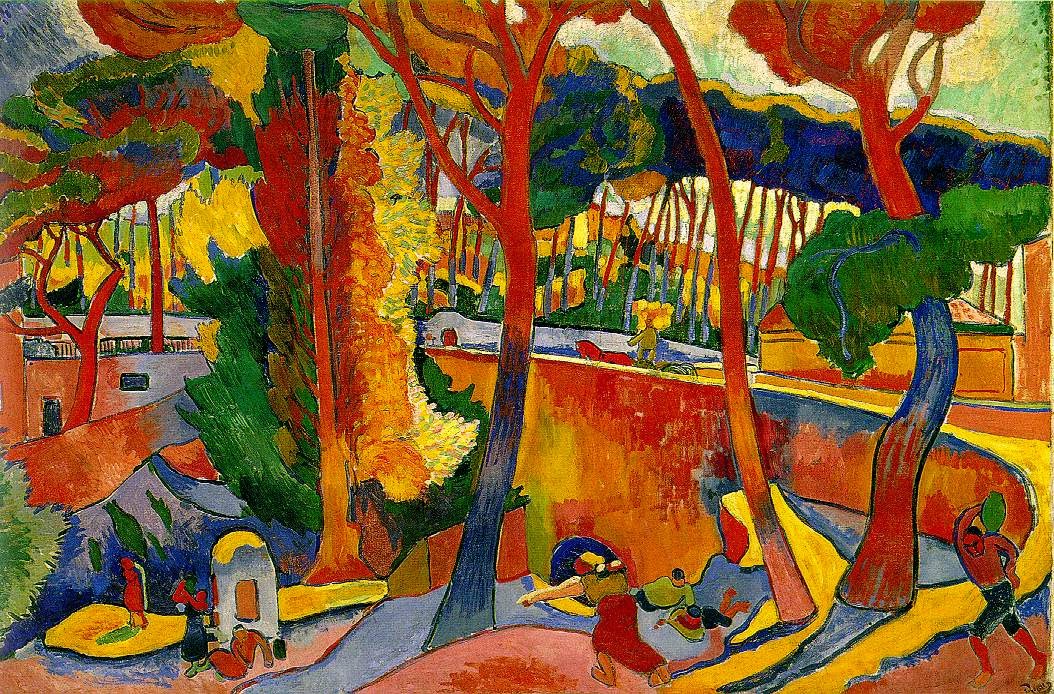
Image of the month: The Turning Road

#F (4415)

André Derain (1880–1954) : L’Es­taque, route tour­nante(1906) oil 129.5 cm x 195 cm

First-time listening for January 2008

18062. (Oscar Peter­son) A Trib­ute to Oscar Peter­son Live at Town Hall [with Neils-Hen­ning
. . . . . Ørst­ed Ped­er­son, Ray Brown, Herb Ellis, Ben­ny Green, Roy Har­grove, Shirley Horn, 
. . . . . Milt Jack­son, Lewis Nash, Clark Ter­ry, Stan­ley Tur­ren­tine, Man­hat­tan Trans­fer]
18063. (Oscar Peter­son & Ben Web­ster) Ben Web­ster Meets Oscar Peter­son [with Ray Brown
. . . . . and Ed Thig­pen]
18064. (Oscar Peter­son) A 75th Birth­day Cel­e­bra­tion [Cana­di­an exclu­sive release]
18065. (John Blow) Ode on the Death of Mr. Hen­ry Pur­cell
18066. (Hen­ry Pur­cell) “Why should men quar­rel?”
Read more »

READING – JANUARY 2008

15469. [2] (Philip Pull­man) The Gold­en Com­pass [His Dark Mate­ri­als, Book 1]
15470. (Philip Pull­man) The Sub­tle Knife [His Dark Mate­ri­als, Book 2]
15471. (Philip Pull­man) The Amber Spy­glass [His Dark Mate­ri­als, Book 3]
15472. (Christo­pher Boehm) Seg­men­tary “War­fare” and the Man­age­ment of Con­flict:
. . . . . Com­par­i­son of East African Chim­panzees and Patri­lin­eal-Patrilo­cal Humans [arti­cle]
15473. (Jacob M. Rab­bie) The Effects of Intra­group Coop­er­a­tion and Inter­group Com­pe­ti­tion
. . . . . on In-group Cohe­sion and Out-group Hos­til­i­ty [arti­cle] Read more »

Wednesday, January 30, 2008 — Canada in Afghanistan ― Ottawa Releases a Puff of Hot Air

Canada’s armed forces have been in Afghanistan since 2002, at a cost of 79 deaths (78 sol­diers and one diplo­mat), and a large, though very dif­fi­cult to assess mon­e­tary cost. Like most Cana­di­ans, I sup­port­ed send­ing troops to Afghanistan, feel­ing that the peo­ple of that long-suf­fer­ing land deserved to be defend­ed against fur­ther humil­i­a­tions. Most of the Afghan-Cana­di­ans I spoke to were sup­port­ive of the enter­prise. I knew per­fect­ly well that the ini­tial rea­son for our being there was a kind of indi­rect black­mail from Wash­ing­ton. Join­ing the NATO oper­a­tion in Afghanistan was prob­a­bly the only way that Paul Martin’s admin­is­tra­tion could get away with our refusal to par­tic­i­pate in the dis­as­trous war on Iraq. But I felt there was a chance that we could do some good there, as long as we man­aged to avoid oper­at­ing under the thumb of U.S. forces. Read more »

Friday, January 25, 2008 — What should Canadians do about the global economic slowdown?

It’s not as if the cur­rent eco­nom­ic slump came as a sur­prise to any­one with horse-sense. Those of us who can add two and two and get four have been pre­dict­ing it for a long time. North Amer­i­cans have long lived in a bizarre Con­ser­v­a­tive fan­ta­sy world in which “pros­per­i­ty” and “con­sump­tion” have been inter­change­able words. Thir­ty years of Con­ser­v­a­tive mum­bo-jum­bo has con­vinced an entire gen­er­a­tion that you mag­i­cal­ly get rich mere­ly by buy­ing things ― and mak­ing things is an unnec­es­sary process, a tir­ing and incon­ve­nient, low class kind of busi­ness that we needn’t dirty our hands with. Now we are in a bloody big mess.  Read more »

Wednesday, January 23, 2008 — The Lure of the Yam Boss

To under­stand how polit­i­cal pow­er works, you have to under­stand the basic unit of pol­i­tics, which is the indi­vid­ual “con-job”. Polit­i­cal pow­er struc­tures are not the result of neb­u­lous col­lec­tive forces or abstrac­tions. They are cre­at­ed by indi­vid­ual human beings. These are not ordi­nary human beings, with ordi­nary motives, but spe­cial­ists, with motives dis­tinct from those that move you or me. In fact, it is the very ordi­nar­i­ness, rea­son­able­ness, and pre­dictabil­i­ty of our motives that enables spe­cial­ists in pow­er acqui­si­tion to flour­ish among us. The spe­cial­ist in pow­er acqui­si­tion oper­ates, like any preda­tor, by strate­gies of which it is con­scious, but its prey is not. The­o­ries of his­to­ry which inter­pret the activ­i­ties of rulers, aris­toc­ra­cies, and pow­er elites as act­ing uncon­scious­ly, or dri­ven by col­lec­tive “belief sys­tems” or ide­olo­gies are pro­found­ly off the mark. Read more »

15562. (Clifford Geertz) The Rotating Credit Association: A “Middle Rung” in Development [article]

Rotat­ing cred­it asso­ci­a­tions are pro­foundly impor­tant insti­tu­tions. They illus­trate the abil­ity of peo­ple to orga­nize them­selves demo­c­ra­t­i­cally on a grass-roots lev­el, and show that this impulse is cross-cul­tur­al. This is the clear­est and most detailed descrip­tion of how rotat­ing cred­it asso­ci­a­tions work. The author’s best knowl­edge is of Indone­sia, but he draws on well-researched com­par­isons with oth­er regions, espe­cially Africa. The analy­sis of struc­ture, motives, and effects is very sharp. Basic read­ing in this area.