
First-time listening for August, 2006
Posted by Phil Paine
on August 31, 2006
No comments
16290. (Siouxsie and the Banshees) Juju
Rough Guide to Brazil: Bahia:
. . . . 16291. (Timbalada) “Motumba”
. . . . 16292. (Sylvia Torres) “Take Sarava”
. . . . 16293. (Daniela Mercury) “Swing Da Cor”
. . . . 16294. (Ze Paulo Becker) “A Vida e Boa”
. . . . 16295. (Riachao) “Pitada de Tabaco”
Read more »
READING – AUGUST 2006
Posted by Phil Paine
on August 31, 2006
No comments
14719. (Brian Doyle) Easy Avenue
14720. (Mary Mapes) Truth andDuty ― The Press, the President, and the Priviledge of Power
(Walter Mosley) Futureland: Nine Stories of an Imminent World:
. . . . 14721. (Walter Mosley) Whispers in the Dark [story]
. . . . 14722. (Walter Mosley) The Greatest [story]
. . . . 14723. (Walter Mosley) Doctor Kismet [story]
Read more »
(Hitchcock 1936) The Secret Agent; (Hitchcock 1936) Sabotage
Posted by Phil Paine
on August 29, 2006
No comments
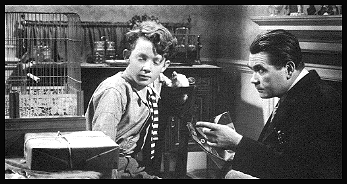
Two fascinating early Hitchcock films both from 1936. The Secret Agentis rather clumsily plotted but has some charm. It is startling to see John Gielgud as a handsome young romantic lead, and Peter Lorre provides an eccentric performance as a sort of generic comical “foreigner”. Sabotageprovides a frissonto today’s viewer. The plot involves a terrorist planting a bomb on a London bus. Hitchcock pulls no punches: he builds up a likable child character, then brutally blows him up, halfway through the film. It would have been impossible to do this in an American film until decades later. But audiences did not like it, and Hitchcock later considered it a lapse of judgement. The terrorist in the film employs a liquid explosive of the same type as seems to have been used in the foiled multiple airplane bombing of the last few days.
14746. (Elliott Leyton) Hunting Humans
Posted by Phil Paine
on August 28, 2006
No comments
This is the seminal work on the anthropology and sociology of serial killing. I read it in conjunction with an NFBdocumentary film “The Man Who Studies Murder”, which puts a face to the voice of the book. Leyton is a country boy from small-town Saskatchewan (who looks and sounds distinctly Metis, though I can’t say for sure that he is) and now lives in Newfoundland. Newfoundland is rural, poor by North American standards, and virtually every house has a gun. Economically, it’s the Canadian equivalent of Arkansas. But it has one of the lowest murder rates in the world. In the film, Leyton discusses the reasons why he considers cultural choices and mores the principal determinant of murder rates and styles of murder, often using his home as a laboratory.
The book on serial and mass killers, dealing with the “classic” cases, attempts to get beyond the kind of unverifiable psychiatric speculations that dominated the issue before Leyton came on the scene. As he demonstrates, psychiatry has been of little use in understanding the phenomenon. He shows the fundamental similarities in most serial killings, and does his best to deflate the nonsense generated by Thomas Harris’s “Hannibal Lecter” fantasies. Serial killers are invariably pathetic, ineffective losers, usually pretty dumb.…. never the suave supergeniuses of fiction. Leyton rejects biological and psychiatric explanations in favour of a cultural one, and argues it persuasively. He may not have the last word on this issue, but his opinions are more worth reading than most. He is also a witty and entertaining writer ― and from the evidence of the film, has the same qualities in person.
(Scorcese & Wilson 1995) A Personal Journey With Martin Scorsece Through American Movies
Posted by Phil Paine
on August 26, 2006
No comments
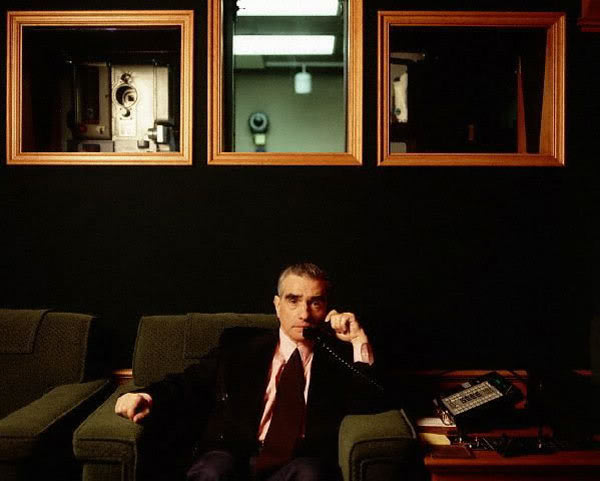 Scorsese is a highly cultured, literate and civilized man, without pretension and remarkably free of snobbery. In this study of the American films that entertained and influenced him, he opens our eyes to the artistry of many Hollywood films ― westerns, gangster films, musicals, and low-budget thrillers ― that film historians and critics would sneer at. This four hours long documentary undermines that obnoxious tendency in all the arts, the glorification of an official canon of “classics”. His analysis of films by forgotten and underrated directors is sharp, but affectionate.
Plan B
Posted by Phil Paine
on August 25, 2006
No comments
 If you want to know the difference between a free country and a collectivist, sovietized society, where the State directs, manipulates and socially engineers the life of the individual, then one has only to walk into a drugstore in Canada and then into one in the United States. In any Canadian drugstore, any woman can purchase Plan B, the “morning after pill”, without prescription or harassment, as is her right. In the United States, this is not the case. There, the State rules over the most private domain of the individual. As in Communist China, Americans suffer a government which considers their bodies the property of the State. Their most intimate personal choices do not belong to them, but to an all-powerful collectivism, to the Leviathan. It makes me profoundly grateful that I live in a significantly freer, more individualist society, where, as one Canadian Prime Minister once proclaimed, “The State has no place in the bedrooms of the nation.”
There are many things of which I disapprove in my own country, and Lord knows there are plenty of stupid things that happen here. But, at least we are not reduced to such pathetic serfdom that we surrender our sexual organs to the tyranny of squalid bureaucrats and a Supreme Soviet on Pennsylvania Avenue.
Thursday, August 24, 2006 — Moscow Nights on the Subway
Posted by Phil Paine
on August 24, 2006
No comments
One of those little moments of beauty. I was in the Finch subway station. There are musicians who busk in many of the stations. In this case, it was an old man with an accordion. He struck up a few chords, instantly familiar to me. And to someone else. A middle-aged Asian woman, walking by, also recognized what was coming, and immediately began to sing. It was a trained voice, very beautiful. She sang, in Russian, Vasily Soloviev-Sedoi’s popular song, Подмосковные Вечера. Now, most Russian songs are sad and heart-tugging, but “Moscow Nights” is that, squared and cubed. It comes off best with a deep male voice — the most famous version is sung by Vladimir Troshin. But this woman was very effective. By the time she was finished, the whole, bustling mass of commuters in the hall that led from the bus platforms to the trains was transfixed. Teenagers, who would normally turn up their iPods as they trudged obliviously past any busker, were stopping to drop coins into the accordionist’s hat. The woman started to dance as she sang. The crowd was mesmerized. When the song ended, with mothers, children, businessmen, students, and subway workers applauding, the accordionists did not skip a beat, and launched immediately into another song. Some opera tune, vaguely familiar to me, but which I could not identify. The woman jumped into it instantly, singing the full aria in Italian. More applause. Again, only a second’s hiatus, and they were doing Bésame mucho, a song so corny that normally it’s unbearable. But she gave it dignity.
Three songs, and then she obviously had to get to work, or whatever. I spoke to her for a moment as we headed for the trains. Her accent was Korean. Did she speak Russian? No, she said, she had merely memorized the words phonetically. And she disappeared, nameless, with her grocery bags, down a crowded escalator into the silver cars that sped under the earth. Read more »
Tuesday, August 22, 2006 — The Ideology of Qutb
Posted by Phil Paine
on August 22, 2006
No comments
I just finished reading Sayyid Qutb’s Ma’alim fi-l-Tariq[“Milestones”]. This book is not available in my public library system. Since it bears the same relationship to the rise of Islamist totalitarianism as Mein Kampf and The Communist Manifesto do to European totalitarianism, you would think it would be smart for our libraries to have it. You cannot resist a movement of oppression and aggression by knowing nothing about it. Milestonesis the ideological entry-point by which bored, spoilt-brat teenagers in Muslim families are drawn into the movement and converted into zealots for death and destruction. It should be read, grasped, and understood by sane people, so that its insanity can be countered. Read more »
14737. (Joseph Boyden) Three Day Road
Posted by Phil Paine
on August 22, 2006
No comments
This book caught my eye because it’s heroes are from the coast of Hudson’s Bay, a nostalgic place for me. Two Cree lads from Moose Factory fight in the trenches of World War I. Boyden writes beautifully, is familiar with Cree culture, and researched WWItrench warfare with a historian’s skill. The book compares well with the classic Canadian novel of WWI, Timothy Findlay’s The Wars. The Great War of 1914–1918 had a tremendous impact on Canada — far more than on the United States. Canada was involved during the entire length of the war, had twice as many soldiers on the front per-capita as the U.S., and one Canadian family in five suffered a casualty. The war ended the desire of most Canadians to keep any serious political ties with Britain, and scarred an entire generation. So it isn’t surprising that WWInovels continue to be written, and loom large in Canadian literature. This is a worthy example. Read more »