 I spotted this in a Goodwill book-bin and snatched it. What a little treasure to come across! In 1931, the young commercial artist Theodore Seuss Geisel, who had already assumed the non-de-plume of “Dr. Seuss”, was commissioned to illustrate three collections of amusing quotes from school essays. His biography states that it was this that convinced him that he should try making a book for children. Dr. Seuss’ inimitable style is already evident in these illustrations. The schoolboy bloopers selected are still very funny. Some examples: “Gravity was discovered by Isaac Walton. It is chiefly noticeable in the autumn, when apples are falling off trees”, “The Zodiac is the Zoo of the Sky, where lions, goats, virgins and other animals go after they are dead”, “A cow is very like a bull, but a bull hurts more”, “To stop a nosebleed, stand on your head till your heart stops beating.”, “The artichoke was an ancient instrument of torture”, “Heredity means that if your grandfather didn’t have any children, then your father probably wouldn’t have had any, and neither would you, probably.”, “Thomas Paine was a rare individual, obsessed by common sense.”, “Canadians raise bowl weevils for their wool.”, and who could forget “Socrates was addicted to hemlock, which eventually corrupted his morals.”? Dr. Seuss’s drawings do full justice to these gems of error. I don’t doubt that this book is collectible, but it would take a gang of furious Scotsmen armed with claymores to pry it away from me. [apparently it isn’t worth anything much — a friend checked up on it] Read more »
(Dr. Seuss & Alexander Abingdon) The Omnibus Boners
Tuesday, April 4, 2006 — Dick Gephart Quotes Us (How’s That Again?)
In 1992, I wrote a little essay in which I criticized the widespread belief that democracy is nothing more than a mere local custom of a few “western” countries, of little interest or applicability to most of the world. This orthodoxy, taught in countless university courses and glibly (and gleefully) chanted by all the world’s enthusiasts for tyranny and exploitation, was, I wrote, without historical or anthropological foundation. I pointed out that the elements on which modern representative democracies were built exist in every major cultural tradition, and are the common experience and heritage of humankind. I sketched out a series of examples that supported my thesis. But the article was nothing more than an anecdotal “think piece”. Read more »
(Scott 2005) Kingdom of Heaven
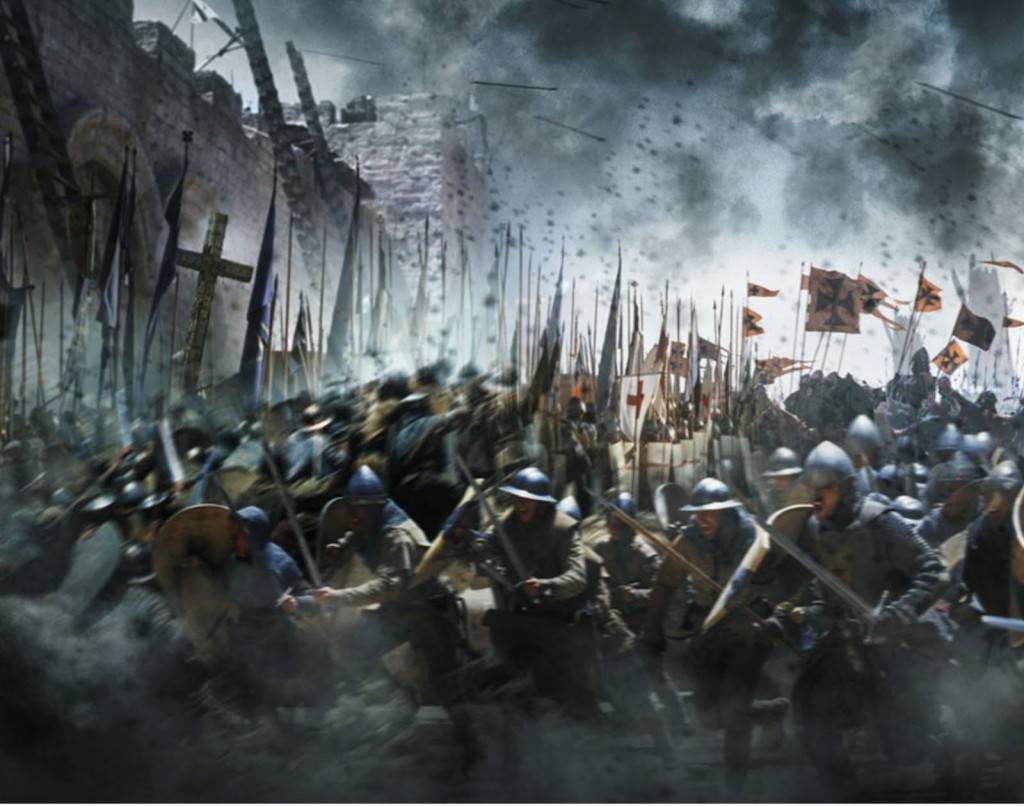
The plot is lifted straight out of Walter Scott’s The Talisman. The characters spout ridiculous speeches, espousing modern sentiments, which would be highly improbable coming out of the mouths of twelfth-century people. But who cares? The battle sequences at the end are magnificent. Medieval siege techniques, with rolling siege towers and trebuchets, were every bit as spectacular as modern attacks with smart bombs and missiles. Visually, the historical detail seems fairly accurate to me. Riddley Scott always does something worth looking at, even if he sometimes has structural problems in story-telling. Visually, his instincts are always on the mark.

FILMS JANUARY-MARCH 2006
(Fletcher 1986) Blackadder II: Bells
(Fletcher 1986) Blackadder II: Head
(Fletcher 1986) Blackadder II: Potato
(Theakson 1994) Cadfael:Ep.4 ― Monk’s Hood Read more »
First-time listening for March, 2006
15513. (Good Charlotte) The Chronicles of Life and Death
15514. (Flaming Lips) Yoshimi Battles the Pink Robots
15515. (Alessandro Stradella) Sinfonia avanti il Barcheggio in D for Trumpet, String
. . . . . Orchestra, Trombone and Harpsichord
15516. (Alessandro Stradella) Sinfonia in A Minor for Two Violins, Celli, Double-Bass, Lute
. . . . . and Harpshichord
15517. (Alessandro Stradella) Sonata a quattro in D for Double Orchestra
Read more »
READING MARCH 2006
14612. (Michael Cunningham) A Home at the End of the World
14613. (Ian Rankin) Strip Jack
14614. (Kim Stanley Robinson) Fifty Degrees Below Zero
14615. (Dean Mahomet) The Travels of Dean Mahomet, An Eighteenth-Century Journey
. . . . . Through India [ed. with an intruction and biographical essay by Michael H. Fisher]
14616. (Tim Wynne-Jones) A Thief in the House of Memory
14617. (Allen F. Davis) Spearheads For Reform ― The Social Settlements and the Progressive
. . . . . Movement 1890–1914
Read more »
(Annaud 1986) The Name of the Rose
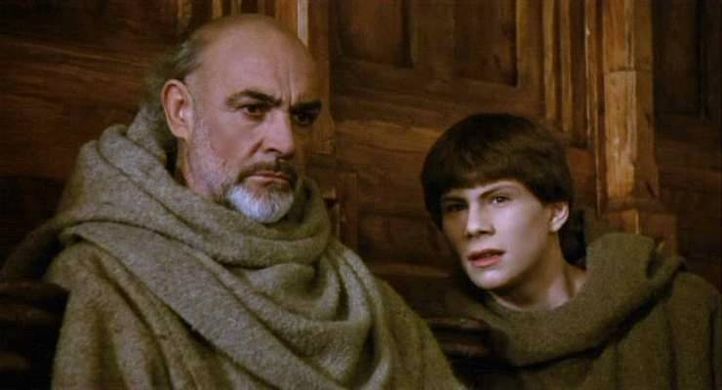 I’ve never understand why this wonderful film had such a poor critical reception. Critics complained that they could not follow the story. In fact, this medieval mystery, a loving tribute to Conan Doyle’s Sherlock Holmes stories, by Umberto Eco was very faithfully translated to the screen. Everything is perfectly clear if the viewer actually pays attention (which I have not noticed film critics being particularly good at). All the performances are good, but Sean Connery, as the Francescan detective William of Baskerville, is superb. You can tell when an actor understands, not only the meaning and context of his lines, but their implications as well. Yes, the film is slowly paced, and requires some effort from the viewer to appreciate. But it has moments of great beauty, especially when William’s character is revealed in his interactions with his novice, Adsel of Melk (Christian Slater). I strongly recommend this film.
Read more »
Edgar Meyer
I’ve always been a sucker for low-register instruments. A cello or a viola da gamba will move me much more easily than any violin, and I get all dreamy if I hear a contrabassoon even tuning up. Edgar Meyeris widely regarded as the finest double-bassist alive. But I will consider him here as a composer. Now, many terrific solo performers have given forth embarassing turkeys when they turned to composing, but this is not the case with Meyer. His Double Concerto for Cello and Double Bass, which he performs with the inimitable cellist Yo-Yo Ma, has none of the surly chugging along you expect from the instrument. It’s a sprightly composition, with pleasant melodies, and some sarcastic passages that Prokofiev would be proud of.The Concerto in D for Double Bass and Orchestra, is downright weird. It starts with little wafted fragments of melody, resolving them every now and then into an orchestral tutti, and plays little games of syncopation and call-and-answer. The second you think you know where the piece is headed, it twists out of it like a wrestler breaking a Boston crab grapevine leg lock. It eventually drifts into a slightly sinister and puzzling ending. The overall effect is surprisingly pleasing.
Meyer is a long-time friend of folk banjo virtuoso Béla Fleck, and they’ve put out an album together that I’m most eager to hear. If anyone out there has heard it, send me a review. The two concerti are together on the CD Meyer and Bottesini Concertos, along with two works by the 19th century Lombard composer, Giovanni Bottesini, whose music I’ll discuss next.
(Persky 1980) Serial
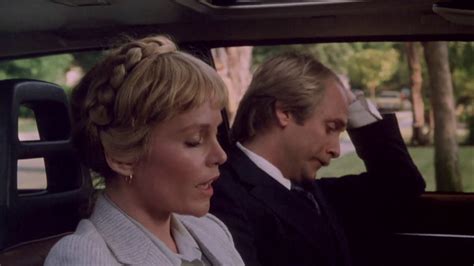 Cyra McFadden’s oddball satire of life in Marin County, an affluent suburb north of San Francisco, during the late 1970’s, was made into a film in 1980. I showed this wonderful little piece of cultural time-travel to a young friend. Nothing could better show how much a culture can transform in a generation or two. For him, it was a voyage to another planet, with incomprehensible values, customs and jargon. Even for me, who was exposed to Marin county not too many years afterward, the movie seemed bizarre. A lot of water has passed under the bridge. The film, starring Martin Mull in the lead role of a middle-aged husband overwhelmed by incomprehensible trends and psychobabble, captured the ambiance perfectly. McFadden’s work was nothing like the scorpion viciousness of a New Yorker’s satirist— it was pure Stephen Leacock.