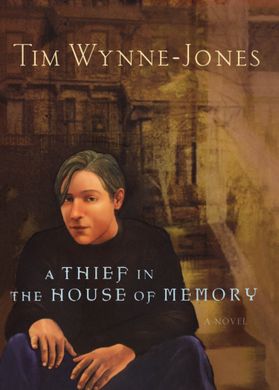
 Tim Wynne-Jones lives in the picturesque town of Perth, Ontario, about an hour’s drive from Ottawa. A small-town Canadian sensibility is the framework for this novel, written for teenagers, but it is not the nostalgia of Leacock’s Sunshine Sketechesby a longshot. It is closer to the haunted past and stiffled hopes in Sherwood Anderson’s Winesburg Ohio. A Thief in the House of Mermoryis beautifullywritten. The prose style is exquisite, full of invention and wordplay, and the dialog feels true. Despite the disturbing and depressing subject matter, the book is not just the product of facile cynicism. It is about confronting the past and dealing with it, and the decision to know the truth even if it brings you pain. Wynne-Jones is clearly writing intelligent, moving, and technically superb fiction for the “young adult” market, and the Toronto publisher Douglas & McIntyre is not putting obstacles in his way. I will eagerly investigate his other books, and the publisher.
14616. (Tim Wynne-Jones) A Thief in the House of Memory
Saturday, March 18, 2006 — Corporatism and Colonialism
I just finished reading Dean Mahomet’s Travels, an autobiographical account of a career in the East Indian Company’s armed forces during the eighteenth century, by a self-educated Bihari Muslim who eventually immigrated to Ireland [see Reading for March 2006]. There are many things to learn from this book, but I would like to use it as evidence for my views on the history and nature of the Corporation. Read more »
14615. (Dean Mahomet) The Travels of Dean Mahomet, An Eighteenth-Century Journey Through India [ed. with an intruction and biographical essay by Michael H. Fisher]
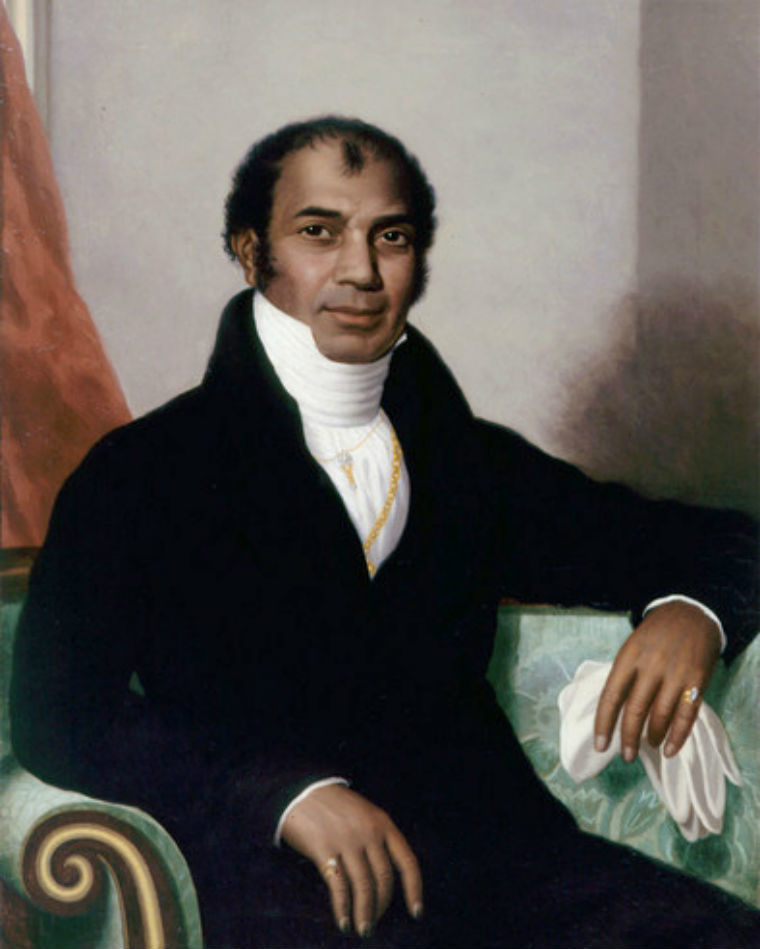 This is a fascinating document. Dean Mahomet came from a modestly successful Muslim family in India in the 18th Century, just at the period when the East India Company was absorbing and taking over the crumbling Mughal Empire. At the age of eleven, he became the friend and confidant of a teenage British officer, and for the next sixteen years they advanced together in that curious entity, the Indian Army. Together, they saw action at the siege of Gwalior, the Great Mutiny, and other key events. When a sudden (though apparently undeserved) disgrace ended his friend’s career, D.M. chose to accompany him to his native Ireland. He seems to have been personally charming, and was thoroughly self-educated in the literary culture of England.
In Cork, Ireland, he married into the local Anglo-Irish gentry. He wrote and published his book, which is an account of his military career, with an emphasis on describing the sights and customs of the regions in Northern India that he traversed. It must be remembered that, for him, most places in India were just as “foreign” as Belgium or Denmark would be to an Englishman. The description of a famine is particularly engrossing. Read more »
MidComer Murders [television series]
 I love all of the “MidSomer Murders”. John Nettles (as the Chief inspector) and Daniel Casey (as his bone-headed side-kick). The production values are first-rate, the acting top-notch, the scripts are well-written. Every one of the tiny, picturesque villages in the fictional English county of MidSomer is seething with hate, jealousy, secret sins, thwarted ambitions, star-crossed love, kinky sex, and murder, murder, murder. Detroit and South L.A. have nothing on MidSomer villages like Badger’s Drift, Ferne Basset, Aspern Tallow, and Midsomer Mallow. Stylistically, the definitely sits in the “cosy” tradition of English mysteries, the heritage of Agatha Christie. Nettles creates one of the most likeable fictional detectives on the screen. There are plenty of neat literary references to catch (especially to Jacobean drama) for those who take pleasure in such things, and plenty of witty jibes at contemporary mores for those who are more present-oriented. The mystery plots are absurdly improbable, in the best Agatha Christie tradition.
(Beavan 2003) A History of Britain: Episode 15 — The Two Winstons [20th Century]
 This is the final episode in Schama’s series, and the best. The “two Winstons” of the title are Winston Churchill, and “Winston Smith”, the fictional hero of George Orwell’s 1984, which Schama uses to refer to Orwell himself. Following the lives of these two obviously very different men, Schama explores several dimensions of Britain’s social and political history in the 20th Century. His narrative is witty, intelligent, and original. His comments on both men are right on the mark. I can tell that Schama got to know Orwell through his remarkable diaries and journalism, which were published in paperback in the 1970s, and made a profound impression on all sorts of people (myself included).
Schama is an astonishingly prolific English historian who has produced some of the most readable history books of this generation. It turns out that he has a good personality to present his ideas on television, and this series is extremely entertaining. It also gets better as the series goes. Schama is most at home in “modern” history (i.e. sixteenth century onward). So he rushes through through everything up to the Norman conquest in the first episode. The next two episodes focus on the Norman and Angevin kings and their soap-operatic struggles (everyone hold up their hands who picture Eleanor of Aquitaine as Katherine Hepburn). The first three episodes are not as good as the ones that follow. When Schama gets into the areas of social and economic history that he’s most comfortable in, the series becomes excellent.
Tuesday, March 7, 2006 — Thinking of Timbuktu
 Something made me think of Timbuktu, today. For a moment, I could smell the wind-blown sand, the acacias, the drying dung. For a moment I could hear snorting camels, the rapidfire street-talk in Chiini, the wailing muezin, the griotsplayinggurkelsand koras, the slender Fulani traders walking like gods through the market place, jaunty in their conical hats. Fabled Tombouctou, the name itself has come to mean “far away and unreachable”. Sad Timbuktu, the fading shadow of an ancient greatness.…“Salt comes from the north, gold from the south, but the wealth of wisdom comes from Timbuktu.” Few can now read the manuscripts from its centuries-old libraries, and the children who tumble out of theLycéemay not care about their loss. Outside the city, the monstrous sand dunes march southward, threatening to swallow what’s left of the city, like so many others that have sunk and drowned and vanished into the sand sea. Years of war among the desert nomads, ended only by uneasy truce in the late nineties, did not do it any good. Nor did decades of exploitation and brutality by a parasitic Marxist aristocracy, before that. Read more »
14614. (Kim Stanley Robinson) Fifty Degrees Below
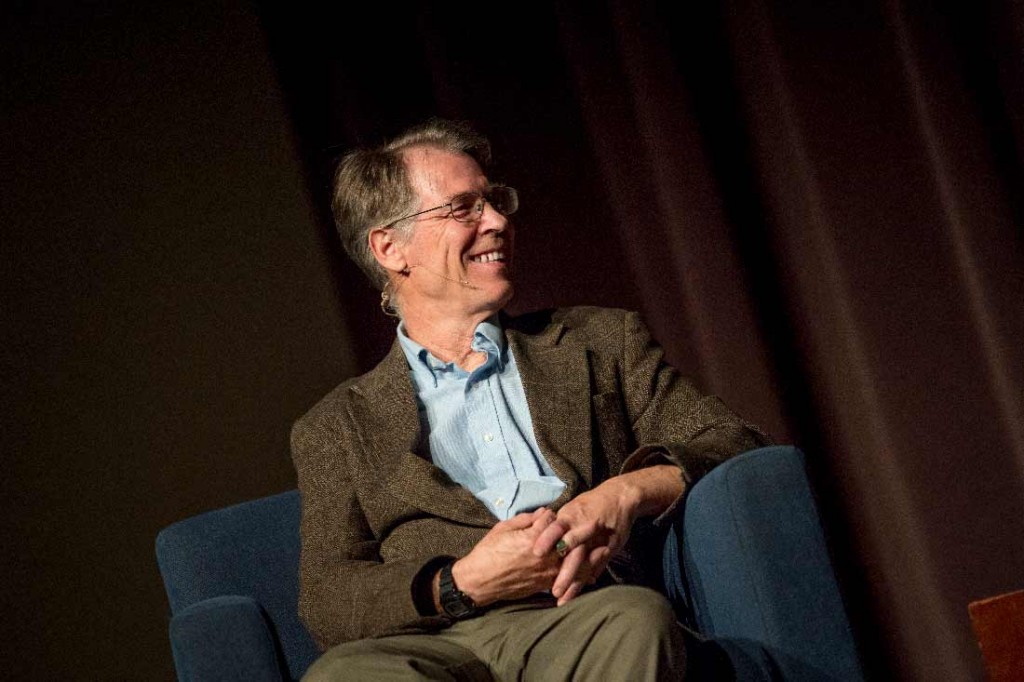 Kim Stanley Robinson is always readable, though the narrative often stops dead so that the reader can be supplied with large quantities of scientific, historical, or political information. It’s to Robinson’s credit that he can pull off these disquisitions without losing the reader. But it makes his novels a bit emotionally cool. This is Robinson’s Global Warming novel. It begins, interestingly, with the city of Washington ravaged by a devastating flood. The description of the clumsy and inadequate response is wonderfully prescient — the book was released only months before the New Orleans flood, and must have been written in 2004. The book didn’t strike terror into my heart, as was intended, since the science fictional premise is that the United States is suddenly forced to have Canada’s climate. I’ve been outdoors in fifty-below zero weather numerous times, and, while a bracing experience, the phrase “fifty below” doesn’t have quite the same scare value for me that it does for a Californian.
14612. (Michael Cunningham) At Home at the End of the World
This novel pleased me. It’s well-written, the characters come alive, and the author doesn’t pussy-foot. Cunningham takes three characters from childhood, bringing them up to youthful adulthood. They end up forming a precarious family and raise a shild. Nothing very extraordinary happens. But it is all done with great skill.The book is grown-up. As I turned the pages, I was reminded of my protracted struggle with the current situation in Science Fiction publishing. I grew up with Science Fiction, and I would rather write in that genre than write the sort of thing that Michael Cunningham does. Read more »
Thursday, March 2, 2006 — Cobalt Blue Evening
While I was walking home, in the early evening, the sky became that brilliant, glowing cobalt blue that only happens when conditions are right. There are few things more beautiful.
Today, I was able to take a short breather from the work I’ve been doing, compiling a database of companies for an urban investment delegation. I delivered an excel doc in the early morning, after doing an all-nighter. So, after finishing some overdue household chores, I caught a four-dollar matinée at the Rainbow Cinema. It was my first theatre movie of the year. I must be the only person on the planet who went to see Brokeback Mountainbecause of the sheep and the scenery [see THE LABYRINTH: VIEWING — Films 2006]. The theatre is across the street from St. Lawrence Market, so I stopped in. There’s a vegetable store there that is so picky about quality that it tosses anything even slightly substandard onto the discount rack. There, I found a bag of perfectly good chanterelle mushrooms for a dollar, and a large bunch of leeks for the same price. Mushroom Soup! Once home, I made one of my improvisational inspirations: cream base (not too thick), chopped leeks, celery, carrots and the chanterelles, enriched in the pot with paprika, Madras curry, parsley, a dash of soy sauce, and a teaspoon of tamarind paste.. I recommend it. Remember, don’t make the cream base sludgy.
As I was pouring it into the bowl, the Canadian dollar moved up to US 88.39. Perhaps I contributed to the rise. When it reaches par, there will be a lot of soul-searching. Exporters who have used the crutch of a low dollar will now have to decide to make things that compete in quality, or go into decline. It will be interesting to see which way they go.
(Ang Lee 2005) Brokeback Mountain
 I have to be the only person who went to this movie to see the scenery and the sheep. A long time ago, I was a shepherd. I spent two and a half years working various sheep farms. So I’ll skip making the obvious comments about this movie. The Marching Morons, in their tens of millions, are no doubt up in arms about this “gay western”. But there’s no point in debating with ignorant savages, so I won’t waste my time doing so. See the film. It’s not a masterpiece, but it’s a well-crafted love story and character study with some superb acting.
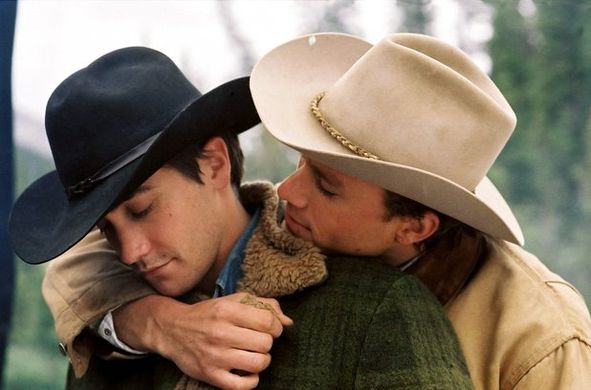 Now, I wasn’t particularly eager to see a story about true love muddled and thwarted by a dumb culture. But Rodrigo Prieto is a good cinematographer, and I am homesick for mountains. Well it didn’t take me more than a few minutes to figure out that it couldn’t have been filmed in Wyoming, where the story is set. A few of the establishing shots were of the Tetons, but most of the time the mountains looked all wrong. Those huge diagonal slabs with castelate peaks, and unbroken masses of douglas fir and spruce sweeping down into crystalline lakes in deep intramontane trenches — well, that’s Canadian Rockies [see photo above]. Wyoming mountains have a different look.
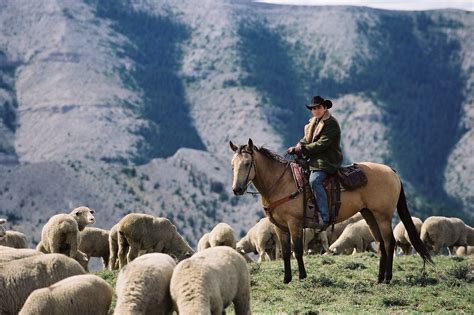
The bane of film authenticity: inaccurate sheep.
The sheep. Well, there was some stuff that was right. The old Euskalduna with a beret is something you would have seen in that time and place. Some of the work the main characters where shown doing was correct. But all the sheep were freshly shorn and marked, and they were still freshly shorn and marked after they had supposedly been pasturing up in the mountains for months! There wasn’t a dingleberry in sight. The main characters where not shown interacting with the dogs, which were nowhere to be seen, most of the time. Take note, Ang Lee, I’ll be watching… next time, get the sheep right.