(Stephen C. Cunnane & Kathlyn M. Stewart ̶ed.) Human Brain Evolution — The Influence of
. . Freshwater and Marine Food Sources:
. . . . 20827. (Phillip V. Tobias) Foreward: Evolution, Encephalization, Environment [preface]
. . . . 20828. (Kathlyn M. Stewart & Stephen C. Cunnane) Introduction [preface]
. . . . 20829. (Ian Tattersall) Macroevolutionary Patterns, Exaptation, and Emergence in the
. . . . . . . . . Evolution of the Human Brain and Cognition [article]
Read more »
READING – MARCH 2013
Posted by Phil Paine
on March 31, 2013
No comments
Grasshopper
Posted by Phil Paine
on March 4, 2013
No comments
Born Loser is a five-song tape given to me by the lead singer, Derek Madison, back in 1992. Not great production quality, but the energetic thrash still holds up well to a jaded ear. Derek obviously had some staying power, because Grasshopper still exists, sixteen years later, under the name Grasshopper SoundClash, Their MySpac.e page offers four songs to download, with a more melodic sound. “Magnetic Super Blue” is catchy, and could easily find a broad audience.
Image of the month: Saving the Saviour of the Lamb
Posted by Phil Paine
on March 1, 2013
No comments

FILMS – FEBRUARY 2013
Posted by Phil Paine
on February 28, 2013
No comments
(Wenders 1977) The American Friend [Der Amerikanische Freund]
(Maloney 1968) Doctor Who: Ep.228 ― The Krotons, Part 1
(Maloney 1968) Doctor Who: Ep.229 ― The Krotons, Part 2
(Maloney 1968) Doctor Who: Ep.230 ― The Krotons, Part 3
(Maloney 1968) Doctor Who: Ep.231 ― The Krotons, Part 4
(Marks 1960) Perry Mason: Ep.87 ― The Case of the Singing Skirt
(Anderson 2012) Moonrise Kingdom
(Thorpe 1941) Tarzan’s Secret Treasure
(Delannoy 1964) Les amitiés particulières Read more »
First-time listening for February, 2013
Posted by Phil Paine
on February 28, 2013
No comments
22182. (George Frederick Händel) Concerto a due chori in B‑f for 2 Oboes, Bassoon, Strings &
. . . . . Basso Continuo, HWV.332
22183. (George Frederick Händel) Concerto a due chori in F for 2 Horns, 2 Oboes, Bassoon,
. . . . . Strings & Basso Continuo, HWV.333
Read more »
READING – FEBRUARY 2013
Posted by Phil Paine
on February 28, 2013
No comments

Cover art by Richard Clifton-Dey for a British edition of
Fritz Leiber’s “A Spectre Is Haunting Texas”
20802. (Robert Sheckley) The Eye of Reality [story]
20803. (Richard Stoneman) Alexander the Great
(Electronic Text Corpus of Sumerian Literature) Lugalbanda and Enmerkar [Sumerian texts and
. . English translations]:
. . . . 20804. Lugalbanda
. . . . 20805. Lugalbanda and the Mountain Cave
. . . . 20806. Enmerkar and the Lord of Aratta
. . . . 20807. Enmerkar and En-suhgir-ana
Read more »
Lugalbanda, Beer and Babes
Posted by Phil Paine
on February 16, 2013
No comments
From Lugalbanda:
“An will fetch Ninguenaka for me from her mountain home — the expert woman, who redounds to her mother’s credit, Ninkasi the expert, who redounds to her mother’s credit: her fermenting-vat is of green lapis lazuli, her beer cask is of refined silver and of gold; if she stands by the beer, there is joy, if she sits by the beer, there is gladness; as cupbearer she mixes the beer, never wearying as she walks back and forth, Ninkasi, the keg at her side, on her hips; may she make my beer-serving perfect.”

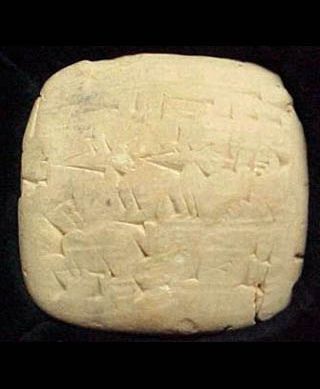
left: A Sumerian beer recipe. right: Receipt for a shipment of “best” beer from a brewer, c. 2050 BC from the Sumerian city of Umma.
text from:
(Electronic Text Corpus of Sumerian Literature) Lugalbanda and Enmerkar [Sumerian texts and English translations]:
23657. Lugalbanda
23658. Lugalbanda and the Mountain Cave
23659. Enmerkar and the Lord of Aratta
23660. Enmerkar and En-suhgir-ana
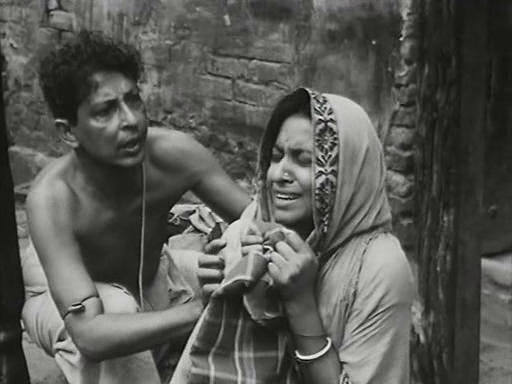
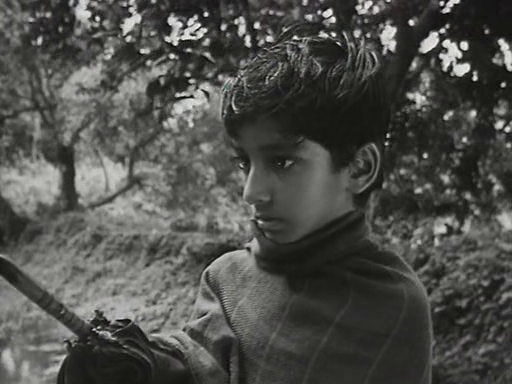
(Ray 1955) Pather Panchali [পথের পাঁচালী; Pôther Pãchali; Song of the Little Road]
Posted by Phil Paine
on February 10, 2013
No comments
Social realism can be pretty drab stuff. Or, like this justly renowned film masterpiece, it can elevate the ordinary details of life into the highest art. There is far more going on in Satyajit Ray’s brilliant directorial debut than the mere recording of life. Considering that he was a novice film-maker, the technical crew and actors were amateurs, and budget was 150,000 rupees (in 1955, less than a sandal-strap budget), Ray was able to create scenes of astonishing lyricism and intensity. Among them are that were the two children, Apu and Durga, chase through a field to see a passing train; where Apu watches, wonder-eyed, a village jatra play; and the homecoming of the father, who learns that his daughter has died. The film was based on the autobiographical novel by Bibhutibhushan Bandyopadhyay, who lived the intense poverty that he wrote of, and knew that the bottom of the social scale contains as many Hamlets and Andromaches as does the top. Everything about this film is honest, and the brilliant score by Ravi Shankar gives it additional depth. Ray went on to film two sequels. The three films are now known as the Apu Trilogy — Pather Panchali (1955); Aparajito [The Unvanquished](1956) and Apur Sansar [The World of Apu](1959). His subsequent career carved out a space for Bengali films, usually more serious in purpose than the output of Mumbai or Chennai.