
FILMS – DECEMBER 2012
Posted by Phil Paine
on December 31, 2012
No comments
(Liman 2002) The Bourne Identity
(Winer 2009) Modern Family: Ep.1 — Pilot
(Taylor 2010) Coast: Ep.43 ― Skagen, Denmark Read more »
First-time listening for December, 2012
Posted by Phil Paine
on December 31, 2012
No comments
23139. (Jón Leifs)Hafis[Drift Ice], for Mixed Chorus & Orchestra, Op. 63
23140. (Jón Leifs) Song: “Máninn Líður” for Mezzo-Soprano & Orchestra, Op.14a
23141. (Jón Leifs) Song: “Vögguvísa” for Mezzo-Soprano & Orchestra, Op.14a
23142. (Jón Leifs) Guðrúnarkviðafor Mezzo-Soprano, Tenor, Baritone & Orchestra, Op.22 Read more »
READING – DECEMBER 2012
Posted by Phil Paine
on December 31, 2012
No comments
23511. (Kevin Stone) Overview of Canada’s Coal Sector [article]
23512. (Brendan Greeley) Urging Economists to Step Forward from the Blackboard [article]
23513. (Steve Muhlberger) [in blog Muhlberber’s World History] Bangladesh: Still Waiting for
. . . . . the Tide to Raise All Boats [article]
23514. (Keenan Lee) The Altai Flood [article]
23515. (Robert Jordan) Wheel of Time #1: The Eye of the World Read more »
Swervedriver: Mezcal Head
Posted by Phil Paine
on December 4, 2012
No comments
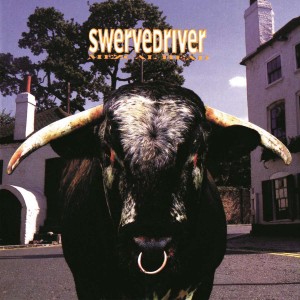 I’ve long been fond of this 1993 album by Swervedriver, a potent alternative rock band from Oxford. I have the Canadian release on cassette tape, which has an additional song, “Never Lose That Feeling/Never Learn”, not available on the U.K. original. Swervedriver was an excellent band, absorbing influences at first from raw bands like Iggy and the Stooges, and slowly acquiring a denser “alternative” texture without losing any aggressiveness. Unlike Dinosaur Jr., Sonic Youth, My Bloody Valentine, and other bands of that general zeitgeist, Swervedriver never found a satisfactory relationship with a record company, or a broad audience. But Mezcal Head stands up very well after twenty years. “Duel”, the only song to get a video and significant airplay, is by no means the only good track on the album. I prefer “Last Train To Satansville” and the jazz-like “Never Learn”. The vocals are more or less impossible to make out, and float over the thick instrumental sound like a ping pong ball on a tsunami, but that was par for the course at the time.

FILMS – NOVEMBER 2012
Posted by Phil Paine
on November 30, 2012
No comments
(McLeod 1933) Alice in Wonderland
(Smith 2002) MidSomer Murders: Ep.23 ― Murder on St Malley’s Day
(DeFriest 1994) Ocean Girl: Ep. 5 ― Past Imperfect [Human Tears]
(DeFriest 1994) Ocean Girl: Ep. 6 ― The Real World [Property Developers] Read more »
First-time listening for November, 2012
Posted by Phil Paine
on November 30, 2012
No comments
23094. (Hector Berlioz) Les nuits d’été[s. Kiri te Kanawa]
23095. (Hector Berlioz) Le mort de Cléopâtre, Scène lyrique[s. Norman]
23096. (Memphis Slim) Beer Drinkin’ Woman [Blues Collection #13]
23097. (George Frederick Händel) Faramondo, Opera in 3 Acts [d. Palmer; Fortunato, Baird] Read more »
READING – NOVEMBER 2012
Posted by Phil Paine
on November 30, 2012
No comments
23575. [5] (Lewis Carroll) Through the Looking-Glass
23576. (Jane Jacobs) Introduction to A Schoolteacher in Old Alaska[preface]
23577. (Hanna Breece) A Schoolteacher in Old Alaska [ ̶ed. Jane Jacobs]
23578. (Wei Wei, et al) A Calibrated Human Y‑chromosomal Phylogeny Based on
. . . . . Resequensing [article] Read more »
Haydn’s Sinfonia Concertante in B‑f
Posted by Phil Paine
on November 5, 2012
No comments
The sinfonia concertanteis a form that sits a little uncomfortably between the symphony and the concerto. Instead of a solo instrument battling heroically with or against the orchestra, a concertanteof various instruments (usually three or four) play solo parts in conversation against the backdrop of the orchestra. This definition has fuzzy edges, and many works might be classified as sinfonia concertantewhich are named something else. The term is usually associated with the late baroque period, and Haydn composed three of them. Among them is his Sinfonia Concertante in B‑flat, Hob. I/105, composed in 1792, which is a fine exemplar. Violin, cello, oboe and bassoon perform the “solo” roles in this one. The “conversation” seems like a pleasant one, as if the instruments were relaxing with brandy and cigars after a fine dinner. The viola’s voice, particularly, comes across as mellow, but never maudlin. In fact, I think the best time to listen to this would be precisely in those physical circumstances.