(Örnek 2003) The Hittites
(Parker 1999) South Park: Ep.39 ― Two Guys Naked in a Hot Tub
(Young 1990) Jeeves and Wooster: Ep.1 ― In Court After the Boat Race Read more »
Category Archives: D - VIEWING - Page 22
FILMS OCTOBER-DECEMBER 2009
Posted by Phil Paine
on December 31, 2009
No comments
(Cameron 2009) Avatar
Posted by Phil Paine
on December 20, 2009
No comments
Some old friends took me out to the suburbs to see the first showing of Avatar on an Imax screen. We were overwhelmed. The motion-capture and 3D technologies were employed intelligently, to tell a compelling story, and to create a kind of Maxfield Parrish beauty that underlined its theme. Read more »
(Örnek 2003) The Hittites
Posted by Phil Paine
on October 3, 2009
No comments
A feature length documentary on the Hittites, narrated by Jeremy Irons! I find it difficult to believe that there’s a commercial market for this. I always liked the Hittites, and read what little was available about them when I was a kid. But the name of this ancient civilization usually draws a blank stare, even among well-educated people. Read more »
FILMS JULY-SEPTEMBER 2009
Posted by Phil Paine
on September 30, 2009
No comments
(Chaffey / McGoohan 1967) The Prisoner: Arrival [6of1 order #1; original order #1]
(Marcus 2001) Murder Rooms: The White Knight Stratagem
(Fickman 2009) Race to Witch Mountain Read more »
(Vogel 1959) Space Invasion of Lapland [Rymdinvasion i Lappland] [aka Terror in the Midnight Sun, Horror in the Midnight Sun, or Invasion of the Animal People]
Posted by Phil Paine
on August 21, 2009
No comments
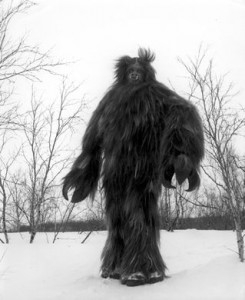 This 1959 low budget science fiction film features aliens (accompanied by a monster that appears to be made of shag carpeting) attacking a Sami village in Swedish Lapland! The film drags boringly for the first two thirds of it’s length, filling time with a lame romance, and lots of scenes of ice skating and skiing. But when the aliens and monster finally appear, there’s lots of fun to be had. The shag carpet monster knocks over tents, and frightens the reindeer, and does the least amount of damage portrayed in any cinematic alien invasion. Some of the camera shots are surprisingly good, as if Svend Nykvist took a day off from Bergman to work for Roger Corman. If you’ve never heard the agglutinative Sami language spoken, you can do so in the one scene where an old man answers questions in it.
(Kjaereng 2005) Canada På Tvers med Lars Monsen
Posted by Phil Paine
on August 20, 2009
No comments
Sami-Norwegian adventurer Lars Morsen travels from Alaska to Labrador by dog sled, canoe, skis, and on foot. The route he takes crosses nothing but tundra, taiga, and boreal forest. That kind of adventure is known as “thru-hiking”, and this is one of the most extreme examples of it. The journey took two years and seven months. There are occasional stops in outposts like Arctic Red River, Churchill, and Mistassini along the way, but mostly he is alone with his dogs. He films himself with a handheld, and talks to himself and the dogs (and the occasional bear), in untranslated Norwegian, but if you’ve spent any time in this kind of environment, you never have trouble guessing what he’s saying. This long documentary (280 minutes — it was split up into episodes for tv broadcast in Norway) won’t be everyone’s cup of tea, but I found it entertaining. But I was entertained by animal behaviour, his bush savvy, and differences in landscape and vegetation that others might not notice or care about. If you like seeing the nitty-gritty of being in the bush, without any extraneous narration, then give it a try.
(Leth 1967) The Perfect Human [Det perfekte menneske] (Leth & von Trier 2003) Five Obstructions, The [De fem benspænd]
Posted by Phil Paine
on July 9, 2009
No comments
My friend Skye Sepp brought over this entertaining Danish documentary, a bit of truffle for film buffs. Back in 1967, young director Jørgen Leth made a short film called “The Perfect Human”. It was the kind of clever, enigmatic, “arty” thing that appealed to the sensibility of the time, then became a chestnut of short film festivals and film schools, much like Norman MacLaren’s films, here in Canada. Looked at now, you can see that it has an elegance to it, mostly because of the superb performances of the only two actors, Claus Nissen and Majken Algren Nielsen. Nissen, apparently, improvised most of his most effective moments. Watch it online here.
Fast forward to 2003. Leth is in semi-retirement in Haiti, and his friend/colleague Lars von Trier dares him to make five “remakes” of the influential short film. In each case, he will demand “obstructions” — absurd restrictions and demands meant to challenge the director’s ingenuity. The film cuts between von Trier presenting his obstructions [“No sets”; “You have to film it in someplace disgustingly horrible”; “You have to remake it as a cartoon”; “You have to act in it yourself”…], the resulting remakes, and fragments of the original film. The result is a fascinating look into how a creative film-maker works, with numerous moments of spontaneous humour.
FILMS APRIL-JUNE 2009
Posted by Phil Paine
on June 30, 2009
No comments
(MacFarlane / Ring 2001) Family Guy: Ep.38 — Fish Out of Water
(Williamson 1901) Stop Thief!
(Williamson 1901) Fire!
(1901) The Georgetown Loop
(Méliês 1902) A Trip To The Moon
(1903) Skyscrapers Of New York City
Read more »
Star Trek (Abrams 2009)
Posted by Phil Paine
on May 14, 2009
No comments
I saw the new Trek opus with artist Taral Wayne, in a theatre filled, for some reason, with Russians, who laughed and cheered whenever the character Chekov spoke. I later learned from a Russki friend that the actor, Anton Yelchin, though himself a born Russian, was giving the character a broad Polish accent! I was actually rather pleased with the film, which managed to strike a balance between providing something new and remaining within the Sacred Canon, and though the plot and events were ludicrously implausible, the humour and enthusiasm with which the actors portrayed their roles made one forget it. An alternate time-line gave license for the deviations from the back-history implied in the previous films. Leonard Nimoy performed with remarkable dignity.
(Forman 1968) The Firemen’s Ball [Hoří, má panenko]
Posted by Phil Paine
on April 11, 2009
No comments
It’s been fifteen years since I’ve seen Miloš Forman’s satirical masterpiece. I found it even more pleasurable on second viewing. Filmed with an amateur cast of real firemen, in a small North Bohemian town, the film contains absolutely nothing overtly political. But it’s attitude was subtly subversive in a way that enraged the ruling Communists, who declared it “banned forever”, and even threatened Forman with ten years imprisonment for “damage to the state”. Forman was in Paris when the Soviets invaded, shortly after, so he defected and became a professor at Columbia University. He subsequently had a distinguished directing career, with films such as One Flew Over the Cuckoo’s Nest and Amadeus. But none of these blockbusters can equal the vitality and originality of this early effort. It’s difficult to explain why this simple, episodic piece of naturalism is so effective. You just have to watch it. There are so many scenes where the comedy emerges painfully from plain reality, such as when the camera scans the bored expressions of the girls being paraded before the aging judges in a ludicrous beauty contest, the brilliantly timed sequence when it’s discovered that all the raffle prizes have been stolen, or the firemen moving a crotchety old man closer to his burning home to keep him warm. This is not bitter or accusing satire. In fact, the film’s approach is tender and forgiving. And perhaps that is what infuriated the corrupt Communist oligarchs most of all.