22006. (Johann Sebastian Bach) Cantata #13 “Meine Seufzer, meine Tränen”, bwv.13
22007. (Johann Sebastian Bach) Cantata #14 “Wär Gott nicht mit uns diese Zeit”, bwv.14
22008. (Johann Sebastian Bach) Cantata #16 “Herr Gott, dich loben wir”, bwv.16 Read more »
LISTENING — MARCH 2010
Posted by Phil Paine
on March 31, 2010
No comments
READING – MARCH 2010
Posted by Phil Paine
on March 30, 2010
No comments
18642. (P. F. de Moraes Farias) Arabic Medieval Inscriptions from the Republic of Mali: Epigraphy,
. . . . . Chronicles, and Songhai-Tuāreg History
18643. (Jacques Hureiki) Essai sur les origines des Touaregs ― herméneutique culturelle des
. . . . . Touaregs de la région de Tombouctou
18644. (Anthony Bourdain) Kitchen Confidential Read more »
Sunday, March 28, 2010 — A Lay of Ancient Toronto, Part 2
Posted by Phil Paine
on March 28, 2010
No comments
When I received Dorothea’s book [see previous blog entry] from the University of Toronto’s compact storage facility.[1] I was rewarded in a way that I could not have guessed. In fact, the coincidence involved is so extreme that I hesitate to relate it, for fear of being thought a hoaxer. Read more »
18672. [2] (William Tenn) Of Men and Monsters
Posted by Phil Paine
on March 19, 2010
No comments
William Tenn was one of Science Fiction’s sharpest satirists in the fifties and sixties. His short stories bit like blackflies.Of Men and Monsterswas one of his only two novels, and it was expanded from a short story. It shows it, as the core story is still visible, and the end shows a distinct falling off in quality, with the satire disappearing so that there can be a conventional, plot-driven resolution. But never mind that. SF writers in that period had no social prestige, and very modest incomes; it was standard practice to inflate any successful short story into a “novel” that might pay the rent. But Tenn’s talent lay in beautiful, self-contained miniatures that did not lend themselves to expansion. Read more »
(Amenábar 2009) Agora
Posted by Phil Paine
on March 17, 2010
No comments

 This excellent film has yet to find a North American distributor. It’s not hard to guess why. The film is a historically accurate portrayal of religious life in Alexandria in the early fifth century AD. The main character is Hypatia, the woman philosopher at the Museum of Alexandria, who was savagely murdered by a Christian mob. The film accurately portrays the city as engulfed in the brutal religious violence that accompanied the rise of Christianity in many parts of the Empire (The population of the city was divided between Christians, Pagans, and Jews, all sensitive to “insults” and determined to use force to control the city). Read more »
Sunday, March 14, 2010 — A Lay of Ancient Toronto, Part 1
Posted by Phil Paine
on March 14, 2010
No comments
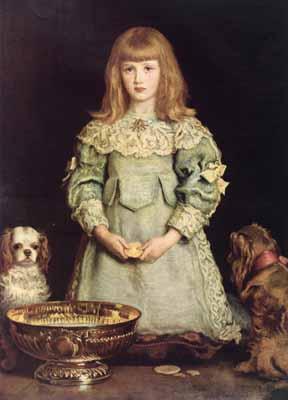
Steve Muhlberger has been more prolific in his blog, lately, and it has featured some fine pieces on the psychology of historians. Entries such as “Is the past another country?” among many, are well worth reading. I’m reminded of them when I re-shelve a nice little book that I recently found in a second-hand shop ― an 1882 edition of Macaulay’s Lays of Ancient Rome. It’s just the sort of thing that delights anyone who is fascinated by the past. It’s inscribed twice by early owners. The first inscription reads: “Dorothea Thorpe, from Hughey Jnr., March 20, 1884″ The second reads: “Lavinia Mary Ford, from Dorothea’s Husband and in memory of her. Charnwood 18th October 1934, St. Luke’s Day”. These excite the historical imagination in me. Read more »
The Beggar’s Opera
Posted by Phil Paine
on March 7, 2010
No comments
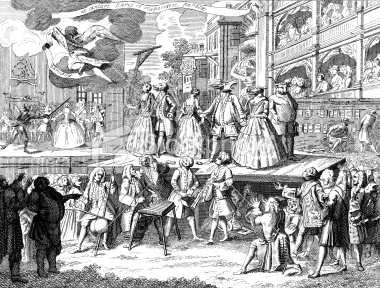
The Beggar’s Operais a pointed example of unpretentious popular art long outliving the “serious” works of its day. In 1728, a rather unsuccessful English poet, John Gay, penned a satire of the upper class’s taste for Italian Opera, as well as the establishment politics of the day (then personified in First Lord of the Treasury, Robert Walpole). Using a kleptomaniac collection of Scottish and French folk-tunes, Gay conceived a fast-moving, tight-knit plot involving, instead of the usual operatic cast of Classical heroes and deities, the whores and thieves of the London slums. Read more »

First-time listening for February, 2010
Posted by Phil Paine
on February 28, 2010
No comments
21514. (Gabriel Fauré) Piano Quartet #1 in C Minor, Op.15
21515. (Gabriel Fauré) Piano Quartet #2 in G Minor, Op.45
21516. (U2) Boy
21517. (Johann Sebastian Bach) Cantata #10 “Meine Seel erhebt den Herren”, bwv.10 Read more »
READING – FEBRUARY 2010
Posted by Phil Paine
on February 28, 2010
No comments
18576. (Steve Muhlberger) [in blog Muhlberger’s Early History] Population Crash in Europe?
.… . [article]
18577. (Steve Muhlberger) [in blog Muhlberger’s Early History] The Chronicle of the Good
.… . Duke and “Modern Times” [article]
Read more »