If you have a certain frame of mind (which I have, and share with my friend William Breiding), you will naturally be drawn to the remarkable 1913 novel by Alain-Fournier [Henri Alban-Fournier, 1886–1914]. Le Grand Meaulnesis justly considered a masterpiece of French literature, and it captures the subtle tension between dream and reality, and between desire and fulfillment. The main character, Augustin Meaulnes, a seventeen-year-old student, gets lost and encounters a woman he falls in love with, then can’t find her, an event that determines the subsequent story. But the tale is told from the point of view of his fifteen-year-old friend François Seurel, and it’s this technique that makes the story brilliant, because the real point of the story is what it all means to Seurel. It’s an elegant, precisely written tale, and the author’s obvious genius was almost immediately extinguished on the battlefields of World War I. Read more »
Grammatics — A good new indie band from Leeds
This album was recorded during June-November 2008, but it hasn’t been released yet. Grammatics is a British indie rock band from Leeds with a complex sound. Owen Brinley (guitar/vocals), Emilia Ergin (cello), Dominic Ord (drums) and Rory O’Hara (bass) have an orchestral approach to their rock, quite far off from the minimalist style dominant in the British Indie scene. Emilia Ergin uses the cello much like a lead guitar. The rhythm section is very strong: this is Rock, not mushy orchestrated pop. There’s a wee bit of Queens Of The Stone Age and other American indie bands perceptible in this mix, but on the whole, Grammatics is an original band, trying to do things on its own terms. Every song is different, every song is interesting. I’ll be listening to anything I can get from this group.
(Lucian of Samosata) Selected Satires of Lucian [ed. & tr. Lionel Casson]
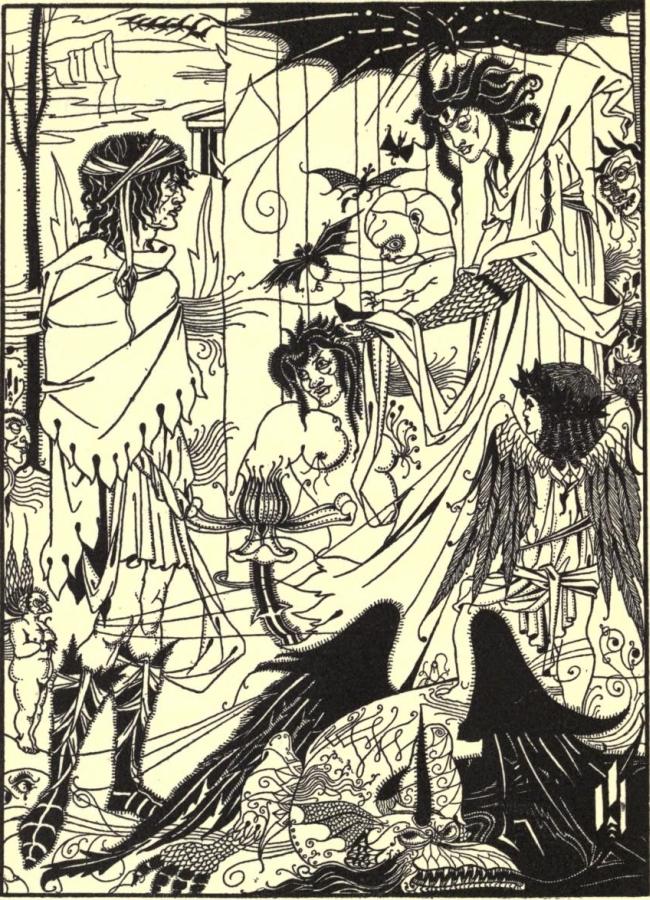 Lucian seems to have been the Kurt Vonnegut of the Roman World, poking fun at philosophers and the classics of Greek literature with a cheerful cynicism. Though he was an Assyrian from Mesopotamia, living in the second century A.D., he wrote in Classical Greek (the equivalent of someone today writing in Elizabethan English). His most famous work is the True History, sometimes listed as the first science fiction story, since it incorporates a trip to the moon and the sun, and an interplanetary war. But it’s really a shaggy-dog story intended to spoof the credulity of Homer and Herodotus. The narrator repeatedly tells you something absurd, then says he won’t tell you another, more absurd detail because you won’t believe him. It employs techniques of farce and burlesque later perfected by Baron Münchausen and Mark Twain. Lucius the Ass, the attribution of which is occasionally questioned, is noticeably different in style, and contains passages that are obviously intended to be read as porn. The same story (the hero is transformed into a donkey: trouble follows) was also told by Apuleius. It’s interesting in that it draws attention to the suffering of an animal, something to which most Roman writers were oblivious. Most of the other pieces are comic dialogues in which the Gods are spoofed in all-too-human terms. Lucian seems to have considered all religion charlatanism, and did not have much good to say about philosophers, either. Christians are satirized in The Death of Peregrinus. The autobiographical My Dreamreveals that a stone-mason’s son from a backwater part of the Empire could educate himself into a success. Lucian was able to settle down and write spoofs after a career as a lecturer that took him across the Empire. A modern reader with a routine exposure to Greek mythology will get at least half of Lucian’s allusions, though not, of course, his puns. This anthology contains less than half of his known works. Read more »
(Jones 1975) A Boy and His Dog
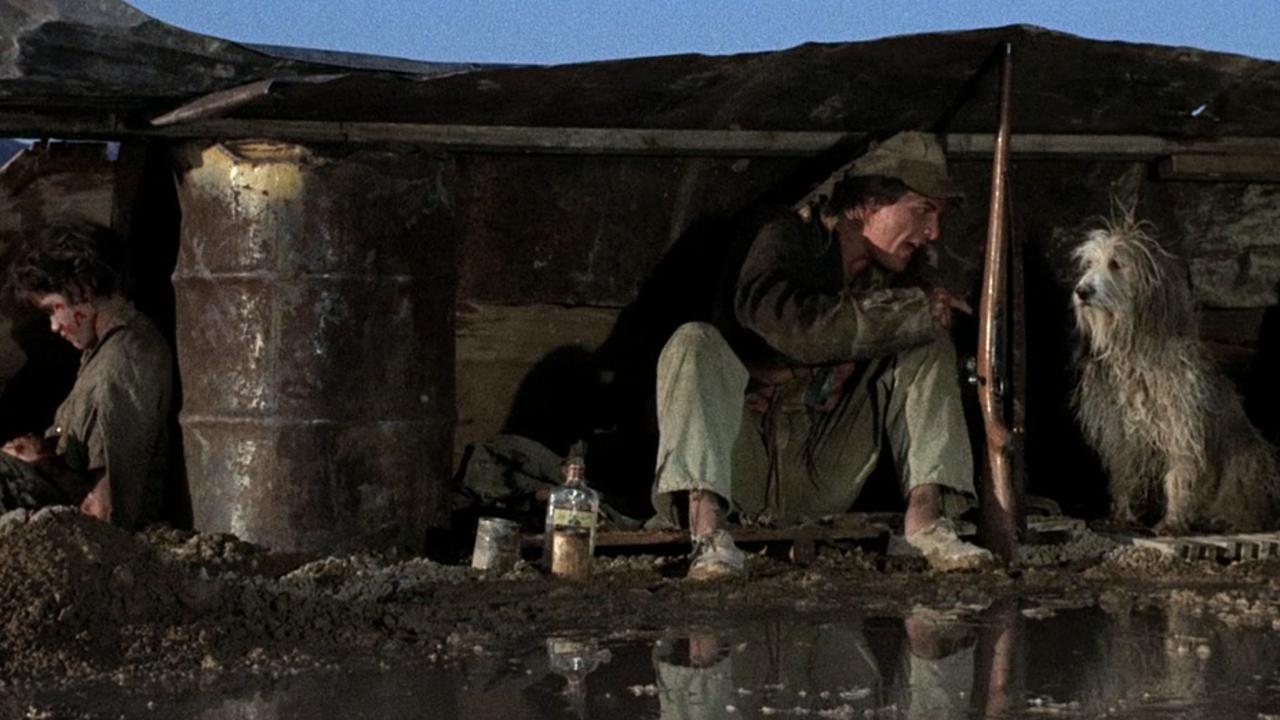 Harlan Ellison’s post-apocalyptic black comedy was written in 1969, and filmed in 1975, at the tail end of the wave of Hollywood eccentric films that briefly came out of Hollywood (after which things went back to Business As Usual). It is reasonably faithful to the story, and apparently won Ellison’s approval, except for the last line spoken in the film. Ellison felt it this line was mysoginist, a criticism that had been unjustly made against the story. The kind of bitter, cynical humour that was commonplace at the time probably doesn’t sit will with the audiences of today. The satirical dystopia of white-face-painted oligarchs ruling a Walt Disneyish Topeka, Kansas in an underground refuge will probably just puzzle anyone under thirty. But this kind of humour, updated in imagery, might be on the verge of a come-back. The lead actor, Don Johnson, later went on to star in the television Miami Vice. Jason Robards, a veteran star from the 1950s, played the sinister ruler of the underground Topeka. Under-rated veteran actor Tim McIntyre provided the voice of Blood, the telepathic dog.
17083. (Juan Cole) [in blog Informed Comment] Top Ten Good News Stories in the Muslim World, 2008 [That Nobody Noticed] [article]
Steve Muhlberger’s site exposed me to the blogging of Juan Cole, who is a University of Michigan historian specializing in contemporary Middle Eastern and South Asian studies. He counts as one of the major historians of, and policy experts on the Middles East. His blog, Informed Comment, is the best source of insightful comment and hard-to-find crucial information in this field that I’ve seen, anywhere. I recommend checking out this entry, since it exemplifies his ability to sort out the “big picture” from a blizzard of data. I was not surprised to learn that Cole is an avid Science Fiction fan .…it seems that all today’s best historians are.
17078. (David Liss) A Conspiracy of Paper
This is an excellent, entertaining novel set in England in 1720, at the time of the “South Sea Bubble.” This was a financial crisis caused by a complex stock market swindle, which was cooked up by an alliance of private and government interests. Reading the book today, now that we have witnessed the biggest armed robbery in human history, in the form of the Wall Street bailouts, is a more piquant experience than it would have been if I had picked it up when it was published, eight years ago. [Last November, I reviewed an interesting biography of John Law, the man at the heart of the financial meltdown of France that occurred in the same year.] Read more »
Charles Ives: the “Universe Symphony”
Charles Ives on the Outside

and on the Inside
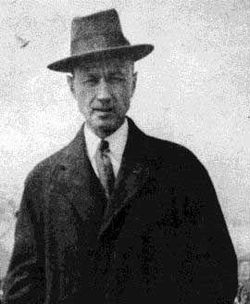
We’re an odd bunch, those of us who have the taste for the eccentric music of Charles Ives, the amateur composer and insurance salesman who independently developed (ahead of everyone else) virtually every musical innovation of the 20th century. Unrecognized and unperformed during most of his lifetime, he composed bizarre concoctions of polyrythms, polytonality, quarter tones, and tone clusters, including aleatoric elements, long before anyone else dreamed of doing so. Read more »

FILMS OCTOBER – DECEMBER 2008
(Parker 2007) South Park: Ep.163 — Imaginationland, Part 1
(Parker 2007) South Park: Ep.164 — Imaginationland, Part 2
(Parker 2007) South Park: Ep.165 — Imaginationland, Part 3
(D’Elia 2004) Boston Legal: Ep.1 — Head Cases
(Ewing & Grady 2006) Jesus Camp
(Parker 2001) South Park: Ep.72 — Proper Condom Use
(Wincer 1996) The Phantom
Read more »
First-time listening for December, 2008
19234. (Charlie Haden) Liberation Music Orchestra
19235. Sundanese Jaipong and Other Popular Music
19236. (Bud Powell) Jazz Giant
19237. (We Are Standard) We Are Standard
19238. (Thomas Tallis) Beati immaculati
19239. (Thomas Tallis) Introit — Puer natus est nobis
19240. (Thomas Tallis) Kyrie — Deus creator 2
19241. (Juno Reactor) Shango Tour Tokyo, 2001
Read more »